What Language Is Spoken in Morocco? Arabic, Amazigh, Darija & French Explained
limitlessmoroccotours.com
21 September 2026
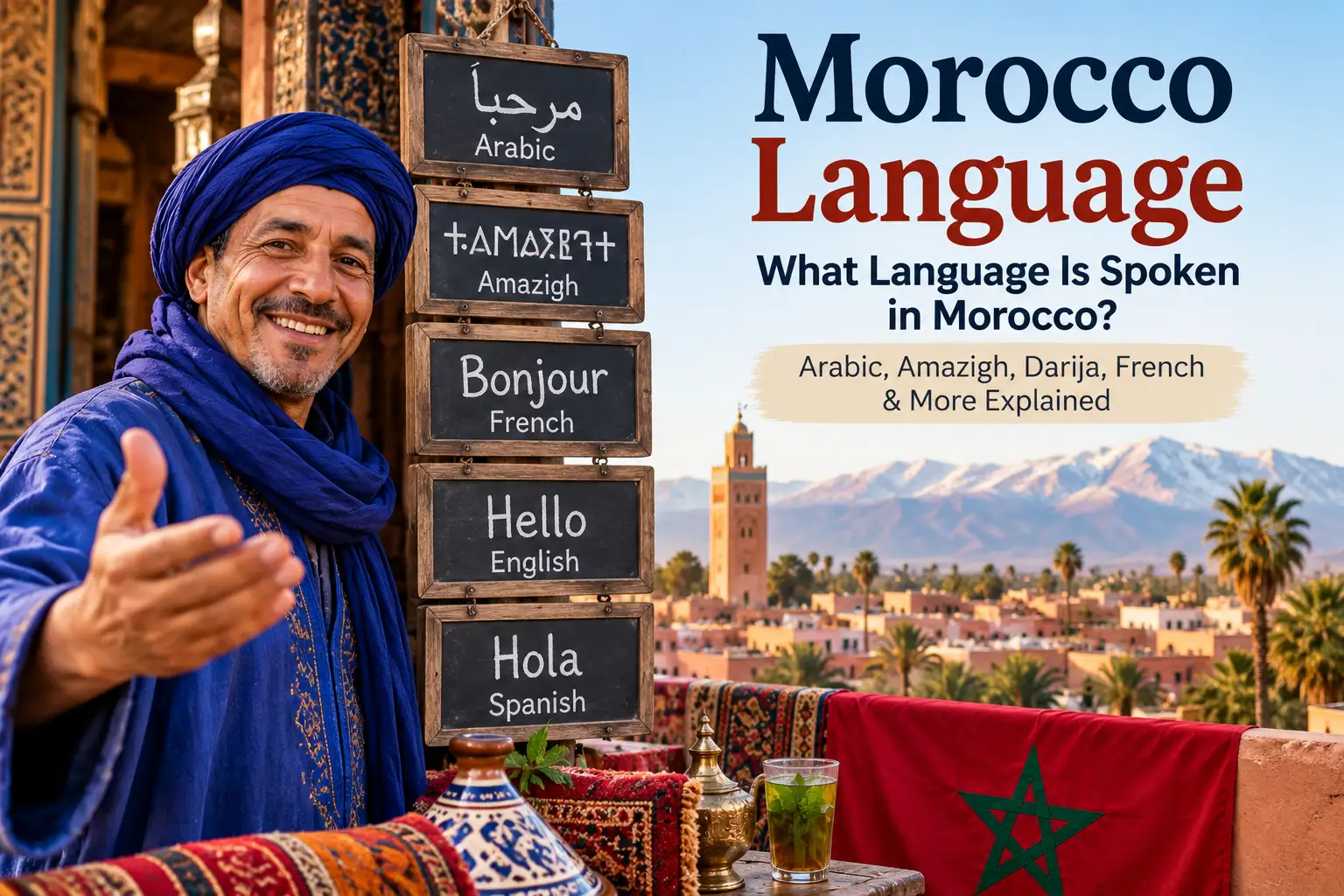
If you are planning a trip to Morocco, you may be wondering: what language is spoken in Morocco?
The answer is more interesting than you might expect.
Morocco is a multilingual country. Arabic and Amazigh are the official languages, while Moroccan Arabic, known as Darija, is the language you will hear most often in everyday conversations. French is also widely used, and English is becoming increasingly common in tourist areas.
For travelers, this means you usually do not need to speak Arabic to enjoy your trip. In cities such as Marrakech, Casablanca, Fes, Tangier and Agadir, you will often find people who can communicate in French, English, Spanish or another language.
This Morocco language guide explains the main languages spoken in Morocco, where you are likely to hear them, and which words are useful to know before your visit.
Morocco Language: What Is the Official Language of Morocco?
The Morocco official language situation includes two languages:
- Arabic
- Amazigh
Arabic has long played an important role in Moroccan government, education, media and religion.
Amazigh, also called Tamazight, is also an official language of Morocco. It represents the indigenous Amazigh heritage that has been part of North Africa for thousands of years.
However, the language people use in daily life can be different from the formal languages used in official documents.
That is why visitors asking what language do they speak in Morocco often receive more than one answer.
What Language Is Spoken in Morocco Every Day?
In everyday life, many Moroccans speak Darija, or Moroccan Arabic.
Darija is the local Arabic dialect used in homes, markets, cafés, taxis and normal conversations.
If you walk through the medina in Marrakech or visit a village near the Atlas Mountains, Darija is one of the languages you are most likely to hear.
Darija developed through centuries of interaction between Arabic, Amazigh and other languages. It also contains many words influenced by French and Spanish.
This makes Moroccan Arabic sound quite different from the Arabic spoken in some other Arab countries.
For travelers, you do not need to learn Darija before visiting Morocco. However, knowing a few simple expressions can make conversations easier and often creates a friendlier connection with local people.
Is Moroccan Arabic the Same as Standard Arabic?
Not exactly.
Modern Standard Arabic is used in formal situations such as news broadcasts, official communication, education and written material.
Darija is used much more often in everyday conversation.
A Moroccan may read or hear Standard Arabic in formal settings but speak Darija with family and friends.
This is one reason the question what language is spoken in Morocco cannot be answered with just one language.
Morocco is officially bilingual, but everyday communication is much more diverse.
What Is Darija?
Darija is the Moroccan form of Arabic.
It is spoken by millions of people across Morocco and is the main everyday language in much of the country.
You may hear Darija when:
- ordering food
- shopping in a souk
- speaking with taxi drivers
- visiting local families
- talking to shop owners
- chatting with guides and drivers
Darija can vary slightly depending on the region.
People from Marrakech, Casablanca, Fes or northern Morocco may use different accents or expressions, but they can normally understand one another.
What Is Amazigh?
Amazigh is an important part of Morocco’s history and identity.
Amazigh people have lived across North Africa for thousands of years, long before the arrival of Arabic in the region.
Today, Amazigh languages are still spoken in many parts of Morocco.
You may hear Amazigh languages in areas including:
- the Atlas Mountains
- the Middle Atlas
- the Anti-Atlas
- parts of southeastern Morocco
- some rural communities
There are different varieties of Amazigh spoken across the country.
Travelers visiting mountain villages or remote regions may hear Amazigh spoken more frequently than in large cities.
Even when local residents speak Amazigh at home, many also speak Darija.
Is French Spoken in Morocco?
Yes.
French is widely used in Morocco, although it is not one of the country’s official languages.
You will often see or hear French in:
- restaurants
- hotels
- businesses
- banks
- universities
- shops
- signs and menus
- tourism services
French is especially common in larger cities such as Casablanca, Rabat and Marrakech.
Many Moroccans can communicate in French as either a second or additional language.
For French-speaking travelers, traveling around Morocco can therefore be relatively straightforward.
Do People Speak English in Morocco?
Yes, especially in areas visited by international travelers.
English has become increasingly common among younger Moroccans and people working in tourism.
In destinations such as:
- Marrakech
- Fes
- Casablanca
- Chefchaouen
- Tangier
- Agadir
- Merzouga
you can often communicate in English at hotels, restaurants, riads, tour companies and major tourist attractions.
English ability varies from person to person, especially outside major tourist areas.
In smaller towns and rural areas, Darija, Amazigh or French may be more useful.
Still, an English-speaking traveler can usually visit Morocco without major language problems.
If you are planning your first visit, our Morocco travel tips guide covers other useful things to know before you arrive.
Is Spanish Spoken in Morocco?
Spanish is also spoken by some Moroccans, particularly in northern parts of the country.
You are more likely to hear Spanish around places such as:
- Tangier
- Tetouan
- Chefchaouen
- northern coastal areas
This reflects the long historical and geographical connection between Morocco and Spain.
Spain is located just across the Strait of Gibraltar from northern Morocco, so travel and cultural connections between the two countries remain strong.
If you are combining several countries in one trip, see our guide to traveling to Spain, Morocco and Portugal.
Languages Spoken in Morocco at a Glance
Morocco has a richer language landscape than many first-time visitors expect.
Here is a simple overview:
Language | Where you may hear it |
Arabic | Government, education, media and formal communication |
Darija | Everyday conversation across much of Morocco |
Amazigh | Atlas regions, rural areas and Amazigh communities |
French | Business, education, restaurants, hotels and cities |
English | Tourism, younger generations and major destinations |
Spanish | Mainly northern Morocco |
The mix can change depending on where you travel.
A visitor spending several days in Marrakech may hear much more Darija, French and English than someone traveling through Amazigh villages in the Atlas Mountains.
Can You Travel in Morocco Speaking Only English?
For most popular tourist routes, yes.
English is widely understood in many hotels, riads, tour companies and tourist restaurants.
You should usually be able to travel between major destinations without speaking Arabic or French.
However, communication may be more limited in small villages or places that receive fewer international visitors.
This is where traveling with a local driver or guide can make the experience easier.
A local guide can also help you understand cultural details that are difficult to discover when traveling alone.
Useful Moroccan Words for Travelers
You do not need to learn a complete language before your trip.
A few simple Darija words can still be useful.
Salam — Hello
Shukran — Thank you
La — No
Naam — Yes
Afak — Please
Bslama — Goodbye
Even using a simple greeting such as “Salam” can make everyday interactions feel more personal.
Do not worry about having a perfect accent. The goal is simply to make an effort and communicate respectfully.
Do Moroccans Speak More Than One Language?
Many do.
It is common for a Moroccan to use different languages depending on the situation.
For example, someone might speak Darija at home, use Arabic in formal settings, study or work partly in French, and communicate with tourists in English.
Someone from an Amazigh community may also speak an Amazigh language.
Because of this multilingual environment, switching between languages during a conversation is not unusual.
Visitors may even hear Darija and French mixed together in the same conversation.
What Language Is Used on Moroccan Signs?
It depends on the location.
Arabic is common on public and official signs.
You may also see Amazigh writing, particularly on official signs.
French is widely used on road signs, businesses and commercial signs.
In major tourist destinations, hotels, attractions and restaurants may also provide English.
This makes navigation relatively manageable for international visitors.
A translation app can still be useful, especially if you plan to explore independently.
If you are preparing your phone before traveling, read our Morocco SIM card and eSIM guide.
Do I Need to Learn Arabic Before Visiting Morocco?
No.
You can travel around Morocco without speaking Arabic.
People working in tourism are used to welcoming international travelers, and many speak one or more foreign languages.
Still, learning several basic Darija expressions is useful.
It can help when:
- greeting people
- buying something
- ordering food
- thanking someone
- asking simple questions
More importantly, using a few local words shows interest in Moroccan culture.
Does Language Change Between Moroccan Cities?
Yes, to some extent.
Darija remains widely spoken, but the mix of other languages changes depending on the region.
In Marrakech, you may hear a lot of Darija, French and English because of the city’s large tourism industry.
In Casablanca, French is very common in business and urban life.
In northern cities such as Tangier and Tetouan, you may hear more Spanish.
In Atlas Mountain communities, Amazigh languages may be more common.
In desert regions, you may encounter different local accents and linguistic traditions.
This diversity is one of the interesting parts of traveling around Morocco rather than staying in only one city.
If you are deciding where to go, our guide to the best places to visit in Morocco can help you compare destinations.
Language Tips for First-Time Visitors to Morocco
You do not need to make language a major concern when planning your trip.
A few simple habits can make communication easier.
Speak clearly and avoid very complicated English when talking with someone who is not a native speaker.
Keep Google Translate or another translation app available on your phone.
Learning “Salam” and “Shukran” before arriving is useful.
If someone does not understand English, try French if you speak it.
In rural regions, your driver or local guide can often help translate.
Most importantly, be patient. Morocco is multilingual, so people are often used to communicating across language differences.
Why Does Morocco Have So Many Languages?
Morocco’s languages reflect its geography and long history.
Amazigh languages have deep roots in North Africa.
Arabic became an important language following the spread of Islam and Arab culture across the region.
French became widely used during the period of the French Protectorate and remained important in business and education afterward.
Spanish influence has been stronger in parts of northern Morocco.
More recently, international tourism, education, media and the internet have contributed to the growing use of English.
The result is a country where several languages can exist side by side.
FAQ About Morocco Language
Arabic and Amazigh are Morocco's official languages. Darija, or Moroccan Arabic, is widely used in everyday life. French is also common, while English is increasingly spoken in tourist areas.
For everyday conversations, many Moroccans speak Darija. Depending on the region, you may also hear Amazigh, French, English or Spanish.
The official languages of Morocco are Arabic and Amazigh.
No. French is not an official language, but it is widely used in business, education, tourism and everyday urban life.
Yes. English is commonly spoken in hotels, riads, restaurants and tourism businesses in major destinations. Communication may be more difficult in remote areas, but most travelers can visit Morocco without speaking Arabic.
Yes. Darija is the Moroccan form of Arabic used widely in everyday conversation. It differs from Modern Standard Arabic and includes influences from Amazigh, French, Spanish and other languages.
Yes. Amazigh languages are spoken in many communities, particularly in mountain and rural regions. Amazigh is also an official language of Morocco.
Final Thoughts
Understanding the Morocco language situation can make your trip easier, but travelers do not need to worry about becoming fluent before arriving.
Arabic and Amazigh are the country’s official languages, while Darija is central to everyday conversation. French remains widely used, English is common in tourism, and Spanish can be heard in parts of northern Morocco.
If you are visiting the main tourist destinations, English is usually enough for most travel situations. Learning a few words of Darija can still make your experience more enjoyable and help you connect with local people.
Morocco’s mix of languages is part of what makes the country culturally diverse. As you travel between cities, mountains, coastal towns and the Sahara, you may notice the language around you changing along with the landscape.
For more help planning your route, see our Morocco itinerary guide and Morocco travel tips.
- 4-day Casablanca to Marrakech desert tour
- 5-day Morocco tour from Casablanca
- 7-day Sahara desert tour from Casablanca
- 8-day imperial cities tour from Casablanca
- 10-day Morocco tour from Casablanca
- 10-day Imperial cities Tours from Casablanca
- 12-day grand Morocco adventure tour
- 14-day Morocco tour from Casablanca
- 3 Days Tour Marrakech To Merzouga Desert
- 3 Day Marrakech to Fes Desert Tour via Merzouga & Erg Chebbi
- 4 Day Sahara Desert Tour from Marrakech
- 4 Day Marrakech to Fes Desert Tour with Camel Trek & Sahara Experience
- 5-day Marrakech to Fes desert tour
- 6 day Morocco desert tour from Marrakech
- 7-day imperial cities tour Marrakech