- Home
- TOURS
- TOURS FROM MARRAKECH
- 3 days Marrakech desert tour to Merzouga
- 3 day Marrakech to Fes desert tour
- 4 Day Sahara Desert Tour from Marrakech to Merzouga
- 4 Day Marrakech to Fes Desert Tour – Explore Morocco in the Sahara
- 5-day Marrakech to Fes desert tour
- 6 day Morocco desert tour from marrakech
- 7-day imperial cities tour Marrakech
- TOURS FROM CASABLANCA
- 4-day Casablanca to Marrakech desert tour
- 5-day Morocco tour from Casablanca
- 7-day Sahara desert tour from Casablanca
- 8-day imperial cities tour from Casablanca
- 10-day Morocco tour from Casablanca
- 10-day imperial cities tour from Casablanca
- 12-day grand Morocco adventure tour
- 14-day Morocco tour from Casablanca
- TOURS FROM TANGIER
- TOURS FROM FES
- TOURS FROM MARRAKECH
- About
- Gallery
- Contact
- Blog
4 day Marrakech to Fes desert tour
4 day Marrakech to Fes desert tour
- Marrakech
Duration
4 Days / 3 Nights
Tour Type
Private tour
Group Size
4 People
Languages
English, French,
- Overview
A 4 day Marrakech to Fes desert tour covers a lot of ground: the High Atlas Mountains, kasbahs that look like they grew straight out of the hillside, a night camping in the Sahara, and a finish in Fes, Morocco’s oldest imperial city. It’s a private tour, with the same driver-guide and vehicle the whole way, so the only people setting the pace are you and anyone traveling with you.
The route follows the classic Marrakech to Fes via Sahara path: over the Tizi N’Tichka pass, through the Ait Ben Haddou UNESCO site, down into the Dades and Todra gorges, and out for the Erg Chebbi camel trek and a night under a Berber tent. From there, the road climbs back north through cedar forest before ending in Fes.
Mornings start with breakfast at the hotel, and the tour includes dinner most nights as well. Most days also build in a stop for tea, a short walk, or photos along the way. Lunch is the one meal left up to you, which works out well, since it means eating where you actually want rather than where the schedule decides for you.
A few quick facts:
- Duration: 4 days, 3 nights
- Pickup: anywhere in Marrakech
- Drop-off: anywhere in Fes
- Price: depends on the number of travelers, since the vehicle and guide are private
- Itinerary
4 Days /3 Night
You're picked up in Marrakech and driven straight into the High Atlas Mountains, over the Tizi N'Tichka pass. At 2,260 meters, it's one of the highest paved roads in the country, and the drive is worth the early start on its own: switchbacks, Berber villages built into the slopes, and views that shift with every turn.
The first proper stop is the Ait Ben Haddou UNESCO site, a fortified kasbah built in the 18th century by Et Hami El Glaoui. It's one of the best-preserved examples of this kind of earthen architecture in Morocco, and there's time to walk through it and eat lunch nearby before moving on.
From there, the road runs through Ouarzazate, nicknamed the Hollywood of Africa for its film studios, and onto the Road of a Thousand Kasbahs. You'll pass through Kalaat M'Gouna, known locally as the Valley of Roses. Travel in May and you'll catch the town's annual rose festival, when the smell of it seems to follow the road for miles. The day ends at a hotel looking out over the Dades Valley, a good spot to slow down after a long first day.
After breakfast, the morning is spent working through the Dades Valley, past rock formations locals call "monkey fingers" and the kasbah at Ait Yul. It's quieter scenery than day one, more about what's on either side of the road than the road itself.
Next is the Todra Gorge, the tallest and narrowest limestone canyon in Morocco and a real draw for rock climbers. You'll pass through Tinghir and a few smaller Berber villages before heading east to Erfoud, known for its dates and fossil workshops, then Rissani, an old market town where you'll stop for lunch and can wander the souk if there's time. This stretch is what a lot of people picture when they think of the kind of desert tour Morocco is known for: dust-colored towns, date palms, and the first real signs of the dunes ahead.
By late afternoon you'll reach Merzouga, where Erg Chebbi comes into view for the first time. Your camels will already be there, waiting for tomorrow's ride. After mint tea and a chance to settle in, you'll spend the night at a hotel right at the edge of the desert.
This day is built around the desert, but it starts with the people who live alongside it. In the morning, you'll visit Khamlia, home to Morocco's Gnawa community, known for a style of music with roots in West Africa and a strong spiritual side to it.
From there, it's on to the Lake of Merzouga, a seasonal lake that draws flamingos and other birds when the water is high, and if you're interested, an optional stop at a nomad family's home, where you can see Berber crafts made by hand and buy something directly from the person who made it.
The afternoon is what most people book this trip for: the Erg Chebbi camel trek. You'll ride out into the dunes as the light softens, and by the time you reach camp, the desert has gone from gold to pink to a deep blue. You'll have dinner in a Berber tent and sleep there too, under more stars than most people are used to seeing.
You'll wake up early, before sunrise, to catch the light coming up over Erg Chebbi. It's worth the early alarm. Camels carry you back to the hotel afterward for a shower and breakfast before the last leg of the trip begins.
The drive to Fes runs through Errachidia, along the Ziz Valley and its palm groves, with lunch in Midelt. After that comes the Cedar Forest, the largest forest in Morocco, where Barbary macaques are common enough that you'll likely spot a few from the road. From there it's a straight run into Fes, the final stop on this Marrakech to Fes via Sahara route. The tour ends here, and the old medina is yours to explore at your own pace.
- What's included and what's not
- Round-trip pickup and drop-off at your accommodation in Marrakech
- Private transport in an air-conditioned vehicle
- A professional driver, plus tour support if arranged
- Three nights of accommodation: a hotel or riad in Dades, and the desert camp
- Breakfast and dinner each day, as listed in the itinerary
- The camel trek to and from camp, timed around sunset when the schedule allows
- Lunch and beverages
- Tips
- Personal spending money
- Optional extra activities, where available
- Tours Location
- Marrakech
- Photos
- 3 Day Marrakech To Fes Desert Tour
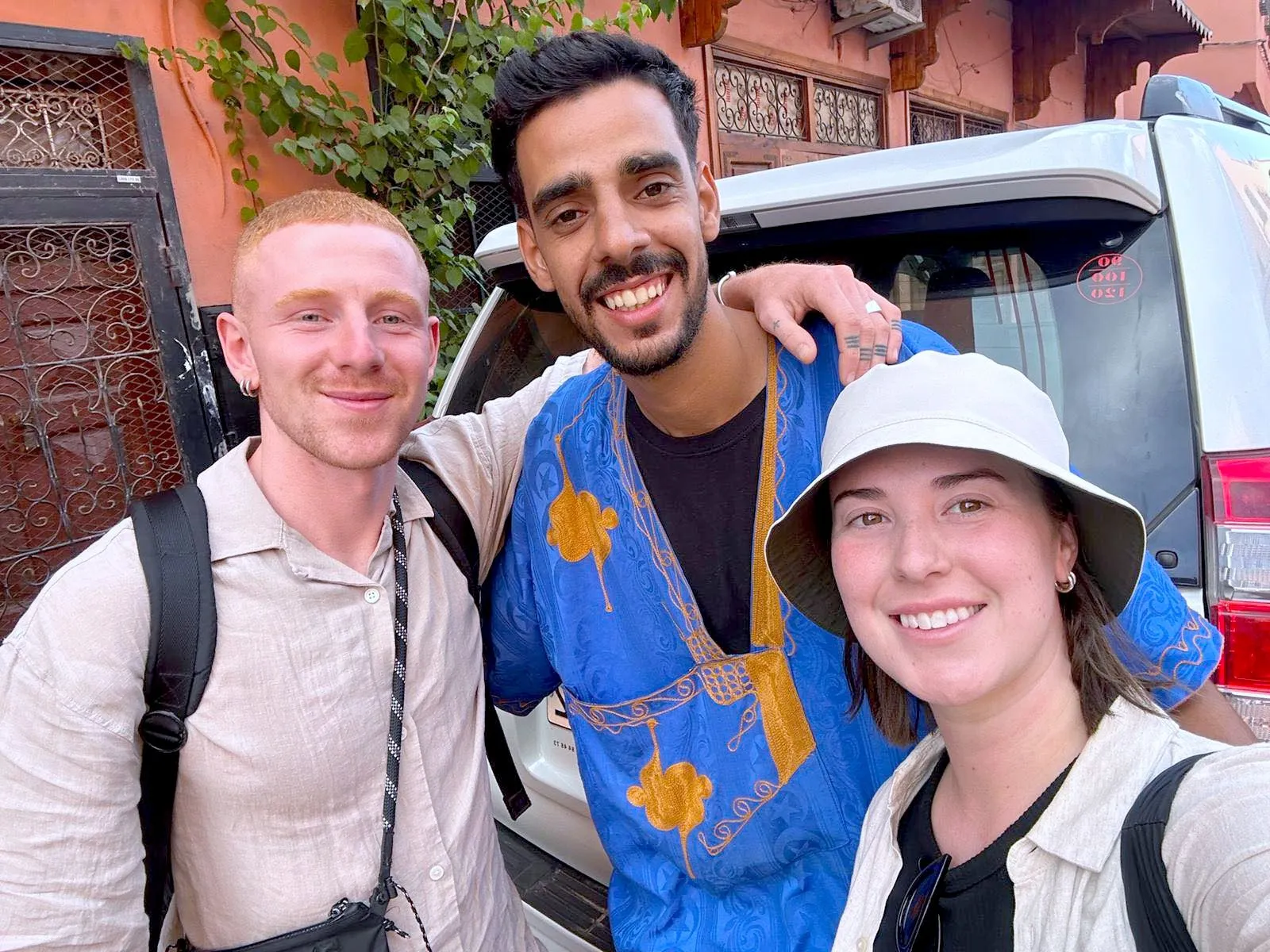
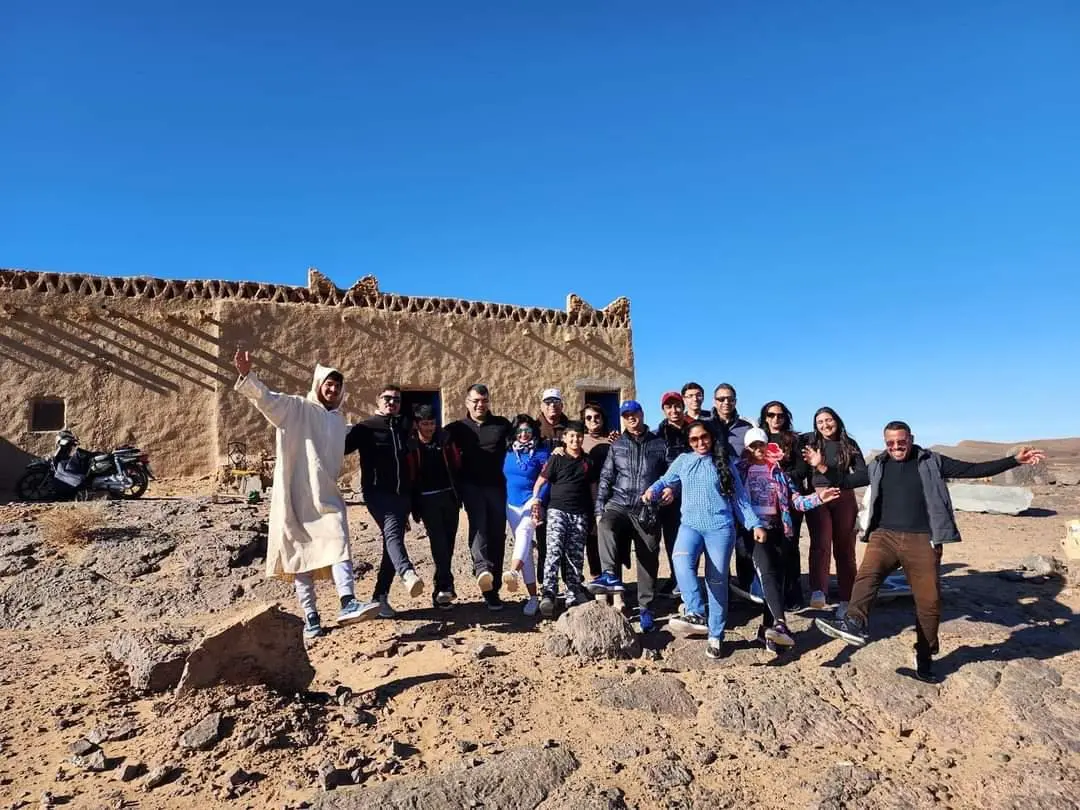
- Frequently asked questions about the 4 day Marrakech to Fes desert tour
It's private. You and anyone traveling with you are the only guests in the vehicle, with the same driver-guide for all four days.
The Erg Chebbi camel trek isn't difficult for most people. The ride out to camp takes under an hour, a handler leads the camels, and you don't need any riding experience. The first ten minutes can feel strange, but most people settle in fast.
Layers. Days in the Sahara run warm, sometimes hot, but the temperature drops fast after sunset, especially between November and February. A scarf or shawl also helps with sun and blowing sand during the day.
Many Morocco desert tours run the same route in both directions, so a Fes to Marrakech version may be available too. It's worth asking about when you book if that fits your flights better.
Correct. Breakfast and dinner are covered each day, but lunch is on you. This is fairly standard for desert tour Morocco itineraries, since it leaves you free to eat where you want rather than where the schedule says.
Only the first few hours overlap. A lot of day trips visit the Ait Ben Haddou UNESCO site and Ouarzazate, then turn back the same afternoon. This tour uses that as a starting point, then keeps going into the desert and on to Fes.
The tour arranges accommodation for all three nights, including the desert camp, so there's nothing extra for you to book.
If your dates line up with it, yes. The Valley of Roses festival in Kalaat M'Gouna runs every May and adds something extra to a day that's already full of scenery. The rest of the year, the tour runs exactly the same, minus the flowers.
Have Any Question?
- +212607747056
- contact@limitlessmoroccotours.com
Traveler Reviews & Experiences With Limitless Morocco Tours
Discover what our guests say about their private Morocco tours, desert adventures, and unforgettable travel experiences with our local guides.
We had an amazing 4-day tour from Marrakech to Fes with Limitless Morocco Tours. Our driver, Mohamed, was very kind, friendly, and professional. The trip through the Sahara Desert was the best part of our visit to Morocco. Everything was well organized, and we couldn't have asked for a better experience.
Oxford, United Kingdom
We had a wonderful experience with the Limitless Morocco Team. Communication was flawless — polite, clear, and friendly. We booked a 4-day trip from Marrakech to the Sahara Desert by private vehicle, including a 4x4 desert excursion. We always felt safe and well looked after.
Cali, Colombia
Our 9-day journey with Limitless Morocco Tours was truly unforgettable. Hssain, our driver, made the whole experience smooth and enjoyable. We explored vibrant cities, crossed both the Mid and High Atlas Mountains, and enjoyed a magical night in the desert after a camel ride.
- 4-day Casablanca to Marrakech desert tour
- 5-day Morocco tour from Casablanca
- 7-day Sahara desert tour from Casablanca
- 8-day imperial cities tour from Casablanca
- 10-day Morocco tour from Casablanca
- 10-day Imperial cities Tours from Casablanca
- 12-day grand Morocco adventure tour
- 14-day Morocco tour from Casablanca
- 3 Days Tour Marrakech To Merzouga Desert
- 3 Day Marrakech to Fes Desert Tour via Merzouga & Erg Chebbi
- 4 Day Sahara Desert Tour from Marrakech
- 4 Day Marrakech to Fes Desert Tour with Camel Trek & Sahara Experience
- 5-day Marrakech to Fes desert tour
- 6 day Morocco desert tour from Marrakech
- 7-day imperial cities tour Marrakech
Anna Marziano
Palermo, Italy