- Home
- TOURS
- TOURS FROM MARRAKECH
- 3 days Marrakech desert tour to Merzouga
- 3 day Marrakech to Fes desert tour
- 4 Day Sahara Desert Tour from Marrakech to Merzouga
- 4 Day Marrakech to Fes Desert Tour – Explore Morocco in the Sahara
- 5-day Marrakech to Fes desert tour
- 6 day Morocco desert tour from marrakech
- 7-day imperial cities tour Marrakech
- TOURS FROM CASABLANCA
- 4-day Casablanca to Marrakech desert tour
- 5-day Morocco tour from Casablanca
- 7-day Sahara desert tour from Casablanca
- 8-day imperial cities tour from Casablanca
- 10-day Morocco tour from Casablanca
- 10-day imperial cities tour from Casablanca
- 12-day grand Morocco adventure tour
- 14-day Morocco tour from Casablanca
- TOURS FROM TANGIER
- TOURS FROM FES
- TOURS FROM MARRAKECH
- About
- Gallery
- Contact
- Blog
10-day imperial cities tour from Casablanca
10-day imperial cities tour from Casablanca
- Casablanca
Duration
10 Days / 9 Nights
Tour Type
Private tour
Group Size
4 People
Languages
English, French,
- Overview
his 10-day imperial cities tour from Casablanca runs a full loop through Morocco: the four imperial capitals, the blue town of Chefchaouen, the Sahara dunes near Merzouga, and the valleys and passes of the High Atlas before finishing in Marrakech.
The first five days work as a complete Casablanca to Fes and Chefchaouen tour on their own, tracing the Rif Mountains up to Tangier before turning back down through Meknes and into Fes. That’s really the core of the Morocco northern cities itinerary: a different landscape and a slower pace than the coastal cities further south.
From Fes, the route climbs over the Middle Atlas cedar forests, drops through the Ziz Valley, and reaches the dunes of Erg Chebbi for a night of camel trekking and camping under a genuinely dark sky.
The road back runs through Todra Gorges, the Dades Valley, and Ait Ben Haddou before crossing the Tizi n’Tichka pass into Marrakech, with an optional extra day on the coast at Essaouira.
Ten days is enough time to actually settle into each place instead of just passing through it. Riads take over from hotels once the route reaches the older medinas, and there’s room in the schedule to sit in a cafe, get lost in a souk, or just slow down for an hour.
Between the medersas of Fes, the Roman ruins at Volubilis, and the kasbahs further south, this trip leans hard into historic cities exploration, balanced against enough open desert to make the contrast worth it.
If what you’re after is a genuine cultural tour of Morocco with a proper night in the Sahara built in, this itinerary is put together with exactly that in mind.
- Itinerary
3 Days /2 Night
Most flights land in Casablanca, so day one starts there. The afternoon is built around the Hassan II Mosque, finished in 1993, one of the few mosques in Morocco that non-Muslim visitors can enter on a guided tour. Part of it sits out over the Atlantic on reclaimed land, and the minaret is among the tallest in the world at 210 meters. From there it's a short walk through the old Medina and along the Corniche, where families walk the seafront in the evening and the cafes fill up around sunset. Overnight in Casablanca.
The drive from Casablanca to Rabat takes about an hour, and the morning goes to Morocco's political capital: the Kasbah of the Udayas above the river mouth, the unfinished Hassan Tower, and the Mausoleum of Mohammed V beside it. After lunch, the route turns north into the Rif Mountains toward Chefchaouen, roughly four hours through pine forest and small farming towns. This is really where the Morocco northern cities itinerary begins in earnest, since the landscape and the pace both shift once you're past Rabat. Overnight in Chefchaouen.
Chefchaouen was founded in 1471, and the blue paint on the buildings is a newer habit. One story traces it to Jewish refugees who settled here in the 1930s and associated the color with the sky and with faith, though nobody agrees on exactly when the tradition started. The morning is free to wander the medina at your own pace, up toward the Spanish Mosque on the hill for a view over the rooftops, or out to the Akchour waterfalls if there's time for a short hike. After lunch, the drive to Tangier runs through Tetouan and along the coast, arriving with enough daylight left for a walk through the Kasbah and a look at the old American Legation building, a 19th-century diplomatic property gifted by the Sultan and now a small museum. Overnight in Tangier.
This is mostly a travel day, but Tangier deserves a slow start before the drive. The Cape Spartel lighthouse marks the point where the Atlantic meets the Mediterranean, and the nearby Caves of Hercules have an opening cut into the rock that's often described as shaped like a map of Africa. By late morning, the road turns south toward Meknes, roughly four and a half hours with a stop or two along the way. Meknes became Morocco's imperial capital under Sultan Moulay Ismail in the late 1600s, and tomorrow is spent there and at the Roman ruins nearby. Overnight in Meknes.
Volubilis sits about half an hour outside Meknes, a Roman city that was gradually abandoned by around the 11th century after well over a thousand years of habitation. Large sections of mosaic floor are still in place under open sky, along with the Triumphal Arch and the columns of the old basilica. Back in Meknes, the afternoon covers Bab Mansour, the city's grand gate finished in 1732, and the Heri es-Souani granaries, built under Moulay Ismail to store enough grain to last for years. From there it's about an hour to Fes, where the next two nights are spent.
Fes gets a full day because it needs one. The University of Al Qarawiyyin, founded in 859 by Fatima al-Fihri, is recognized by UNESCO and Guinness World Records as the oldest continuously operating educational institution in the world, and its historic library reopened to the public in 2016 after a long restoration. The Chouara Tannery is best seen from one of the leather shop terraces above it, where the dye pits sit in rows like a giant paint palette. Fes el Bali, the old medina, has an estimated 9,000 narrow streets and no cars, so donkeys and handcarts still do the heavy lifting. This is where the historic cities exploration side of the trip is at its most concentrated, and it's worth getting a little lost in before dinner. This also wraps up the Casablanca to Fes and Chefchaouen tour portion of the route. From here, the trip turns toward the desert.
The drive from Fes to Merzouga takes most of the day, but it's a good one to be in the car for. Ifrane looks more like an Alpine village than anywhere else in Morocco, with steep roofs built for snow that barely make sense until you remember the town sits at over 1,600 meters. Just past it, the Cedar Forest around Azrou is home to wild Barbary macaques that wander right up to the road looking for food. The route continues down through Midelt and the Ziz Valley, where palm groves trace the river in a long green line against dry, bare hills, before reaching the dunes of Erg Chebbi in time to watch the color change at sunset. The evening is a camel trek out to a desert camp, dinner, and music around the fire under a sky with a lot more stars than most people are used to seeing.
Sunrise over Erg Chebbi is worth the early start. Camel treks usually head back to camp while the light is still soft and orange, before breakfast and a shower back at the riad in Merzouga. From there, the drive heads toward Tinghir and the Todra Gorges, where the canyon narrows to about ten meters across in places with rock walls rising more than 150 meters straight up. It's a popular spot for rock climbers, and it's easy to see why once you're standing at the bottom looking up. The road continues through the Dades Valley, sometimes called the Valley of a Thousand Kasbahs, past a set of eroded rock formations locals call the monkey fingers, before reaching Ouarzazate for the night.
Ait Ben Haddou is a fortified village of packed red earth that's been used as a filming location so often it's easier to list the productions that skipped it than the ones that used it. Lawrence of Arabia, Gladiator, and parts of Game of Thrones were all shot here at different points. Only a handful of families still live inside the old walls today, and the site has been a UNESCO World Heritage Site since 1987. After a couple of hours there, the road climbs into the High Atlas and over the Tizi n'Tichka pass, the highest paved mountain pass in Morocco at just over 2,260 meters, before dropping down into Marrakech by late afternoon.
The last morning is spent in the Marrakech medina: the Bahia Palace, built for a 19th-century grand vizier and full of carved cedar ceilings and painted stucco, the Saadian Tombs, sealed off and forgotten for more than two centuries until they were rediscovered in 1917, and the Koutoubia Mosque, whose minaret is often linked architecturally to the Giralda in Seville. The Majorelle Garden, planted by the French painter Jacques Majorelle in the 1920s and later restored by Yves Saint Laurent, is worth an hour if time allows before lunch. From here, travelers flying home can be transferred straight to Marrakech airport, and those with an extra day can continue to the coast at Essaouira, about two and a half hours away, for fishing boats, sea air, and one slower final night, a fitting close to a cultural tour of Morocco that started on the Atlantic coast in Casablanca and ends at the foot of the Atlas Mountains.
- Included & Excluded
- Round-trip pickup and drop-off at your accommodation in Marrakech
- Private transport in an air-conditioned vehicle
- A professional driver, plus tour support if arranged
- Nine nights of accommodation: a hotel or riad in Dades, and the desert camp
- Breakfast and dinner each day, as listed in the itinerary
- The camel trek to and from camp, timed around sunset when the schedule allows
- Lunch and beverages
- Tips
- Personal spending money
- Optional extra activities, where available
- Tours Location
- 10-day imperial cities tour from Casablanca
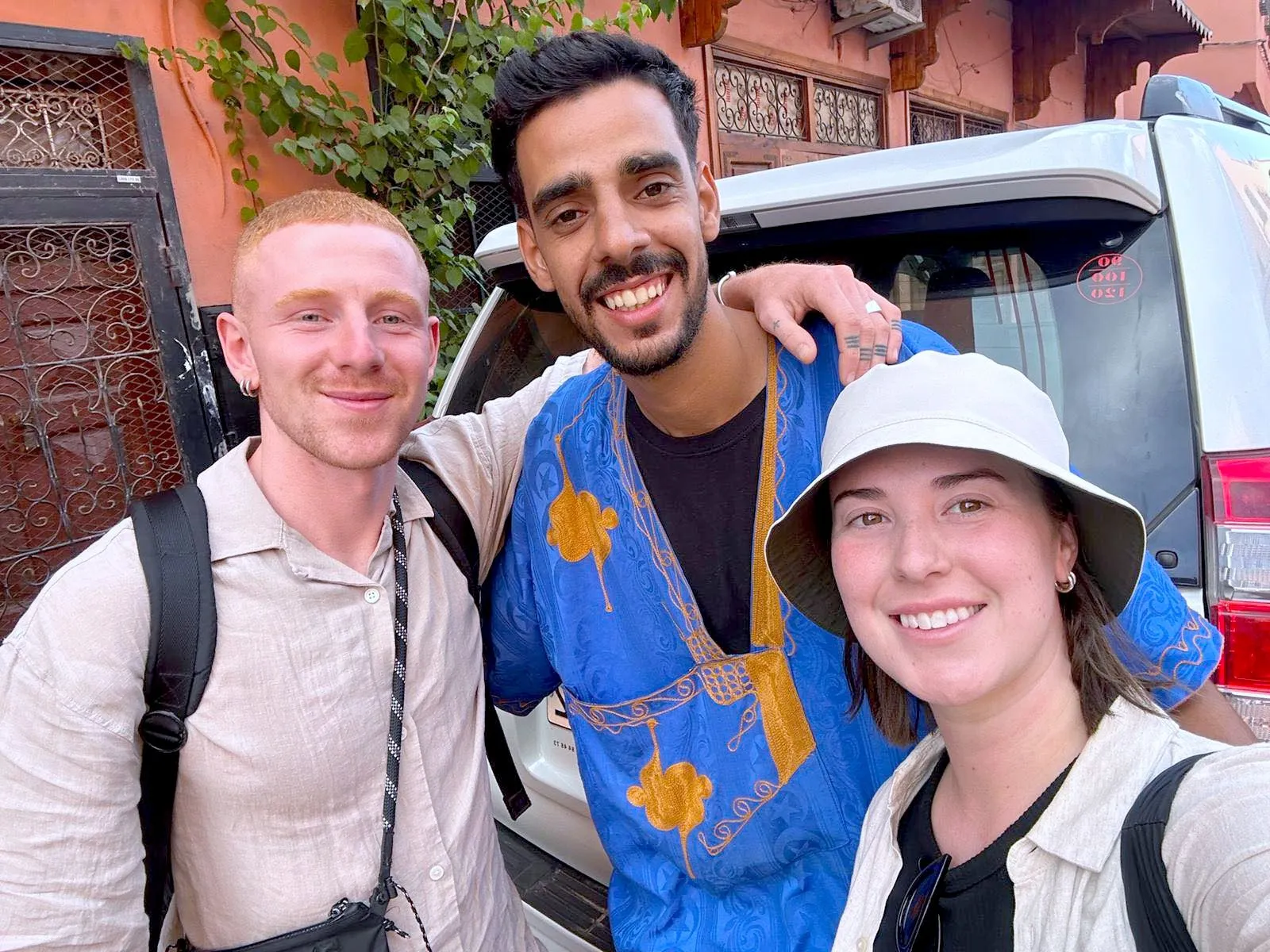
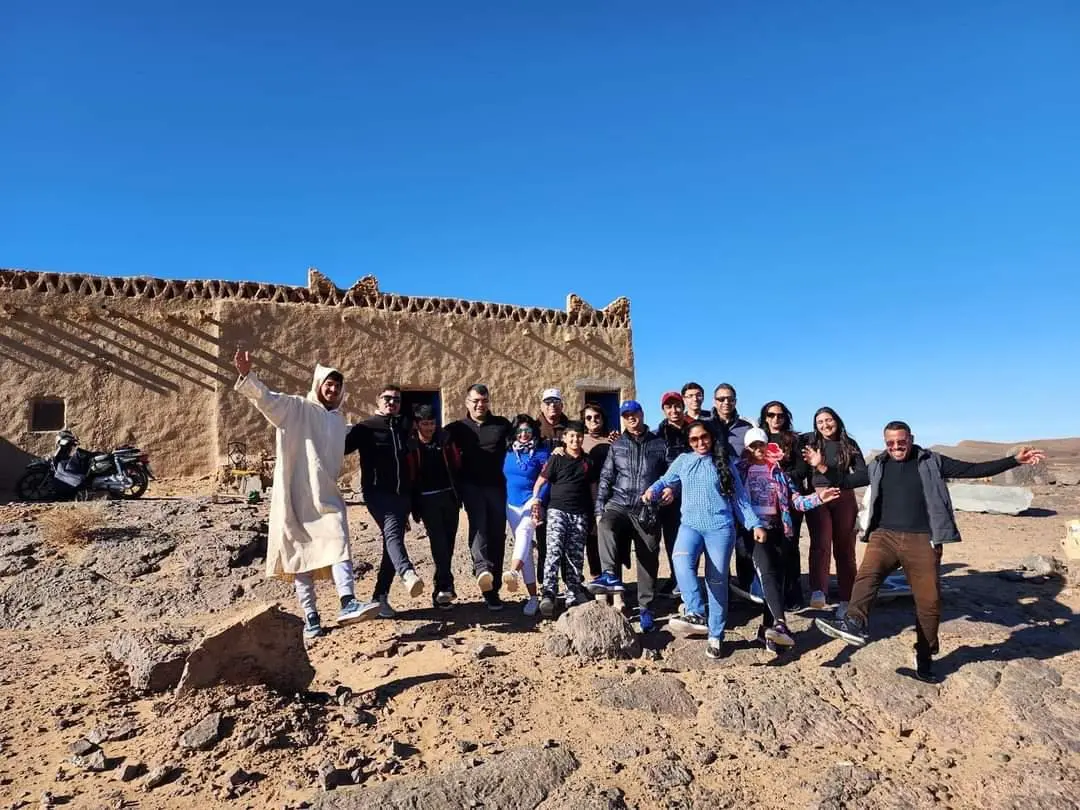
- Photos
- 10-day imperial cities tour from Casablanca
- FAQs
- 10-day imperial cities tour from Casablanca
Nine nights of accommodation, breakfast each day, a private driver-guide and vehicle for the whole route, the camel trek, and one night at a desert camp near Merzouga are all included. Flights, most lunches and dinners, entry tickets, and tips are not. The full list is above.
The tour starts in Casablanca and finishes in Marrakech on day ten, with an optional extra day added on for a slower finish on the coast at Essaouira. Pickup and drop-off points can usually be adjusted if you're flying in or out somewhere else.
Yes. The first five days, covering Casablanca, Rabat, Chefchaouen, Tangier, Meknes, and Fes, work fine as a shorter trip on their own if ten days doesn't fit your schedule or the desert leg doesn't interest you. Ask about a five-day or six-day version if that fits better.
March to May and September to November are the most comfortable months, with mild weather in the cities and manageable heat in the desert. Summer gets very hot around Merzouga, and desert and mountain nights in winter can drop close to freezing, so pack layers whichever season you travel in.
More than most people expect, and mostly on uneven, cobbled ground. Medinas are pedestrian only, so a day in Fes usually means several hours on foot with some gentle hills. Comfortable, broken-in shoes matter more than general fitness for most travelers on this tour.
Passport holders from the US, Canada, the UK, most of the EU, and Australia can usually enter Morocco visa-free for stays of up to 90 days. Requirements vary by nationality and do change, so it's worth checking with the nearest Moroccan consulate before you book flights.
Riads (traditional courtyard houses) in Chefchaouen, Fes, and Marrakech, standard hotels in Casablanca, Rabat, Tangier, and Meknes, and a fixed desert camp near Merzouga with real beds rather than basic tents.
Both. It's a private tour, so the pace can be adjusted around your group, and solo travelers aren't paying the steep single-room surcharge that comes with a fixed-departure group tour. Families with young kids should know the camel trek is short and easy to skip.
A warm layer for after sunset, since desert nights get cold even after a hot day, a scarf or buff for wind and blowing sand, sunglasses, and shoes that won't fill up with sand on the camel trek. Sandals usually work better than trainers for that last part.
Yes, the same route works well backward, starting in Marrakech and finishing in Casablanca. It helps to mention your preferred arrival and departure city when booking, so the driver-guide and accommodation can be arranged in the right order.
Have Any Question?
- +212607747056
- contact@limitlessmoroccotours.com
Traveler Reviews & Experiences With Limitless Morocco Tours
Discover what our guests say about their private Morocco tours, desert adventures, and unforgettable travel experiences with our local guides.
We had an amazing 4-day tour from Marrakech to Fes with Limitless Morocco Tours. Our driver, Mohamed, was very kind, friendly, and professional. The trip through the Sahara Desert was the best part of our visit to Morocco. Everything was well organized, and we couldn't have asked for a better experience.
Oxford, United Kingdom
We had a wonderful experience with the Limitless Morocco Team. Communication was flawless — polite, clear, and friendly. We booked a 4-day trip from Marrakech to the Sahara Desert by private vehicle, including a 4x4 desert excursion. We always felt safe and well looked after.
Cali, Colombia
Our 9-day journey with Limitless Morocco Tours was truly unforgettable. Hssain, our driver, made the whole experience smooth and enjoyable. We explored vibrant cities, crossed both the Mid and High Atlas Mountains, and enjoyed a magical night in the desert after a camel ride.
- 4-day Casablanca to Marrakech desert tour
- 5-day Morocco tour from Casablanca
- 7-day Sahara desert tour from Casablanca
- 8-day imperial cities tour from Casablanca
- 10-day Morocco tour from Casablanca
- 10-day Imperial cities Tours from Casablanca
- 12-day grand Morocco adventure tour
- 14-day Morocco tour from Casablanca
- 3 Days Tour Marrakech To Merzouga Desert
- 3 Day Marrakech to Fes Desert Tour via Merzouga & Erg Chebbi
- 4 Day Sahara Desert Tour from Marrakech
- 4 Day Marrakech to Fes Desert Tour with Camel Trek & Sahara Experience
- 5-day Marrakech to Fes desert tour
- 6 day Morocco desert tour from Marrakech
- 7-day imperial cities tour Marrakech
Anna Marziano
Palermo, Italy