- Home
- TOURS
- TOURS FROM MARRAKECH
- 3 days Marrakech desert tour to Merzouga
- 3 day Marrakech to Fes desert tour
- 4 Day Sahara Desert Tour from Marrakech to Merzouga
- 4 Day Marrakech to Fes Desert Tour – Explore Morocco in the Sahara
- 5-day Marrakech to Fes desert tour
- 6 day Morocco desert tour from marrakech
- 7-day imperial cities tour Marrakech
- TOURS FROM CASABLANCA
- 4-day Casablanca to Marrakech desert tour
- 5-day Morocco tour from Casablanca
- 7-day Sahara desert tour from Casablanca
- 8-day imperial cities tour from Casablanca
- 10-day Morocco tour from Casablanca
- 10-day imperial cities tour from Casablanca
- 12-day grand Morocco adventure tour
- 14-day Morocco tour from Casablanca
- TOURS FROM TANGIER
- TOURS FROM FES
- TOURS FROM MARRAKECH
- About
- Gallery
- Contact
- Blog
4-Day Fes to Marrakech Desert Tour
4-Day Fes to Marrakech Desert Tour
- Fes
Duration
4 Days / 3 Nights
Tour Type
Private tour
Group Size
4 People
Languages
English, French,
- Overview
Going from Fes to Marrakech via Sahara turns a six-hour highway drive into a four-day trip through the Middle Atlas, the Ziz valley, the dunes of Erg Chebbi, and the kasbah road near Ouarzazate. It’s the standard route for anyone who wants a proper desert adventure from Fes instead of just connecting two cities, and it works well if you’re finishing your trip in Marrakech rather than flying back out of Fes. Along the way you get a night in Merzouga, a camel ride into the dunes at sunset, a night camping in the Sahara, and a day of kasbahs and gorges before arriving in Marrakech. Here’s the full route, day by day, followed by what’s covered in the price and a few questions people usually ask before booking.
- Fes to Marrakech desert itinerary
4 Days /3 Night
The drive out of Fes covers roughly 560 km, and with stops it takes about nine hours to reach Merzouga. The road climbs first into the Middle Atlas through Ifrane, a town built in a European mountain style during the French protectorate era, which is why it looks so different from anywhere else in Morocco. Past Azrou the road runs through cedar forest, and this is usually where drivers stop, since Barbary macaques come down close to the road looking for food.
South of the cedars, the route drops onto drier ground and picks up the Ziz river, following it through a canyon before opening into the Ziz valley, a long stretch of date palms squeezed between rock walls. A handful of old kasbahs are still standing along here, mostly abandoned but visible from the road. As the palms thin out past Erfoud, the first dunes of Erg Chebbi appear on the horizon.
You'll reach your riad on the edge of Merzouga by early evening, usually with a glass of mint tea waiting. The night here is free to rest up before the desert stretch of the trip begins.
After breakfast, the first stop is Khamlia, a small village settled generations ago by families who arrived along the old trans-Saharan trade routes. A few households here still play Gnawa music in the evenings, built around iron castanets and a deep, three-stringed lute called a guembri.
Next is Dayet Srji, a seasonal salt lake west of Merzouga. It's often dry in summer, but after enough rain it fills up and draws flamingos and other migratory birds, so whether you see any water at all really depends on the season. From there the tour continues to Rissani, once the capital of the Tafilalt region and the birthplace of the ruling Alaouite dynasty. Its souk sells less to tourists than the ones in Fes or Marrakech, which makes it a decent spot for dates, silver, or spices at closer to local prices.
Late afternoon is when the Erg Chebbi camel ride starts. Camels are led out toward the tallest dunes in the erg, some of which rise past 150 meters, on a ride that takes about ninety minutes and is timed to reach camp as the sun goes down. Camps range in comfort. Some have private tents with proper beds and an attached bathroom, others are more basic with shared facilities, so it's worth checking which setup comes with your booking. Dinner is usually served around a fire, with camp staff playing drums afterward.
Most groups get up before dawn to watch the sunrise from the dunes, then head back to Merzouga for breakfast and to collect the rest of the group's luggage. From there the road runs north toward Tinghir and Todra Gorge, where limestone walls climb up to 300 meters on either side of a narrow river channel. It's a popular stop for rock climbers, and even a short walk into the gorge gives a sense of the scale.
Past Tinghir the road follows the Dades valley, sometimes called the road of a thousand kasbahs for the sheer number of old fortified villages built into the hillsides. The rock formations here are known locally as monkey fingers, an eroded pattern in the cliff face that's hard to miss once it's pointed out. The night is spent at a kasbah or riad in the Dades area, with most places offering a terrace looking over the valley.
The last day starts with a stop in Kelaat M'Gouna, the center of Morocco's rose oil industry and host to a rose festival each May when the harvest comes in. From there the road continues to Ouarzazate, known locally as Ouallywood because of the film studios on its outskirts that have hosted productions from Gladiator to Game of Thrones. Kasbah Taourirt, once the seat of the Glaoui family who controlled the region for much of the 20th century, is usually the stop here.
About half an hour further is Ait Ben Haddou, a fortified ksar on the old caravan route between the Sahara and Marrakech and a UNESCO World Heritage site since 1987. Its clay towers are the reason it keeps showing up in films shot in Morocco. After that, the road climbs the Tizi n'Tichka pass, the highest paved mountain pass in the Atlas at just over 2,260 meters, before dropping down into Marrakech. Most tours end at your riad or hotel, leaving enough daylight to walk over to Jemaa el-Fna before dinner.
- Included & Excluded
- Round-trip pickup and drop-off at your accommodation in Marrakech
- Private transport in an air-conditioned vehicle
- A professional driver, plus tour support if arranged
- Three nights of accommodation: a hotel or riad in Dades, and the desert camp
- Breakfast and dinner each day, as listed in the itinerary
- The camel trek to and from camp, timed around sunset when the schedule allows
- Lunch and beverages
- Tips
- Personal spending money
- Optional extra activities, where available
- Tours Location
- 4-Day Fes to Marrakech Desert Tour
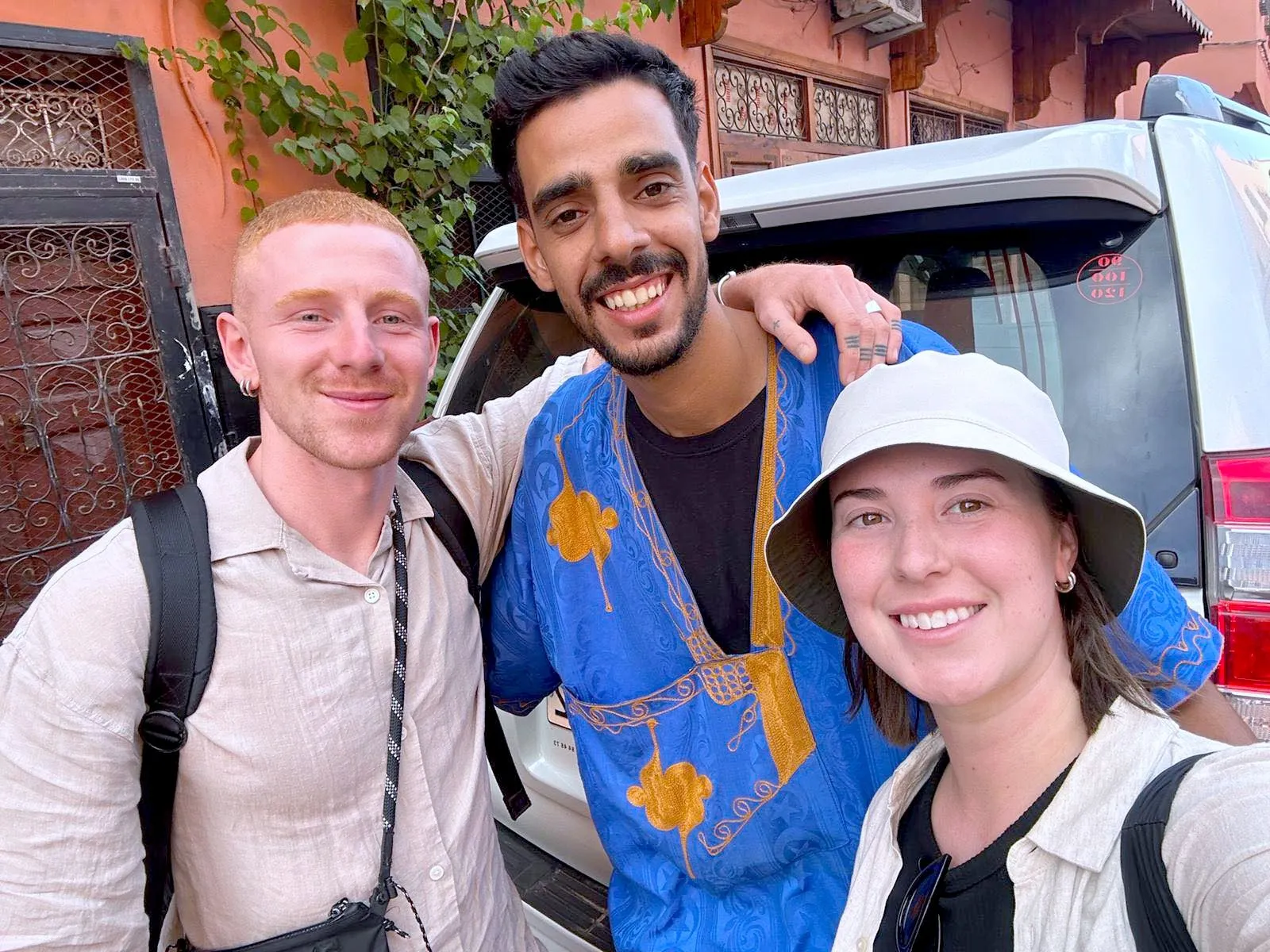
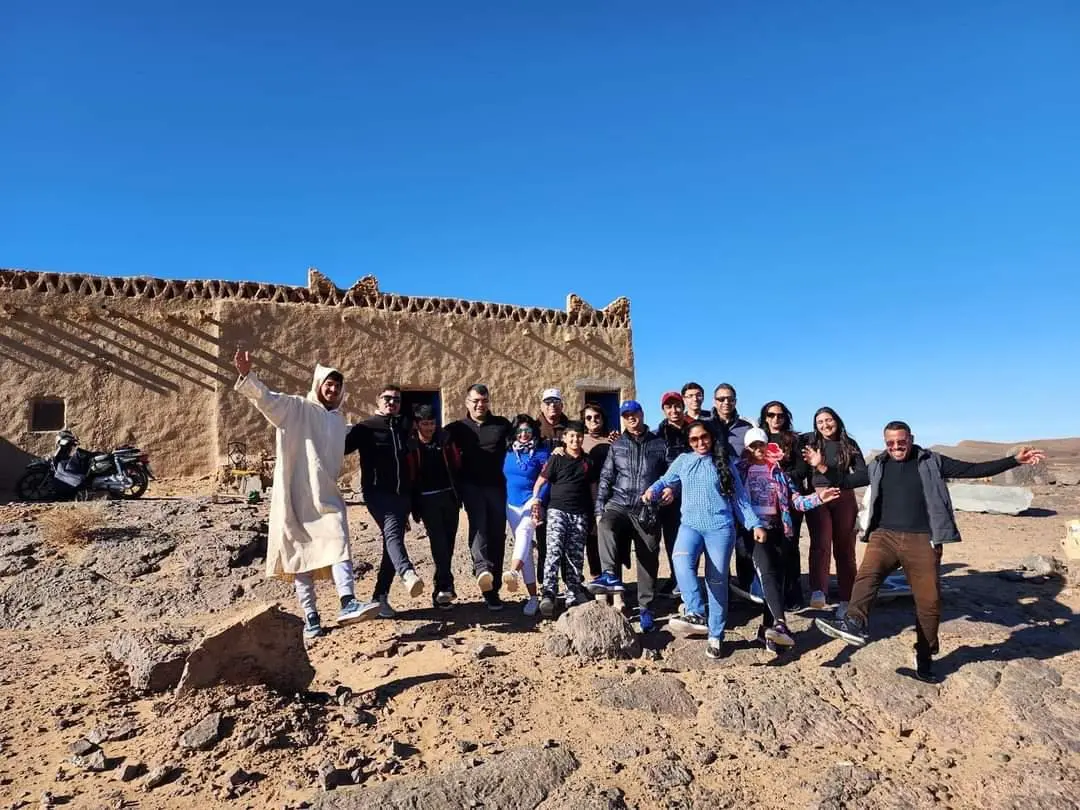
- Photos
- 4-Day Fes to Marrakech Desert Tour
- FAQs
- 4-Day Fes to Marrakech Desert Tour
Most operators run this as a private tour with your own driver and vehicle, though some offer a shared version with a small group to bring the cost down. Worth confirming which one you're booking, since the pace and stops can differ.
The ride to camp is about ninety minutes at a walking pace, sitting rather than riding actively, so it's manageable for most ages. If someone in your group would rather not ride, a 4x4 transfer to camp is usually available instead.
Spring (March to May) and autumn (September to November) are the most comfortable, with mild days and cool desert nights. Summer can hit well over 40°C in Merzouga by midday, and winter nights in the desert drop close to freezing, so pack layers either way.
It depends on the camp. Standard camps usually have shared toilets and showers a short walk from the tents, while upgraded camps offer private tents. Ask before booking if this matters to you.
Yes, the same route runs both directions, and the stops stay the same. Some travelers prefer starting in Marrakech since it means finishing in Fes if that's where their flight home leaves from.
Signal is patchy in Merzouga and generally drops out completely once you're at the camp itself. A few upgraded camps have wifi near the main tent, but it's not something to count on for the night.
Yes, for tips, drinks, and any souvenirs along the way. Card machines are rare outside Fes and Marrakech, and ATMs are limited once you're past Erfoud, so it's best to withdraw what you'll need before leaving the cities.
Have Any Question?
- +212607747056
- contact@limitlessmoroccotours.com
Traveler Reviews & Experiences With Limitless Morocco Tours
Discover what our guests say about their private Morocco tours, desert adventures, and unforgettable travel experiences with our local guides.
We had an amazing 4-day tour from Marrakech to Fes with Limitless Morocco Tours. Our driver, Mohamed, was very kind, friendly, and professional. The trip through the Sahara Desert was the best part of our visit to Morocco. Everything was well organized, and we couldn't have asked for a better experience.
Oxford, United Kingdom
We had a wonderful experience with the Limitless Morocco Team. Communication was flawless — polite, clear, and friendly. We booked a 4-day trip from Marrakech to the Sahara Desert by private vehicle, including a 4x4 desert excursion. We always felt safe and well looked after.
Cali, Colombia
Our 9-day journey with Limitless Morocco Tours was truly unforgettable. Hssain, our driver, made the whole experience smooth and enjoyable. We explored vibrant cities, crossed both the Mid and High Atlas Mountains, and enjoyed a magical night in the desert after a camel ride.
- 4-day Casablanca to Marrakech desert tour
- 5-day Morocco tour from Casablanca
- 7-day Sahara desert tour from Casablanca
- 8-day imperial cities tour from Casablanca
- 10-day Morocco tour from Casablanca
- 10-day Imperial cities Tours from Casablanca
- 12-day grand Morocco adventure tour
- 14-day Morocco tour from Casablanca
- 3 Days Tour Marrakech To Merzouga Desert
- 3 Day Marrakech to Fes Desert Tour via Merzouga & Erg Chebbi
- 4 Day Sahara Desert Tour from Marrakech
- 4 Day Marrakech to Fes Desert Tour with Camel Trek & Sahara Experience
- 5-day Marrakech to Fes desert tour
- 6 day Morocco desert tour from Marrakech
- 7-day imperial cities tour Marrakech
Anna Marziano
Palermo, Italy