- Home
- TOURS
- TOURS FROM MARRAKECH
- 3 days Marrakech desert tour to Merzouga
- 3 day Marrakech to Fes desert tour
- 4 Day Sahara Desert Tour from Marrakech to Merzouga
- 4 Day Marrakech to Fes Desert Tour – Explore Morocco in the Sahara
- 5-day Marrakech to Fes desert tour
- 6 day Morocco desert tour from marrakech
- 7-day imperial cities tour Marrakech
- TOURS FROM CASABLANCA
- 4-day Casablanca to Marrakech desert tour
- 5-day Morocco tour from Casablanca
- 7-day Sahara desert tour from Casablanca
- 8-day imperial cities tour from Casablanca
- 10-day Morocco tour from Casablanca
- 10-day imperial cities tour from Casablanca
- 12-day grand Morocco adventure tour
- 14-day Morocco tour from Casablanca
- TOURS FROM TANGIER
- TOURS FROM FES
- TOURS FROM MARRAKECH
- About
- Gallery
- Contact
- Blog
14-Day Morocco Tour from Casablanca
14-Day Morocco Tour from Casablanca
- Casablanca
Duration
14 Days / 13 Nights
Tour Type
Private tour
Group Size
4 People
Languages
English, French,
- Overview
This 14-day Morocco tour from Casablanca is built as a full loop south to the Sahara and back north through the imperial cities and the Rif Mountains, rather than the more common route that heads north first. As a Casablanca to Sahara desert tour, it actually reaches two different desert regions, the remote dunes of Erg Chegaga near M’Hamid and the taller, better-known dunes of Erg Chebbi near Merzouga, which most two-week itineraries don’t attempt in one trip.
Between the two deserts, the route also covers Marrakech, Ouarzazate, the Draa Valley, the Dades Valley, a mountain crossing near Imilchil, Fes, Meknes, Volubilis, Chefchaouen, and the northern coast through Tangier and Asilah before finishing back in Casablanca. It’s a private tour throughout, and it works well as a comprehensive Morocco travel plan for anyone who’d rather see the country properly once than rush through it on a shorter trip.
- Itinerary
3 Days /2 Night
Your driver meets you at the airport or your hotel in Casablanca. Rather than starting in Rabat, this route heads straight south, so after a short stop to see the outside of Hassan II Mosque, one of the largest mosques in the world and one of the few in Morocco open to non-Muslim visitors on guided tours, you continue on to Marrakech. Overnight in Marrakech.
A local guide takes you through the city's main sights, including the Koutoubia Mosque, the Bahia Palace with its carved cedar ceilings, and the Saadian Tombs, sealed for centuries before their rediscovery in 1917. Depending on your plan, there may also be time at the Majorelle Garden. In the afternoon, you're free to explore the souks and Jemaa el Fna at your own pace, or keep your guide for a longer walk through the different craft quarters. Overnight in Marrakech.
After breakfast, the road climbs over the High Atlas through the Tizi n'Tichka Pass, one of the highest paved roads in the country, with switchbacks, roadside mineral stalls, and small Berber villages along the way. On the other side, Ait Ben Haddou is one of Morocco's best-known ksour, a fortified village built from earth and clay and listed as a UNESCO World Heritage Site. From there, it's a short drive to Ouarzazate, where you'll spend the night.
Today the route turns south along the Draa Valley, Morocco's longest river valley, through Agdz and its palm groves toward Zagora. Zagora still carries its old reputation as a caravan town, where routes once left for Timbuktu, and the drive down gives a good look at how the Draa's palmeries and mud-brick villages have farmed dates here for generations. Overnight in Zagora.
After breakfast, continue south to M'Hamid, the last real town before the open desert. From there, a 4x4 transfer takes you across open desert tracks to Erg Chegaga, a larger and far less visited dune field than Merzouga's, with ridges that can run over 40 kilometers without a road or settlement in sight. You'll reach camp in the late afternoon, with time to climb a nearby dune for sunset before dinner. Overnight at the desert camp.
Leaving the camp after breakfast, the 4x4 retraces the track back to Zagora, then the route continues east through Nkob, a small town known for old kasbahs and fossil trading, and Alnif, before reaching Rissani and its long-running market. This stretch of road is the connector most standard itineraries skip, since it links the Zagora desert route with Merzouga without backtracking through Ouarzazate. You'll arrive in Merzouga by early evening. Overnight in a riad in Merzouga.
Today shifts fully into desert mode again, this time at Erg Chebbi, Morocco's tallest dune field. There's time in the morning to visit Khamlia, a village known for its Gnawa musicians, before camels take you into the dunes in the late afternoon, timed so you arrive as the light turns from gold to a deep red. Dinner at camp is typically a tagine cooked over coals, with music around the fire afterward. Overnight at the desert camp.
Most people get up before sunrise to watch it from the dunes, then head back for breakfast before the drive resumes. The road to Tinghir passes through Erfoud and long stretches of palm groves before reaching Todra Gorge, a narrow canyon with rock walls rising 300 meters on either side. From Todra, the route continues to Dades Valley, known for unusual rock formations, old kasbahs, and small mountain villages. Overnight in Dades Valley.
Instead of heading back toward Ouarzazate, this Morocco cultural and natural exploration continues north into the High Atlas, through Msemrir and up toward Imilchil. The road narrows and climbs past small Amazigh villages, some still working fields with mules rather than tractors. Imilchil sits near two lakes, Isli and Tislit, tied to a local legend about two lovers from rival tribes kept apart, and every September the area hosts a large moussem where marriages are still arranged the traditional way. From there, the road drops down toward Midelt and apple country for the night.
The route north continues through Azrou, where a cedar forest along the road is one of the most reliable spots in the country to see Barbary macaques close to the roadside, then Ifrane, a town built in a French Alpine style in the 1930s. From Ifrane, it's a fairly short drive down into the plains toward Fes, where you'll spend the next two nights.
A local guide leads you through Fes el Bali, one of the oldest medinas still functioning as a working city. The day usually covers the Chouara Tannery, the Al Quaraouiyine mosque and university area, viewed from outside, the Nejjarine fountain, and a ceramics or woodwork workshop. There's also time in the souks, where different streets specialize in different trades. Overnight in Fes.
After breakfast, a short stop in Meknes takes in Bab Mansour, one of the most detailed imperial gates in the country, and the Mausoleum of Moulay Ismail. From Meknes, it's a quick drive to Volubilis, the largest Roman site in Morocco, with mosaic floors still in place after almost two thousand years. The road then climbs into the Rif Mountains toward Chefchaouen, where the blue-painted alleys are quieter once you're a few streets back from the main square. Overnight in Chefchaouen.
Leaving Chefchaouen, the drive to Tangier takes a couple of hours. If time allows, there's a stop at Cape Spartel and the Caves of Hercules before continuing along the coast to Asilah, a small town known for whitewashed walls covered in murals repainted each year for its arts festival. From Asilah, the route runs south to Rabat, the capital, where you'll spend the final night before Casablanca.
After breakfast, there's a short visit in Rabat, usually Hassan Tower and the Kasbah of the Udayas, before the drive back to Casablanca. Depending on your flight, there may be time for one more look at Hassan II Mosque before your driver takes you to the airport. This 14-day Morocco tour from Casablanca ends here, having covered two deserts, four imperial cities, the Atlas Mountains twice, and both the Rif and the Atlantic coast along the way.
- Included & Excluded
- Round-trip pickup and drop-off at your accommodation in Marrakech
- Private transport in an air-conditioned vehicle
- A professional driver, plus tour support if arranged
- twelve nights of accommodation: a hotel or riad in Dades, and the desert camp
- Breakfast and dinner each day, as listed in the itinerary
- The camel trek to and from camp, timed around sunset when the schedule allows
- Lunch and beverages
- Tips
- Personal spending money
- Optional extra activities, where available
- Tours Location
- 14-Day Morocco Tour from Casablanca
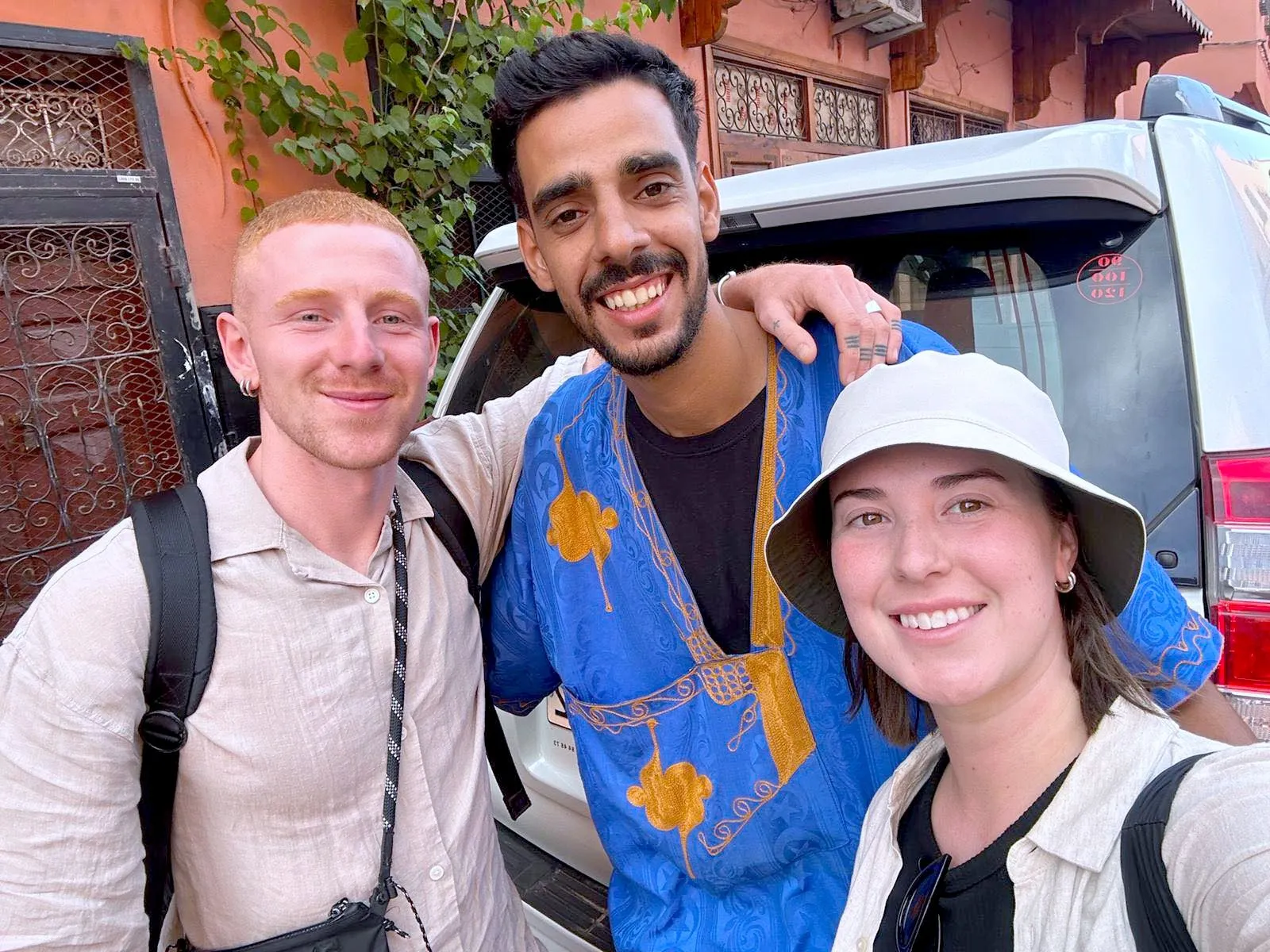
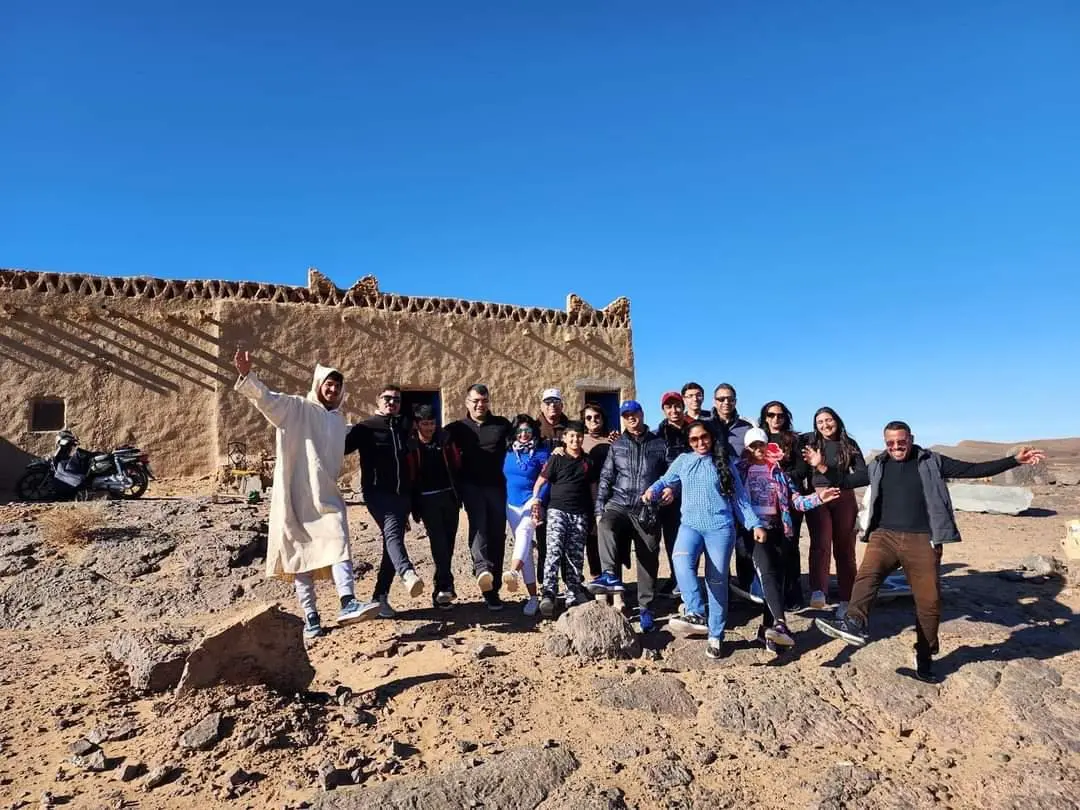
- Photos
- Casablanca to Sahara desert tour
- FAQs
- 14-Day Morocco Tour from Casablanca
Yes. Aside from the local guides added in Marrakech and Fes, it's just your group and your driver for the whole two-week Morocco itinerary, so the schedule can flex around you.
Most 14-day trips only reach Merzouga, but with two weeks there's enough time to add Erg Chegaga near M'Hamid as well, which is quieter, more remote, and reached by 4x4 rather than by paved road. If you'd rather keep the trip simpler, the Erg Chegaga leg can be dropped and those two days added elsewhere, in Marrakech or on the coast.
Not very. Most of the distance covered on this comprehensive Morocco travel plan happens from the vehicle, and the two camel treks are slow, around an hour each way. The main physical activity is walking through medinas on even stone streets, in Marrakech, Fes, and Chefchaouen in particular.
Spring and fall are the most comfortable overall, with mild days in the cities and manageable heat in both desert regions. Summer regularly passes 40°C in Merzouga and the Draa Valley during the day, while winter nights in the desert and in Imilchil's mountain crossing can get close to freezing, so pack layers regardless of the month.
Yes. Cutting the Erg Chegaga extension brings it down to roughly 11 or 12 days, and the northern coastal leg (Chefchaouen, Tangier, Asilah) can also be trimmed if time is tight, though that removes a fair part of what makes this different from a standard Casablanca to Sahara desert tour.
Mostly the amount of ground it covers without doubling back. A 14-day Morocco tour from Casablanca has room for two desert regions, four imperial cities, and both the Rif Mountains and the Atlantic coast, where a 7 or 8-day trip has to pick one or two of those and skip the rest. It's built as a comprehensive Morocco travel plan for travelers who'd rather do one long trip than come back twice.
Yes. Pickup at the start and a drop-off at the end are both part of this 14-day Morocco tour from Casablanca, along with every transfer between cities in between, so there's nothing extra to arrange on either end of the trip.
The two-week Morocco itinerary as written balances out well, but it's not fixed. Some travelers extend it to 16 days by adding Essaouira on the coast, while others compress it toward 12 by cutting the Erg Chegaga extension. Either way, the route is planned in blocks, so removing one region doesn't disrupt the rest.
Have Any Question?
- +212607747056
- contact@limitlessmoroccotours.com
Traveler Reviews & Experiences With Limitless Morocco Tours
Discover what our guests say about their private Morocco tours, desert adventures, and unforgettable travel experiences with our local guides.
We had an amazing 4-day tour from Marrakech to Fes with Limitless Morocco Tours. Our driver, Mohamed, was very kind, friendly, and professional. The trip through the Sahara Desert was the best part of our visit to Morocco. Everything was well organized, and we couldn't have asked for a better experience.
Oxford, United Kingdom
We had a wonderful experience with the Limitless Morocco Team. Communication was flawless — polite, clear, and friendly. We booked a 4-day trip from Marrakech to the Sahara Desert by private vehicle, including a 4x4 desert excursion. We always felt safe and well looked after.
Cali, Colombia
Our 9-day journey with Limitless Morocco Tours was truly unforgettable. Hssain, our driver, made the whole experience smooth and enjoyable. We explored vibrant cities, crossed both the Mid and High Atlas Mountains, and enjoyed a magical night in the desert after a camel ride.
- 4-day Casablanca to Marrakech desert tour
- 5-day Morocco tour from Casablanca
- 7-day Sahara desert tour from Casablanca
- 8-day imperial cities tour from Casablanca
- 10-day Morocco tour from Casablanca
- 10-day Imperial cities Tours from Casablanca
- 12-day grand Morocco adventure tour
- 14-day Morocco tour from Casablanca
- 3 Days Tour Marrakech To Merzouga Desert
- 3 Day Marrakech to Fes Desert Tour via Merzouga & Erg Chebbi
- 4 Day Sahara Desert Tour from Marrakech
- 4 Day Marrakech to Fes Desert Tour with Camel Trek & Sahara Experience
- 5-day Marrakech to Fes desert tour
- 6 day Morocco desert tour from Marrakech
- 7-day imperial cities tour Marrakech
Anna Marziano
Palermo, Italy