- Home
- TOURS
- TOURS FROM MARRAKECH
- 3 days Marrakech desert tour to Merzouga
- 3 day Marrakech to Fes desert tour
- 4 Day Sahara Desert Tour from Marrakech to Merzouga
- 4 Day Marrakech to Fes Desert Tour – Explore Morocco in the Sahara
- 5-day Marrakech to Fes desert tour
- 6 day Morocco desert tour from marrakech
- 7-day imperial cities tour Marrakech
- TOURS FROM CASABLANCA
- 4-day Casablanca to Marrakech desert tour
- 5-day Morocco tour from Casablanca
- 7-day Sahara desert tour from Casablanca
- 8-day imperial cities tour from Casablanca
- 10-day Morocco tour from Casablanca
- 10-day imperial cities tour from Casablanca
- 12-day grand Morocco adventure tour
- 14-day Morocco tour from Casablanca
- TOURS FROM TANGIER
- TOURS FROM FES
- TOURS FROM MARRAKECH
- About
- Gallery
- Contact
- Blog
12-Day Morocco Imperial Cities and Desert Tour: Tangier to Marrakech Itinerary
12-Day Morocco Imperial Cities and Desert Tour
- Tangier
Duration
12 Days / 11 Nights
Tour Type
Private tour
Group Size
4 People
Languages
English, French,
- Overview
This 12-day Morocco imperial cities and desert tour runs from Tangier down through Chefchaouen, Fes, and the Sahara, then finishes with Marrakech, Casablanca, and Rabat. As a Tangier to Marrakech 12-day itinerary, it hits all four imperial cities (Meknes, Fes, Marrakech, and Rabat), one night camping near Merzouga, and most of the sights along Morocco’s main north-to-south road. If you want a Morocco imperial cities tour 12 days long that doesn’t skip the Sahara, this is the classic route for it.
- Itinerary
12 Days /11 Night
You'll land in Tangier and get picked up at the airport, the port, or your hotel, depending on how you arrive. Tangier sits right where Africa meets Europe, just 14 kilometers across the Strait of Gibraltar from Spain, and that in-between feeling shows up everywhere, in the mix of Spanish, French, and Arabic on shop signs, in the medina's narrow lanes, in the Kasbah's sea-facing terraces. In the afternoon, walk through the medina and the Grand Socco, then head out to Cape Spartel, where the Atlantic meets the Mediterranean, and the Caves of Hercules, an odd rock formation locals say is shaped like a map of Africa. Overnight in Tangier.
After breakfast, drive into the Rif Mountains toward Tetouan, a city with a strong Andalusian imprint left by Muslims and Jews who resettled here after being expelled from Spain in the 15th and 16th centuries. Its medina, a UNESCO World Heritage Site, is smaller and quieter than Fes or Marrakech, with whitewashed houses and wrought-iron balconies. From there, continue to Chefchaouen, the town everyone knows from photos of blue-painted alleys. Nobody agrees on why the color started, a Jewish tradition and a way to keep mosquitoes away are both offered as reasons, but wandering the old town in the late afternoon light is one of the calmer stops on this trip. Overnight in Chefchaouen.
Leave Chefchaouen this morning and head south to Volubilis, Morocco's best-preserved Roman site. It was once a provincial capital, and you can still make out mosaic floors, a triumphal arch, and the outlines of houses that belonged to wealthy olive-oil merchants nearly 2,000 years ago. From there, continue to Meknes, the smallest of Morocco's four imperial cities and, for that reason, one of the more overlooked. Sultan Moulay Ismail built it as his capital in the 17th century, and the scale still shows in Bab Mansour, a gate covered in green and white zellige tile, and in El Hedim Square. By late afternoon, arrive in Fes and check into your riad.
A full day in Fes, guided by someone local enough not to get lost in it (the medina has around 9,000 alleys, so this matters). Fes el Bali is the oldest part of the city and one of the oldest continuously inhabited urban centers in the world. You'll see the outside of the Royal Palace, walk through the old Jewish quarter, and pass through souks organized by trade the same way they've been for centuries: leather here, metalwork there, wood carving somewhere else. The tanneries, where hides are still dyed in stone vats using methods that go back to medieval times, are one of the more memorable, and frankly pungent, stops. In the afternoon, visit a ceramics workshop to see the hand-cut mosaic tilework Fes is known for, then finish at a viewpoint over the city before heading back to your riad.
This is the longest driving day of the trip, and also the one where the landscape changes the most. You'll pass through Ifrane, a mountain town the French built in a European alpine style that still looks slightly out of place until you remember it sits at 1,600 meters. Past Azrou, keep an eye on the road: Barbary macaques often come right up to the cedar forest's edge. After lunch around Midelt, the terrain opens into rocky plains, mountain passes, and eventually the Ziz Valley, a corridor of date palms running for kilometers along the river. By evening, you'll reach Merzouga on the edge of the Sahara.
Spend the morning exploring around Merzouga by 4x4, with stops that might include Khamlia, a village known for Gnawa music with roots in West Africa, and a visit with a nomad family living much the way their families have for generations. Then, in the late afternoon, the trip's centerpiece: a camel trek into the Erg Chebbi dunes. The sand shifts from gold to orange to deep red as the sun drops, and by the time you reach camp, it's dark enough to see more stars than most people see in a year. Dinner, drumming, and a night in the desert camp follow. This is usually the part of the Tangier to Sahara desert 12-day trip that people remember most.
If you're up for it, watch the sunrise over the dunes before breakfast. It's worth losing the extra sleep. Then leave the desert for Rissani, once a stop on the old trans-Saharan caravan routes and still home to a working market. From there, drive to Todra Gorge, where limestone walls rise up to 300 meters on either side of a narrow canyon, a favorite with rock climbers and anyone who likes dramatic scenery. Continue along the Road of a Thousand Kasbahs to Dades Valley, known for rock formations that look like folded fabric and old fortified villages built into the hillsides.
This morning, drive through the Valley of Roses, where much of Morocco's rose water and rose oil comes from, then continue to Ouarzazate, sometimes called the gateway to the desert and home to several of the film studios where movies like Gladiator and Lawrence of Arabia were shot. The main stop today is Ait Ben Haddou, a fortified ksar built from red earth that's been a UNESCO World Heritage Site since 1987. From there, cross the High Atlas Mountains on the Tizi n'Tichka Pass, the highest road pass in North Africa, before arriving in Marrakech by evening.
A full guided day in Marrakech, another of Morocco's imperial cities and the busiest stop on the trip. You'll see the Koutoubia Mosque (its minaret was the model for Spain's Giralda Tower), the Bahia Palace with its carved cedar ceilings, and the Saadian Tombs, rediscovered in 1917 after being sealed off for centuries. Walk through the souks for spices, leather, and lamps, then end the day at Jemaa el-Fna, the main square, which turns into an open-air food market and street performance space every evening. It's one of the few places you can watch snake charmers and eat grilled sardines within the same ten minutes.
After a slower morning, drive to Casablanca, Morocco's largest city and its financial hub, which feels almost like a different country after the historic centers you've just come from. The main stop is the Hassan II Mosque, one of the largest mosques in the world, built partly on land reclaimed from the Atlantic so that worshippers could pray over the water. Depending on timing, you can visit the interior, which is open to non-Muslims. Afterward, walk the Corniche or the Habous Quarter, a colonial-era neighborhood built to look like an older medina.
Today's day trip goes to Rabat, Morocco's capital and its calmest imperial city. You'll see the Hassan Tower, an unfinished 12th-century minaret, the Mausoleum of Mohammed V, and the Kasbah of the Oudayas, a blue and white fortified neighborhood overlooking the river mouth. It's a quieter counterpoint to Fes and Marrakech, and a fitting place to close out the imperial cities side of the trip before heading back to Casablanca for your last night.
Transfer to the airport, port, or your next stop in Casablanca. Your 12-day Moroccan cultural and desert adventure ends here, though most people leave already planning when they'll come back.
- Included & Excluded
- Round-trip pickup and drop-off at your accommodation in Marrakech
- Private transport in an air-conditioned vehicle
- A professional driver, plus tour support if arranged
- 11 nights accommodation in 3 to 4 star hotels and riads (double or twin rooms), as per the itinerary
- Breakfast and dinner each day, as listed in the itinerary
- The camel trek to and from camp, timed around sunset when the schedule allows
- Lunch and beverages
- Tips
- Personal spending money
- Optional extra activities, where available
- Tours Location
- 12-day Morocco imperial cities and desert tour
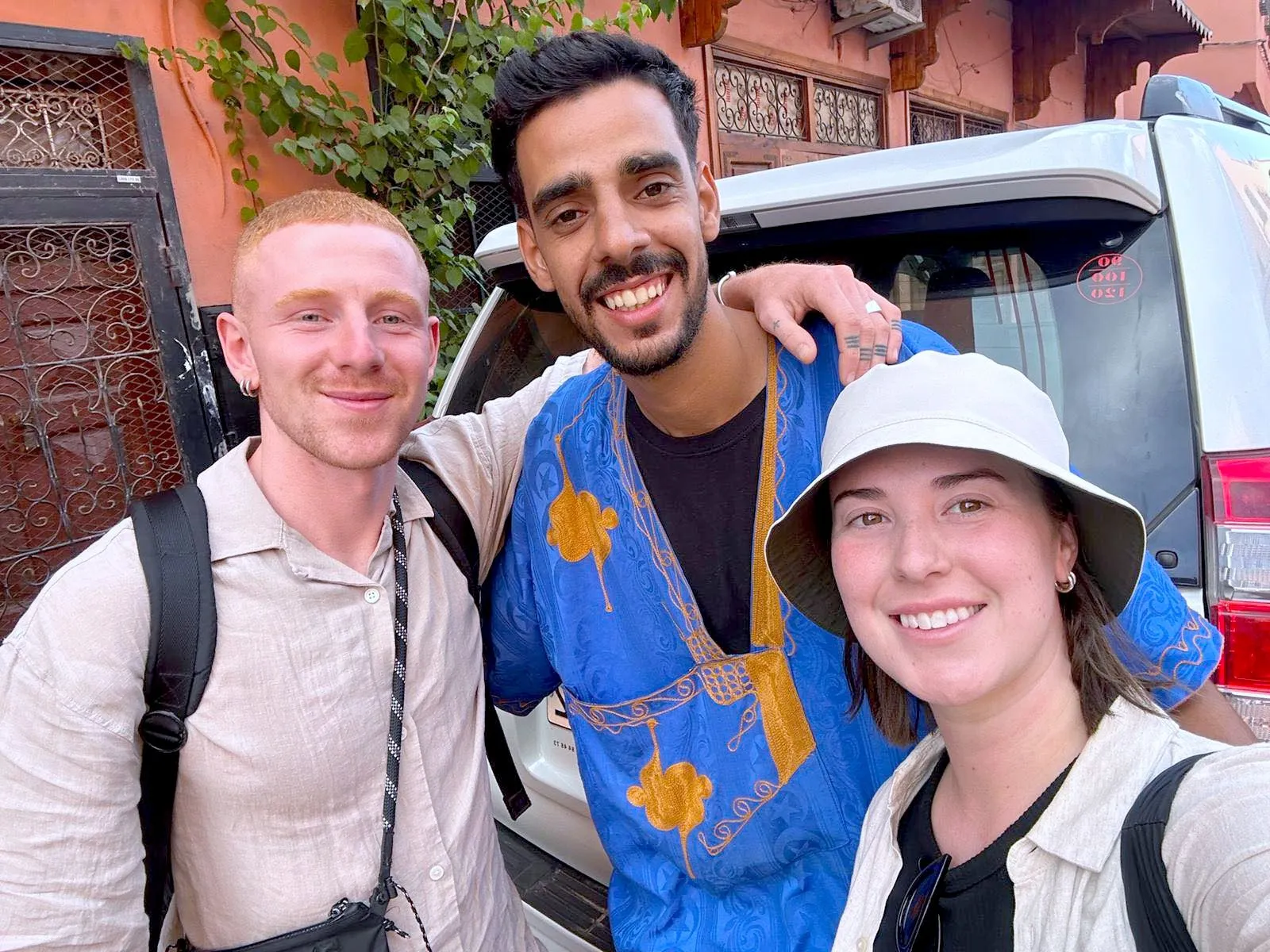
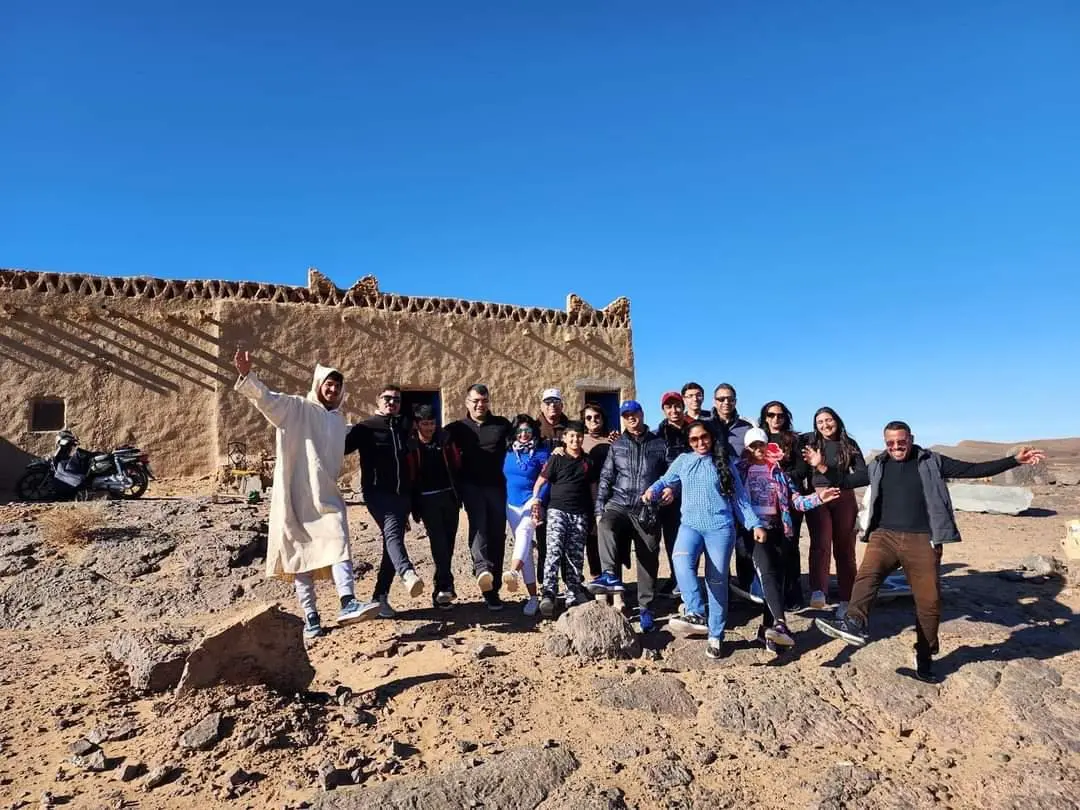
- Photos
- Tangier to Marrakech 12-day itinerary
- FAQs
- Tangier to Sahara desert 12-day trip
Most packages include private transport, a driver-guide, riad or hotel stays, one night in a desert camp, and a camel or 4x4 ride into the dunes. Meals and accommodation are usually part of the price. Flights, visas, tips, and personal spending are not.
The road usually runs south from Tangier through Chefchaouen, then to Fes and Meknes, across the Middle Atlas to Merzouga for the desert, through the Dades and Todra valleys, and over to Ouarzazate before ending in Marrakech. A Tangier to Marrakech 12-day itinerary built this way moves in one direction instead of backtracking, so the scenery shifts from coast to mountains to desert over the course of the trip.
Morocco has four former royal capitals: Rabat, Meknes, Fes, and Marrakech. A Morocco imperial cities tour spanning 12 days typically covers all four, plus Chefchaouen and the desert, even though neither one is technically an imperial city.
One night is standard on a Tangier to Sahara desert 12-day trip: a camel or 4x4 ride into the dunes before sunset, a night in a fixed or mobile camp, and a sunrise ride back out the next morning. Some operators offer a second desert night in place of an extra stop in the valleys, so it helps to check which version you're comparing when you look at itineraries.
For a first visit, yes. It covers the north, the desert, and the south without packing every night with a new hotel. Longer trips add extra nights in one region, like the coast or the Atlas Mountains, but 12 days hits a common balance between seeing enough and spending half the trip in the car.
The imperial cities carry as much weight in the itinerary as the dunes. Walking the medina in Fes, seeing the tanneries and the Bou Inania madrasa, and stopping in a Berber village on the way to Merzouga are what separate a 12-day Moroccan cultural and desert adventure from a two-day trip built around a single camel photo.
Spring (March through May) and fall (September through November) bring the most comfortable temperatures for both the cities and the desert. Summer gets extremely hot in the Sahara and the south, and desert nights in winter can drop close to freezing, so packing layers matters more than picking the exact month.
Have Any Question?
- +212607747056
- contact@limitlessmoroccotours.com
Traveler Reviews & Experiences With Limitless Morocco Tours
Discover what our guests say about their private Morocco tours, desert adventures, and unforgettable travel experiences with our local guides.
We had an amazing 4-day tour from Marrakech to Fes with Limitless Morocco Tours. Our driver, Mohamed, was very kind, friendly, and professional. The trip through the Sahara Desert was the best part of our visit to Morocco. Everything was well organized, and we couldn't have asked for a better experience.
Oxford, United Kingdom
We had a wonderful experience with the Limitless Morocco Team. Communication was flawless — polite, clear, and friendly. We booked a 4-day trip from Marrakech to the Sahara Desert by private vehicle, including a 4x4 desert excursion. We always felt safe and well looked after.
Cali, Colombia
Our 9-day journey with Limitless Morocco Tours was truly unforgettable. Hssain, our driver, made the whole experience smooth and enjoyable. We explored vibrant cities, crossed both the Mid and High Atlas Mountains, and enjoyed a magical night in the desert after a camel ride.
- 4-day Casablanca to Marrakech desert tour
- 5-day Morocco tour from Casablanca
- 7-day Sahara desert tour from Casablanca
- 8-day imperial cities tour from Casablanca
- 10-day Morocco tour from Casablanca
- 10-day Imperial cities Tours from Casablanca
- 12-day grand Morocco adventure tour
- 14-day Morocco tour from Casablanca
- 3 Days Tour Marrakech To Merzouga Desert
- 3 Day Marrakech to Fes Desert Tour via Merzouga & Erg Chebbi
- 4 Day Sahara Desert Tour from Marrakech
- 4 Day Marrakech to Fes Desert Tour with Camel Trek & Sahara Experience
- 5-day Marrakech to Fes desert tour
- 6 day Morocco desert tour from Marrakech
- 7-day imperial cities tour Marrakech
Anna Marziano
Palermo, Italy