- Home
- TOURS
- TOURS FROM MARRAKECH
- 3 days Marrakech desert tour to Merzouga
- 3 day Marrakech to Fes desert tour
- 4 Day Sahara Desert Tour from Marrakech to Merzouga
- 4 Day Marrakech to Fes Desert Tour – Explore Morocco in the Sahara
- 5-day Marrakech to Fes desert tour
- 6 day Morocco desert tour from marrakech
- 7-day imperial cities tour Marrakech
- TOURS FROM CASABLANCA
- 4-day Casablanca to Marrakech desert tour
- 5-day Morocco tour from Casablanca
- 7-day Sahara desert tour from Casablanca
- 8-day imperial cities tour from Casablanca
- 10-day Morocco tour from Casablanca
- 10-day imperial cities tour from Casablanca
- 12-day grand Morocco adventure tour
- 14-day Morocco tour from Casablanca
- TOURS FROM TANGIER
- TOURS FROM FES
- TOURS FROM MARRAKECH
- About
- Gallery
- Contact
- Blog
3-day Fes to Merzouga desert tour: camel trek and Erg Chebbi dunes
3-Day Fes to Merzouga Desert Tour
- Fes
Duration
3 Days / 2 Nights
Tour Type
Private tour
Group Size
4 People
Languages
English, French,
- Overview
A 3-day Fes to Merzouga desert tour gives you enough time to go from the gates of Fes to the open sand of the Sahara and back, with a camel trek and a night in the desert somewhere in the middle. This Fes to Merzouga itinerary climbs through the Middle Atlas, follows the Ziz Valley south, and ends at the Erg Chebbi dunes, home to some of the tallest dunes in Morocco. Along the way there’s cedar forest, a fossil trading town, and a string of palm oases before the road gives out to sand. If you only have a few days outside the cities, this Sahara desert tour from Fes covers a lot of ground without feeling rushed.
- Itinerary
3 Days /2 Night
Your driver collects you from your riad or hotel in Fes early in the morning. The road heads south into the Middle Atlas, and the first proper stop is Ifrane, a town built in the 1930s that still looks more like an alpine village than anything else in Morocco. From here the route runs through cedar forest around Azrou, where Barbary macaques often sit right at the roadside waiting for someone to roll down a window.
Past Midelt, the road drops into the Ziz Valley, and this is where the trip starts to feel like the desert. Palm groves line the river for miles, with old kasbahs and mudbrick villages built into the hillsides above. Lunch is usually in Errachidia or a small roadside stop along the valley, depending on timing.
The last leg runs through Erfoud, a town that grew up around the fossil trade (much of the "marble" sold here is limestone packed with trilobite fossils), and then out to the edge of the Sahara. You'll reach your desert camp near Erg Chebbi by late afternoon, with enough daylight left to catch your first sunset over the dunes before dinner.
Most people are up before sunrise on this day, whether they planned to be or not. The camp usually arranges a short walk or a spot on a nearby dune to watch the sky turn from gray to orange over Erg Chebbi.
After breakfast, a 4x4 takes you out to visit a Berber family living on the edge of the desert, one of a handful of nomadic or semi-settled households still around Merzouga. It's a low-key stop, more conversation over tea than anything staged for tourists, though that depends a bit on the guide.
Back at camp for lunch, then the afternoon is built around the main event: the Fes to Merzouga camel trek across Erg Chebbi. The ride out to the overnight camp takes a couple of hours, timed so you're crossing the highest dunes as the afternoon light turns from white to deep gold, right before sunset.
At the second camp, the crew cooks dinner over a fire, and most nights end with Berber drumming afterward, played by camp staff rather than a hired act. Once the fire dies down and the generator switches off, the sky does the rest. There's no real light pollution out here, so the stars alone are worth staying up for.
This one day, more than anything else on the trip, is what people mean when they talk about the Erg Chebbi dunes experience: the camel trek at sunset and a night under more stars than most people have ever seen.
Some people choose a second early start for a short walk across the dunes before breakfast, since the desert looks different again in the first light of morning. Others just sleep in and skip it. Either way, after breakfast you ride back into Merzouga on camelback, closing out the trek.
From there the drive toward Fes begins, with a stop in Rissani on the way out of the desert. Rissani's souk is one of the oldest in the region and a better place to buy dates, spices, or a rug than most tourist shops in Fes, provided you're comfortable with a bit of bargaining.
Heading back, you'll mostly retrace Day 1's route: through the Ziz Valley, past Errachidia and Midelt, and back into cedar forest near Azrou before the final stretch into Fes. Your driver drops you at your hotel or riad by early evening, three days and a few hundred kilometers after you leave.
- Included & Excluded
- Round-trip pickup and drop-off at your accommodation in Marrakech
- Private transport in an air-conditioned vehicle
- A professional driver, plus tour support if arranged
- Two nights of accommodation: a hotel or riad in Dades, and the desert camp
- Breakfast and dinner each day, as listed in the itinerary
- The camel trek to and from camp, timed around sunset when the schedule allows
- Lunch and beverages
- Tips
- Personal spending money
- Optional extra activities, where available
- Tours Location
- Marrakech
- Photos
- 3 Day Marrakech To Fes Desert Tour
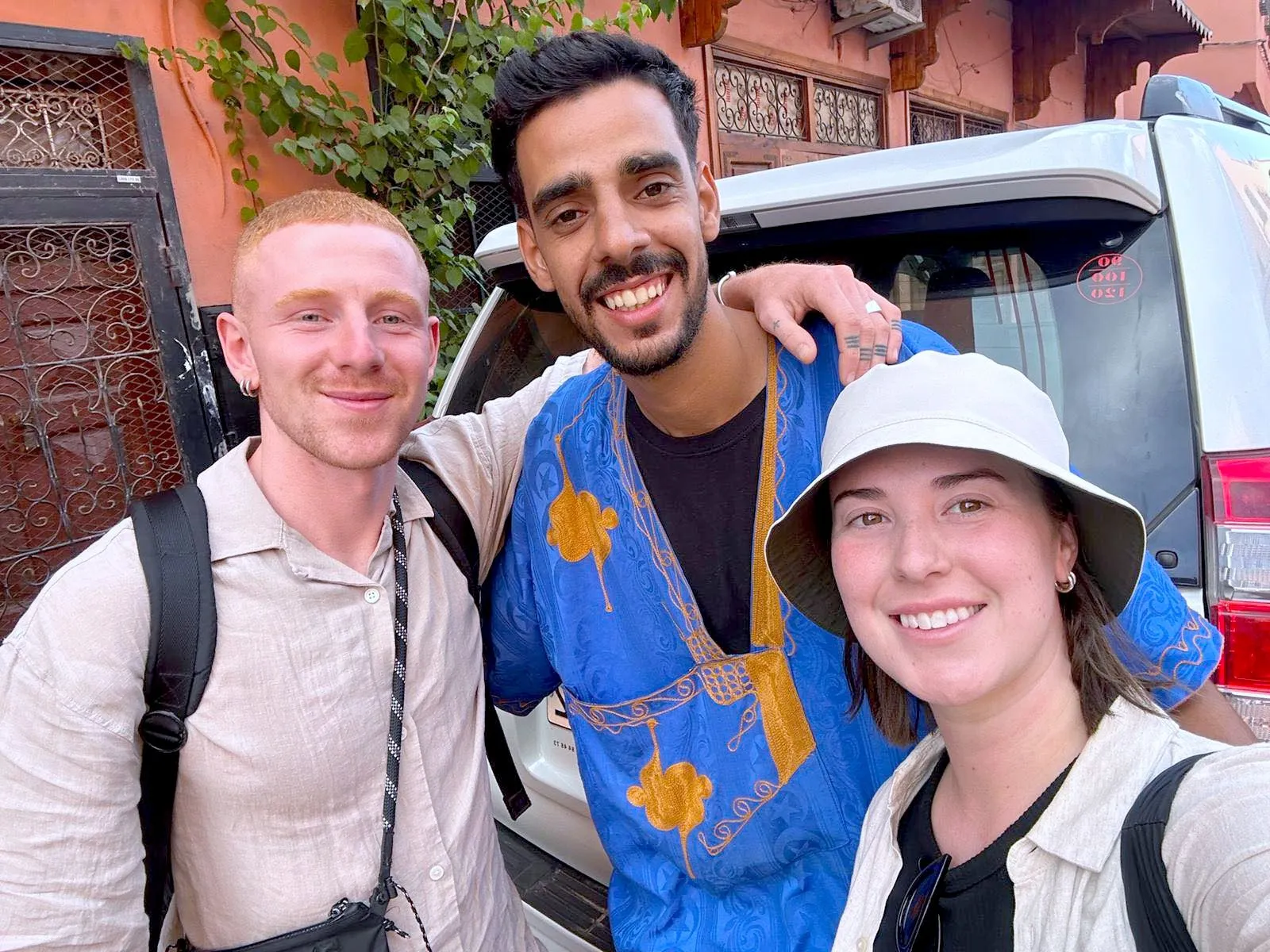
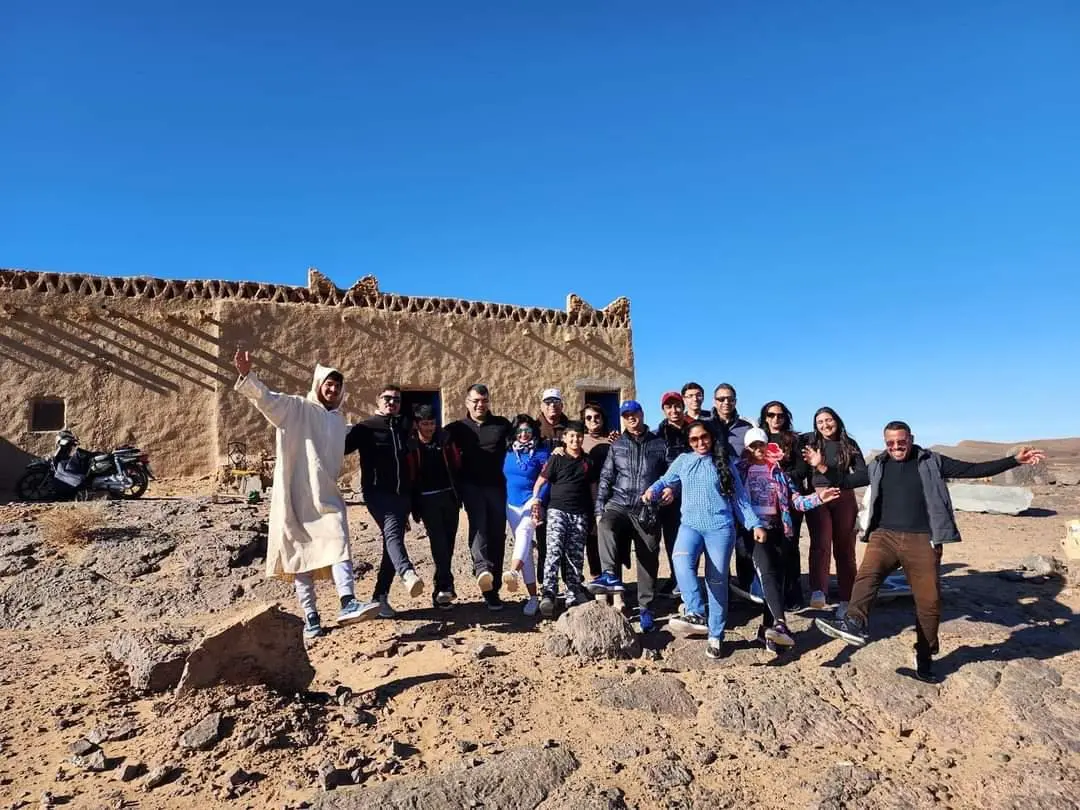
Most companies run this as a private tour, so it's just you and your group with the driver. Group departures exist too, usually at a lower price, if you don't mind sharing the vehicle and camp with other travelers.
Layers work best. Days can be warm even in cooler months, but desert nights get cold year round, so bring something warm for the evening. A scarf or light headwrap helps with sand and sun, and closed shoes are more useful than sandals once you're on the dunes.
The trek is slow and mostly flat, and most operators can seat younger children in front of an adult. If riding isn't for you or someone in your group, ask about a 4x4 transfer to the camp instead. Most companies can arrange it.
It depends what you book. Basic camps mean shared tents and a shared bathroom block. Better camps have private tents with real mattresses and sometimes an en-suite bathroom. Ask before booking if this matters to you, since the difference is bigger than the price gap sometimes suggests.
Spring and autumn are the easiest seasons, roughly March to May and September to November, when daytime heat is manageable and nights aren't too cold. Summer days in the desert can hit 45°C (113°F). Winter days are fine, but nights in the tents can drop close to freezing, so pack accordingly if you're traveling December through February.
Usually yes. Some travelers add a day, swap a stop, or end the trip in Marrakech instead of looping back to Fes, since there's a route that continues over the Atlas through Todra Gorge and Dades Valley. Mention it when booking rather than after, since it affects the driver's schedule.
A few weeks is safer than a few days, particularly in April, May, October, and November, when desert camps fill up fastest.
That covers the standard 3-day Fes to Merzouga desert tour. Exact stops and timings vary a little by operator, so it's worth confirming the day-by-day schedule when you book.
Have Any Question?
- +212607747056
- contact@limitlessmoroccotours.com
Traveler Reviews & Experiences With Limitless Morocco Tours
Discover what our guests say about their private Morocco tours, desert adventures, and unforgettable travel experiences with our local guides.
We had an amazing 4-day tour from Marrakech to Fes with Limitless Morocco Tours. Our driver, Mohamed, was very kind, friendly, and professional. The trip through the Sahara Desert was the best part of our visit to Morocco. Everything was well organized, and we couldn't have asked for a better experience.
Oxford, United Kingdom
We had a wonderful experience with the Limitless Morocco Team. Communication was flawless — polite, clear, and friendly. We booked a 4-day trip from Marrakech to the Sahara Desert by private vehicle, including a 4x4 desert excursion. We always felt safe and well looked after.
Cali, Colombia
Our 9-day journey with Limitless Morocco Tours was truly unforgettable. Hssain, our driver, made the whole experience smooth and enjoyable. We explored vibrant cities, crossed both the Mid and High Atlas Mountains, and enjoyed a magical night in the desert after a camel ride.
- 4-day Casablanca to Marrakech desert tour
- 5-day Morocco tour from Casablanca
- 7-day Sahara desert tour from Casablanca
- 8-day imperial cities tour from Casablanca
- 10-day Morocco tour from Casablanca
- 10-day Imperial cities Tours from Casablanca
- 12-day grand Morocco adventure tour
- 14-day Morocco tour from Casablanca
- 3 Days Tour Marrakech To Merzouga Desert
- 3 Day Marrakech to Fes Desert Tour via Merzouga & Erg Chebbi
- 4 Day Sahara Desert Tour from Marrakech
- 4 Day Marrakech to Fes Desert Tour with Camel Trek & Sahara Experience
- 5-day Marrakech to Fes desert tour
- 6 day Morocco desert tour from Marrakech
- 7-day imperial cities tour Marrakech
Anna Marziano
Palermo, Italy