- Home
- TOURS
- TOURS FROM MARRAKECH
- 3 days Marrakech desert tour to Merzouga
- 3 day Marrakech to Fes desert tour
- 4 Day Sahara Desert Tour from Marrakech to Merzouga
- 4 Day Marrakech to Fes Desert Tour – Explore Morocco in the Sahara
- 5-day Marrakech to Fes desert tour
- 6 day Morocco desert tour from marrakech
- 7-day imperial cities tour Marrakech
- TOURS FROM CASABLANCA
- 4-day Casablanca to Marrakech desert tour
- 5-day Morocco tour from Casablanca
- 7-day Sahara desert tour from Casablanca
- 8-day imperial cities tour from Casablanca
- 10-day Morocco tour from Casablanca
- 10-day imperial cities tour from Casablanca
- 12-day grand Morocco adventure tour
- 14-day Morocco tour from Casablanca
- TOURS FROM TANGIER
- TOURS FROM FES
- TOURS FROM MARRAKECH
- About
- Gallery
- Contact
- Blog
10-Day Morocco Tour from Tangier
10-Day Morocco Tour from Tangier
- Tanger
Duration
10 Days / 9 Nights
Tour Type
Private tour
Group Size
4 People
Languages
English, French,
- Overview
This 10-day Morocco tour from Tangier gives the city a proper first day of its own before heading into the Rif Mountains, rather than rushing straight past it toward Chefchaouen. As a Tangier to Fes and Sahara tour, the route then moves through the imperial cities to Merzouga, spends a full day and a desert camp night around the Erg Chebbi dunes, and works south through the Atlas Mountains before finishing in Marrakech and Casablanca.
It’s a private trip with your own driver for all 10 days, plus local guides in Fes and Marrakech for the two city tours. Between the blue streets of Chefchaouen, the medinas of Fes and Marrakech, a night under the stars in the Sahara, and the Atlas crossing at Tizi n’Tichka, this Tangier to Marrakech 10-day itinerary works well as a single, well-rounded Morocco cultural tour 10 days long, without needing a second trip to fill in what got missed.
- Itinerary
10 Days /9 Night
Your driver meets you at the airport, port, or hotel in Tangier. Rather than heading straight out of the city, today stays local, with a walk through the medina, a stop at the Kasbah overlooking the strait, and time in the Grand Socco, the main square where the old and new parts of the city meet. If you're interested in Tangier's history as an international zone in the early 20th century, the American Legation Museum, one of the oldest American diplomatic properties anywhere, is worth an hour. Overnight in Tangier.
After breakfast, a short drive takes you to Cape Spartel, where the Atlantic Ocean meets the Mediterranean Sea, and the Hercules Caves nearby, known for an opening shaped roughly like the African continent when seen from inside. Heading south along the coast, Asilah is next, a small town known for whitewashed walls covered in murals repainted each summer for its arts festival.
From Asilah, the route turns inland toward Ouezzane, a religious town built around an old zaouia and still an active pilgrimage site for Moroccans, known locally for its olive oil rather than for tourism. The road then climbs into the Rif Mountains, reaching Chefchaouen by the evening. Overnight in Chefchaouen.
A full day to explore Chefchaouen at a relaxed pace. The blue-painted streets photograph well, but walking them slowly is a different experience than most pictures suggest, especially a few streets back from Uta el Hammam, the main square. The old Kasbah museum inside the square gives a good overview of the region's history, and Ras el Maa, a spring at the edge of the medina where locals still do laundry by hand, is worth the short walk uphill. Late in the afternoon, the path up to the Spanish Mosque gives a wide view over the town and the hills around it. Overnight in Chefchaouen.
After breakfast, the drive south brings you first to Meknes, one of Morocco's four imperial cities, known for its monumental gates and the scale of building carried out under Sultan Moulay Ismail in the late 17th century. From Meknes, it's a short drive to Volubilis, the largest Roman site in the country, with mosaic floors still in place after almost two thousand years and enough of the old street layout intact to get a sense of how the town was arranged. By evening, you'll arrive in Fes for a two-night stay.
A local guide leads you through Fes el Bali, one of the oldest medinas still functioning as a working city rather than a museum piece. The day usually covers the Dar Batha museum, known for its Moroccan ceramics and woodwork, the Attarine Madrasa with its carved stucco and cedar detail, the Chouara Tannery, best seen from a leather shop terrace above it, and a stop at Borj Nord for a wide view over the rooftops. There's also time in the souks, where different streets specialize in different trades. Overnight in Fes.
Leaving Fes after breakfast, the road climbs into the Middle Atlas. Ifrane is the first stop, a town built in a French Alpine style in the 1930s that still looks a little out of place in Morocco. Azrou follows, with a cedar forest along the road where Barbary macaques are often visible right from the car. Midelt marks the shift from mountains to desert, and from there the road runs through changing scenery until the Ziz Valley opens up, a long stretch of palm groves that leads toward Merzouga.
You'll reach Merzouga by late afternoon, in time for camels to take you into the dunes as the sun starts dropping and the sand shifts from gold to a deep red. Dinner at camp is typically a tagine cooked over coals, with music around the fire afterward. Overnight at the desert camp.
Most people get up before sunrise to watch it from the dunes, then head back to Merzouga for breakfast and a shower. Before the drive resumes, there's usually time to visit a nomad family living near the dunes, sharing tea and hearing about daily life in the desert, and a stop in Khamlia, a village known for its Gnawa musicians.
From Merzouga, the road passes through Erfoud, known for fossils cut from the surrounding rock in local workshops, then Tinjdad and Goulmima, two smaller towns known for old fortified granaries, before reaching Todra Gorge. The canyon's rock walls rise 300 meters on either side, close enough that a normal conversation echoes off them. The route continues afterward to Dades Valley, known for unusual rock formations and old kasbahs. Overnight in Dades Valley.
After breakfast, the road passes through Kalaat M'Gouna, known locally for its rose products, then Skoura, a fertile oasis filled with palm trees and historic kasbahs. Ouarzazate comes next, sometimes called the gateway to the south, with a possible short stop at the Atlas Film Studios if time allows.
From Ouarzazate, a short drive takes you to Ait Ben Haddou, one of Morocco's best-known ksour, a fortified village built from earth and clay and listed as a UNESCO World Heritage Site. After the visit, the route crosses the High Atlas over the Tizi n'Tichka Pass, with switchbacks and small Berber villages along the way, before arriving in Marrakech by evening. Overnight in Marrakech.
Your guide covers the main sights, including Bahia Palace, with its carved cedar ceilings and quiet courtyards, the Saadian Tombs, rediscovered only in 1917 after being sealed for centuries, and Ben Youssef Madrasa, one of the largest Islamic colleges in North Africa when it was active. There's also a stop near the Koutoubia Mosque, viewed from outside, and time in the souks before Jemaa el Fna fills up with food stalls and performers in the evening. If it's included in your plan, the Majorelle Garden is a calm contrast to the busier stops earlier in the day. Overnight in Marrakech.
After breakfast, you leave Marrakech and head north toward Casablanca. Depending on your departure time, there may be a stop at Hassan II Mosque, one of the largest mosques in the world and one of the few in Morocco open to non-Muslim visitors. From there, your driver takes you to the airport or your chosen drop-off point, closing out this 10-day Moroccan adventure where Africa meets the Atlantic.
- Included & Excluded
- Round-trip pickup and drop-off at your accommodation in Marrakech
- Private transport in an air-conditioned vehicle
- A professional driver, plus tour support if arranged
- Nine nights of accommodation: a hotel or riad in Dades, and the desert camp
- Breakfast and dinner each day, as listed in the itinerary
- The camel trek to and from camp, timed around sunset when the schedule allows
- Lunch and beverages
- Tips
- Personal spending money
- Optional extra activities, where available
- Tours Location
- 10-day Morocco tour from Tangier
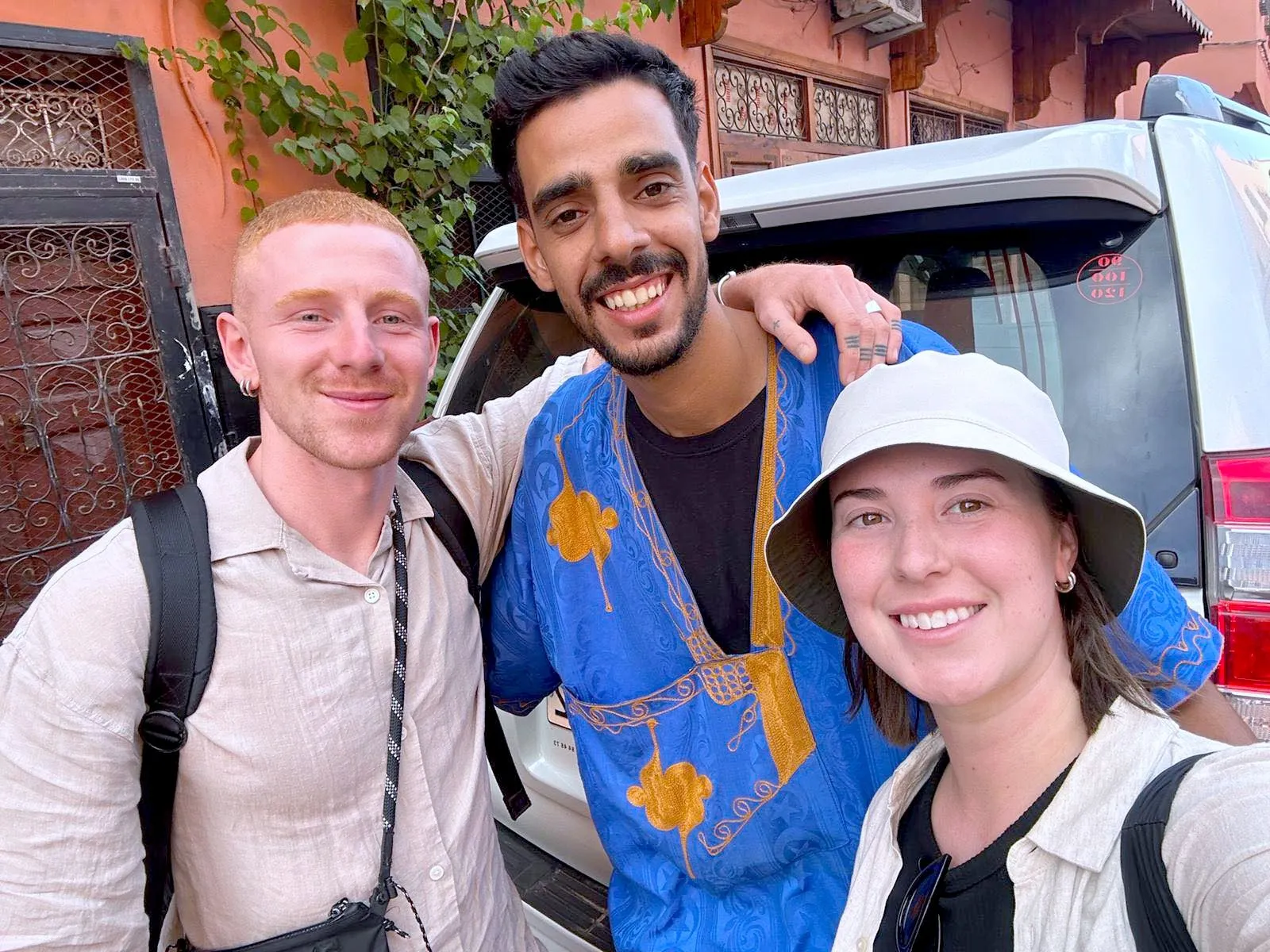
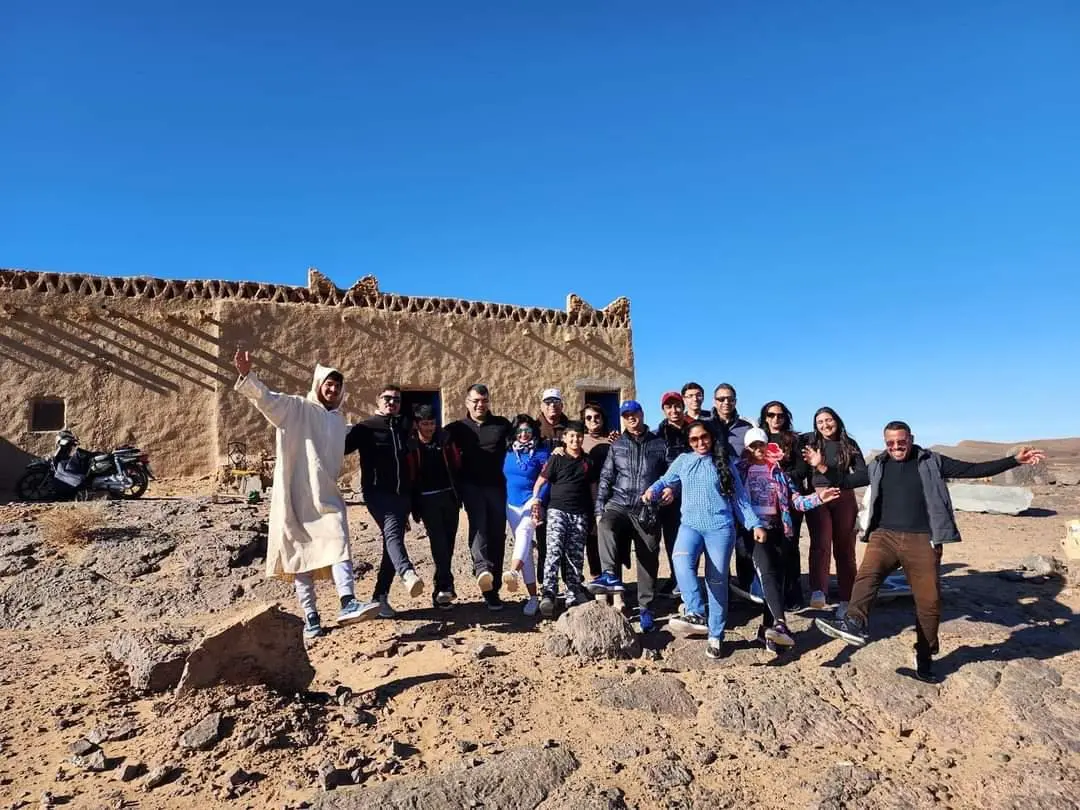
- Photos
- Morocco cultural tour 10 days
- FAQs
- Tangier to Marrakech 10-day itinerary
Yes. Aside from the local guides added in Fes and Marrakech, it's just your group and your driver for the whole trip, so the pace can flex around you.
Most 10-day itineraries treat Tangier as a quick stop on the way out of the city, but giving it a proper first day means you're not trying to see the medina, the Kasbah, and Cape Spartel all in the same afternoon you arrive. If your flight lands very early, the two can still be combined into one day to free up time elsewhere.
A fair amount, mostly on foot through medinas closed to cars. Chefchaouen, Fes, and Marrakech all involve uneven stone streets, and the walk up to the Spanish Mosque and through Todra Gorge add a bit more, though none of it needs special fitness.
Spring and fall are the most comfortable overall, with mild weather in the north and manageable heat in the desert. Winter brings rain to Tangier and Chefchaouen and cold desert nights, so pack a light rain jacket and warm layers if you're traveling between November and February.
o. A guide leads the camels the whole way to camp, and the ride is slow, about an hour each direction. Anyone who'd rather skip it can usually arrange a 4x4 transfer instead.
No, these are paid on site and separate from the tour price. Your guide can tell you the current fee before each stop.
Yes. The Merzouga region morning on Day 7 can be trimmed to leave earlier for Dades Valley, and Asilah or Ouezzane can be dropped from Day 2 if the north coast matters less to you than extra time in the desert or the imperial cities.
Have Any Question?
- +212607747056
- contact@limitlessmoroccotours.com
Traveler Reviews & Experiences With Limitless Morocco Tours
Discover what our guests say about their private Morocco tours, desert adventures, and unforgettable travel experiences with our local guides.
We had an amazing 4-day tour from Marrakech to Fes with Limitless Morocco Tours. Our driver, Mohamed, was very kind, friendly, and professional. The trip through the Sahara Desert was the best part of our visit to Morocco. Everything was well organized, and we couldn't have asked for a better experience.
Oxford, United Kingdom
We had a wonderful experience with the Limitless Morocco Team. Communication was flawless — polite, clear, and friendly. We booked a 4-day trip from Marrakech to the Sahara Desert by private vehicle, including a 4x4 desert excursion. We always felt safe and well looked after.
Cali, Colombia
Our 9-day journey with Limitless Morocco Tours was truly unforgettable. Hssain, our driver, made the whole experience smooth and enjoyable. We explored vibrant cities, crossed both the Mid and High Atlas Mountains, and enjoyed a magical night in the desert after a camel ride.
- 4-day Casablanca to Marrakech desert tour
- 5-day Morocco tour from Casablanca
- 7-day Sahara desert tour from Casablanca
- 8-day imperial cities tour from Casablanca
- 10-day Morocco tour from Casablanca
- 10-day Imperial cities Tours from Casablanca
- 12-day grand Morocco adventure tour
- 14-day Morocco tour from Casablanca
- 3 Days Tour Marrakech To Merzouga Desert
- 3 Day Marrakech to Fes Desert Tour via Merzouga & Erg Chebbi
- 4 Day Sahara Desert Tour from Marrakech
- 4 Day Marrakech to Fes Desert Tour with Camel Trek & Sahara Experience
- 5-day Marrakech to Fes desert tour
- 6 day Morocco desert tour from Marrakech
- 7-day imperial cities tour Marrakech
Anna Marziano
Palermo, Italy