25 Fun Facts About Morocco Every Traveler Should Know
limitlessmoroccotours.com
24 September 2026
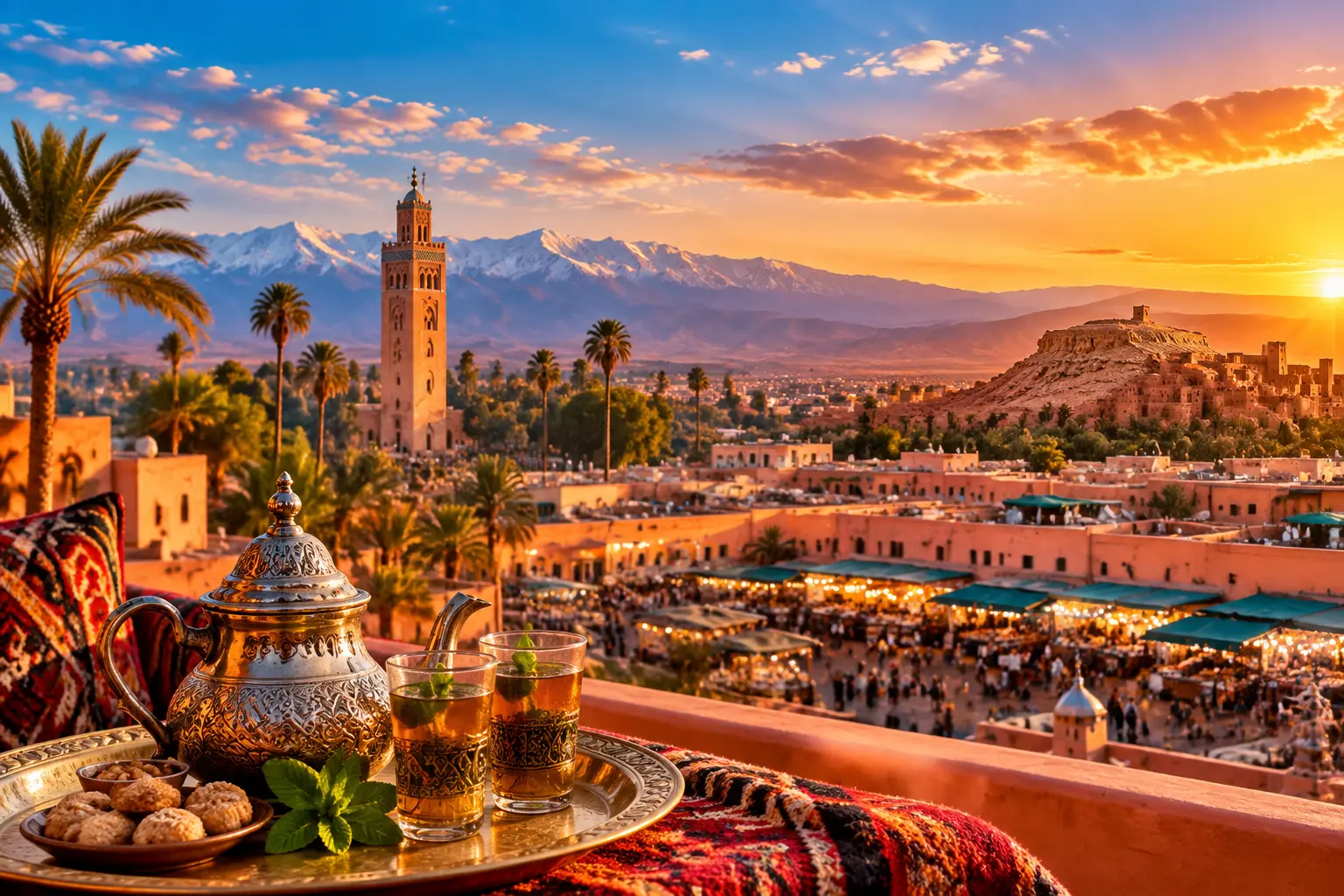
Morocco is one of the only countries where you can stand on a beach and see another continent with your own eyes. From Tangier on a clear day, Spain sits just 14 kilometers across the water, close enough to look like a rumor rather than a country. That closeness is part of what makes Morocco different from its neighbors, touching Africa, Europe, and the Arab world all at once while keeping its own language, food, and way of doing things.
That mix is exactly what makes fun facts about Morocco so easy to find. This list covers 25 of them: how the country got its nicknames, why the tea is poured from so high above the glass, what a riad actually is, and a few historical surprises most visitors never learn until they land.
Fun Facts About Morocco: 25 Things Every Traveler Should Know
Africa and Europe are just 14 kilometers apart here
The Strait of Gibraltar separates Morocco from Spain, and at its narrowest point it’s only about 14 kilometers wide. Stand on the beach in Tangier on a clear day and you can see the hills of southern Spain across the water. Ferries cross in under an hour, which is one reason Tangier has spent centuries as a meeting point between the two continents.
Morocco has two official languages, and a third one everyone actually speaks
Arabic and Amazigh (also called Tamazight or Berber) are both official languages in Morocco, with Amazigh gaining that status in the 2011 constitution. Day to day, though, most Moroccans speak Darija, a Moroccan Arabic dialect mixed with French and Spanish words depending on the region. French is still common in business and schools too, left over from the years of French rule before independence in 1956.
Rabat is the capital, not Casablanca
Casablanca is Morocco’s biggest city and main business center, so people often assume it’s the capital too. It isn’t. Rabat, about an hour up the coast, holds that title and is home to the royal palace, the parliament, and most foreign embassies. Casablanca is worth a stop for its size and architecture, but government buildings live in Rabat.
Morocco has four imperial cities
Fez, Marrakech, Meknes, and Rabat have each served as Morocco’s capital at different points in its history, which is why they’re grouped together as the country’s four imperial cities. Each one kept the palaces, walls, and mosques built during its time in charge, so visiting all four feels like walking through different centuries in a single trip.
The world’s oldest operating university is in Fez
Founded in the year 859 by a woman named Fatima al-Fihri, the University of Al Quaraouiyine in Fez is recognized by UNESCO and Guinness World Records as the oldest university in the world that has never stopped operating. It started as a mosque with an attached school, more than two centuries before Oxford existed, and it still teaches students in Fez today as part of Morocco’s public university system.
Morocco has more UNESCO World Heritage Sites than any other African country
Morocco holds nine UNESCO World Heritage Sites, more than any other country on the continent. They range from the Roman ruins at Volubilis to the fortified village of Ait Benhaddou and the old medinas of Fez, Marrakech, and Essaouira. Since Morocco is fairly compact and well connected by road and rail, it’s realistic to see several on one trip.
Marrakech earns its nickname, the Red City
Walk through Marrakech’s medina and you’ll notice the walls, buildings, and even the dust all carry a reddish pink tone. Local building rules require structures in and around the old city to keep that color, which is why Marrakech is nicknamed the Red City. The effect is strongest right around sunset.
Chefchaouen paints itself blue on purpose
Chefchaouen sits in the Rif Mountains, and its walls, doorways, and staircases are almost all painted in shades of blue. No single explanation for why ever fully wins out: some say Jewish refugees who settled there in the 1930s brought the tradition, since blue is linked in Jewish custom to the sky, while others say it simply kept mosquitoes away. Either way, the town repaints every year, and the color is now part of its identity.
Jemaa el-Fna turns into a different place after dark
By day, Jemaa el-Fna in Marrakech is a wide open square with orange juice stalls and the occasional snake charmer. After sunset, it fills with food carts, musicians, and storytellers who have performed there for generations. UNESCO recognized the square in 2001 as one of the first Masterpieces of Oral and Intangible Heritage, protecting the performers and their traditions rather than a building.
Fez still dyes leather the way it did centuries ago
The Chouara Tannery in Fez is one of the oldest tanneries in the world, and it still uses stone vats and natural dyes much like it did hundreds of years ago. Visitors climb to nearby terraces to look down over the honeycomb of colored vats below, and shops hand out fresh mint leaves at the entrance for a good reason: the smell is strong.
Mint tea is closer to a ritual than a drink
Moroccans sometimes call it Berber whiskey, and it shows up everywhere, from homes to shops to roadside stops in the middle of nowhere. It’s made with green tea, fresh mint, and plenty of sugar, poured from high above the glass to build a light foam on top. Turning down a glass from a shopkeeper you’ve just met can come across as a little rude, since offering tea is how Moroccans welcome a guest.
Hammams are where Moroccans have washed and caught up for centuries
A hammam is a traditional steam bathhouse, and most Moroccan neighborhoods still have at least one in regular use by locals, not just visitors. Families often go together on a set day, scrub down with black soap and a rough exfoliating glove called a kessa, and trade neighborhood news while they’re at it. Tourist-oriented hammams in riads offer a gentler version of the same experience.
Riads hide their best rooms behind plain doors
From the street, a traditional riad often looks like nothing more than a wall with a single wooden door. Step inside, though, and you’ll usually find a courtyard open to the sky, sometimes with a fountain or orange trees, surrounded by rooms on two or three floors. The design reflects old ideas about privacy: family life happens inside, facing the courtyard, not the street.
The Sahara Desert is closer than most first-time visitors expect
Merzouga, the main gateway to the dunes, is roughly a 9 to 10 hour drive from Marrakech, usually broken into two days with stops in the Atlas Mountains along the way. Once you arrive, camel treks lead out to the dunes at Erg Chebbi, some of which rise more than 150 meters, for a night in a desert camp under a sky with almost no light pollution.
Morocco’s mountains outrank its desert for altitude
The High Atlas Mountains run through the middle of Morocco, and Mount Toubkal, their tallest peak, reaches 4,167 meters, the highest point in North Africa. On a clear day from the summit, you can see the Sahara’s far dunes in one direction and the Atlantic coast in the other. The hike up from the village of Imlil takes most people two days.
Argan oil grows in one corner of the world, and goats really do climb for it
Argan trees grow almost exclusively in southwestern Morocco, and the oil pressed from their nuts shows up in kitchens and cosmetics worldwide. Goats genuinely do climb into argan trees to eat the fruit, a habit tied to the region’s dry conditions. Along the busier roads near Essaouira, though, some goats you’ll spot in trees have been placed there by their owners for a photo, so it’s not always the wild coincidence it looks like.
A tagine is a pot before it’s a meal
The word tagine refers to two things: the cone-shaped clay pot and the slow-cooked dish made inside it. The shape isn’t just decoration. The cone traps steam and sends it back onto the food, so meat, vegetables, and spices cook gently in their own liquid. Chicken with preserved lemon and olives is one version you’ll see on nearly every menu.
Couscous has a day of its own
In most Moroccan households, couscous is a Friday tradition, served after midday prayers as a family meal. It’s steamed rather than boiled, usually in a two-part pot called a couscoussier, and topped with vegetables and meat cooked in a broth ladled over the grain at the table. If you’re invited to a Moroccan home on a Friday, this is often what’s served.
Morocco recognized the United States before most of Europe did
In 1777, under Sultan Mohammed ben Abdallah, Morocco became the first country in the world to formally recognize the independence of the United States, ahead of France’s own recognition the following year. A treaty of friendship between the two countries followed in 1786 and is still in effect, making it the longest unbroken treaty relationship in U.S. history.
Hollywood built a second home in the Moroccan desert
Ouarzazate, sometimes called the door to the desert, is home to Atlas Studios, one of the largest film studios in the world, and the nearby fortified village of Ait Benhaddou has appeared on screen more times than most actors. Lawrence of Arabia, Gladiator, The Mummy, and Game of Thrones all filmed scenes there, drawn by the red mudbrick walls and the light.
The movie Casablanca was never actually filmed in Casablanca
Despite its name and setting, the 1942 film Casablanca was shot almost entirely at Warner Bros. Studios in Burbank, California. Morocco was under wartime control at the time, which made filming there impossible, so the crew built the sets from scratch instead. A real bar in the city, Rick’s Cafe, opened decades later as a tribute to the film.
Africa’s first high-speed train runs across northern Morocco
Al Boraq, launched in 2018, connects Tangier and Casablanca at speeds up to 320 kilometers per hour, cutting a trip that used to take almost 5 hours down to about 2 hours and 10 minutes. It’s Africa’s first high-speed rail line, named after a mythical winged creature from Islamic tradition said to have carried prophets on their journeys, and an extension to Marrakech is now under construction.
You can’t buy Moroccan dirhams before you arrive
The Moroccan dirham is a closed currency, meaning it can’t legally be bought or sold outside the country. Bring dollars, euros, or pounds to exchange once you land instead of trying to get dirhams at home ahead of time. Travelers can only bring in or take out a limited amount, so spend or exchange back what’s left before flying home.
The star on Morocco’s flag has an old name
Morocco’s flag is a plain red field with a green five-pointed star in the center, adopted in its current form in 1915. The star is known as the Seal of Solomon, a symbol that shows up across Islamic art, from tile work to jewelry, long before it ended up on a national flag. The red goes back to the Alaouite dynasty, Morocco’s royal family since the 1600s.
In 2022, Morocco’s football team made history no African team had made before
At the 2022 World Cup in Qatar, Morocco’s national team, the Atlas Lions, beat Spain and then Portugal to reach the semifinal, the first African and Arab nation ever to get that far. The record still stands, even after Morocco reached the quarterfinals again at the 2026 World Cup. Next up, Morocco co-hosts the 2030 World Cup with Spain and Portugal, bringing matches back to Africa for the first time since South Africa hosted in 2010.
Interesting facts about Morocco for first-time visitors
If you’re gathering interesting facts on Morocco before you pack, these are the practical ones worth knowing once you land.
- Haggling is expected in souks and markets, but not in restaurants, supermarkets, or shops with fixed prices.
- Most mosques in Morocco are closed to non-Muslim visitors. The main exception is the Hassan II Mosque in Casablanca, which offers guided tours outside prayer times.
- Modest clothing is appreciated outside beach resorts and hotel pools, especially in medinas and smaller towns.
- Friday afternoons move a little slower than the rest of the week, since many people attend midday prayers and some shops close for a few hours.
- Tipping isn’t required by law, but it’s a normal part of daily life for guides, drivers, and restaurant staff.
- Cash still matters in the souks and smaller towns, even though cards work fine in most hotels and bigger restaurants.
Frequently asked questions about Morocco
Morocco is known for the Sahara Desert, cities like Marrakech and Fez, the Atlas Mountains, and a culture that blends Arab, Amazigh, and French influences. Mint tea, tagines, and the walled medinas at the center of most cities are part of that reputation too.
A few worth remembering: Morocco has two official languages, holds nine UNESCO World Heritage Sites, and was the first country to recognize the independence of the United States, back in 1777. These are just a handful of the interesting facts about Morocco covered in this guide.
Few countries sit this close to Europe while holding onto such a distinct identity. Morocco blends Arab, Amazigh, and French influences, and its landscape swings from Atlantic beaches to mountain passes to Sahara dunes, sometimes within the same day's drive.
Yes. Morocco has a well developed tourism scene in cities like Marrakech, Fez, and Chefchaouen, plus organized desert tours, and it's generally easy to get around by train, bus, or with a guide. Many first-time visitors are surprised by how much variety fits into one trip.
A week to ten days is enough to cover two or three cities plus a night in the Sahara without rushing. With only three or four days, most travelers stick to Marrakech and a short trip to the desert or mountains nearby.
Arabic and Amazigh are the official languages, but most people speak Darija, the Moroccan Arabic dialect, day to day. French is common in business and education, and in cities used to tourism, you'll usually find some English and Spanish too.
Morocco culture facts include its mix of Arab and Amazigh traditions, traditional food, mint tea ceremonies, colorful markets, and historic cities like Marrakech and Fez.
These 25 fun facts about Morocco only cover so much. Morocco facts like these are a good starting point, but the mix of Arab, Amazigh, French, and Sahara influences that shapes the country is easier to feel than to read about, which is part of why fun facts about Morocco, Africa’s gateway between two continents, keep surprising even repeat visitors. If you’re planning your first trip, give yourself time to slow down in at least one city instead of rushing through all of them.
- 4-day Casablanca to Marrakech desert tour
- 5-day Morocco tour from Casablanca
- 7-day Sahara desert tour from Casablanca
- 8-day imperial cities tour from Casablanca
- 10-day Morocco tour from Casablanca
- 10-day Imperial cities Tours from Casablanca
- 12-day grand Morocco adventure tour
- 14-day Morocco tour from Casablanca
- 3 Days Tour Marrakech To Merzouga Desert
- 3 Day Marrakech to Fes Desert Tour via Merzouga & Erg Chebbi
- 4 Day Sahara Desert Tour from Marrakech
- 4 Day Marrakech to Fes Desert Tour with Camel Trek & Sahara Experience
- 5-day Marrakech to Fes desert tour
- 6 day Morocco desert tour from Marrakech
- 7-day imperial cities tour Marrakech