
Where to Stay in Marrakech: Best Neighborhoods, Riads, and Hotels
limitlessmoroccotours.com
11 October 2026
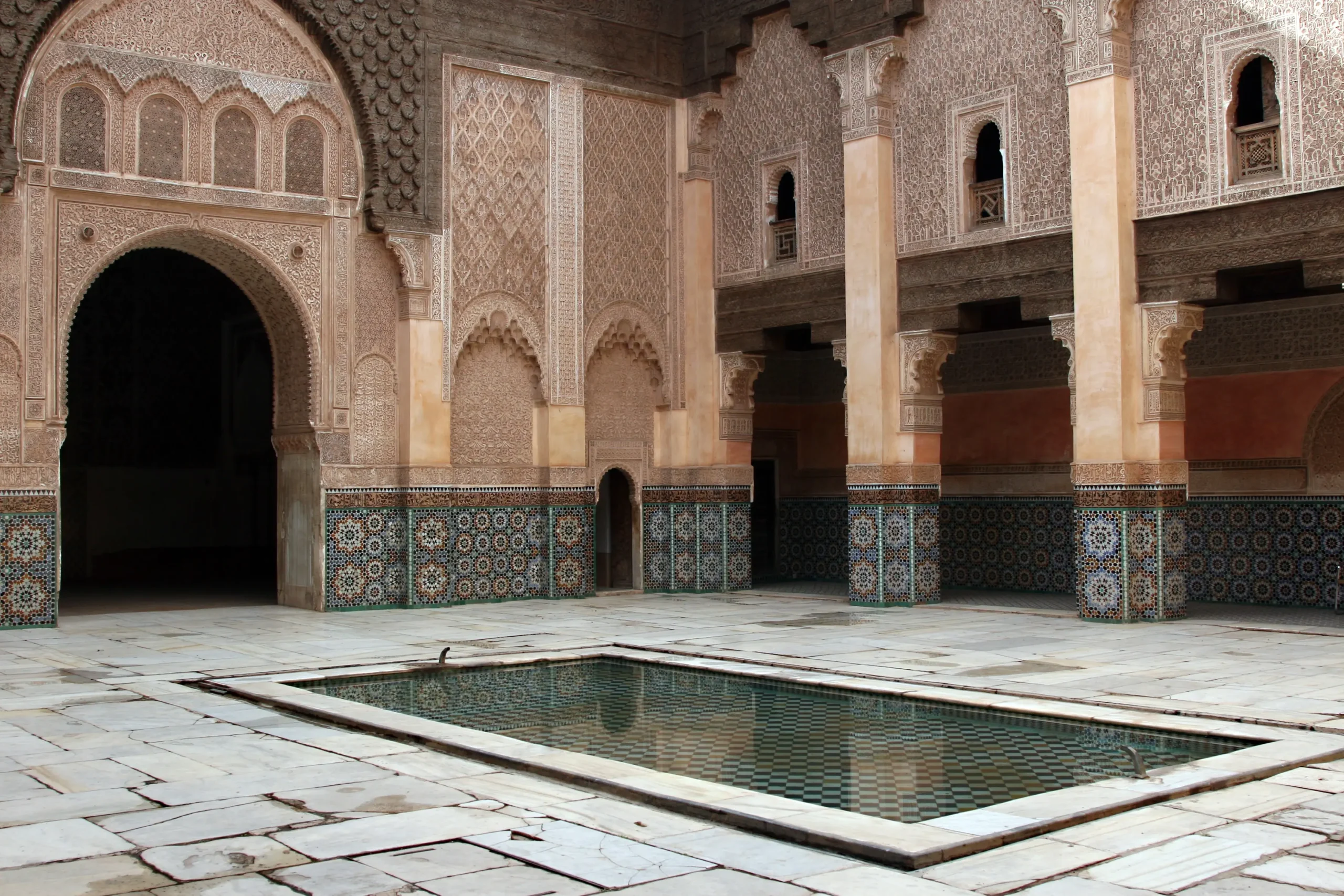
For a first visit centered on historic sights, start with a well-located riad in the Medina. You can explore traditional streets and souks, then return to a courtyard between outings. If you prefer conventional hotel facilities, wider streets and more straightforward vehicle access, begin your search in Gueliz or Hivernage.
The best neighborhood to stay in Marrakech depends on how you will spend your days. A couple planning long walks through the old city needs a different base from a family looking for a pool, connecting rooms and easy transfers.
Choose the area first, then check the exact property, room and arrival route. Those details matter more than a listing’s promise of a “central location.”
Where to Stay in Marrakech: A Quick Comparison
Marrakech’s Medina is the historic old city. Mouassine, the Kasbah and the Mellah are smaller quarters within that wider historic setting. Gueliz and Hivernage offer different sides of modern Marrakech, while the Palmeraie suits a stay built around time at the property.
Area | Best fit | Main advantages | What to consider |
Central Medina and Mouassine | First visits focused on culture and souks | Historic streets, courtyard accommodation and sightseeing on foot | Navigation, street activity and the final walk from a vehicle |
Kasbah | Travelers drawn to the southern historic city | Access to the Saadian Tombs and a different base from the central souks | Walking routes to northern Medina sights; noise varies by address |
Mellah | Visitors interested in Jewish heritage and the palace area | Historic markets and the area around Bahia Palace and Place des Ferblantiers | Exact location, accommodation access and street activity |
Gueliz | Restaurants, shopping and a modern city stay | Café terraces, contemporary shops and conventional hotels | Plan how you will reach your chosen Medina sights |
Hivernage | Upscale hotels, hotel dining and nightlife | A concentration of larger hotels and evening venues | Room position matters around traffic, events and bars |
Palmeraie | Pool time, gardens and longer resort stays | Space and accommodation set in larger grounds | Transport, dining options and any shuttle arrangements |
These are starting points for comparing accommodation, rather than fixed labels for every property.

Best Neighborhoods to Stay in Marrakech
The Medina: A Strong Starting Point for Historic Marrakech
Staying in the Marrakech Medina puts the old city around you: souks, traditional houses, monuments and the streets leading to Jemaa el-Fnaa. It is a living historic center, with residential lanes and working markets as well as visitor attractions.
The appeal is being able to explore between breakfast and dinner without making every outing a transfer. The compromise is that a short distance on a map can involve several turns, a busy lane or a walk with your luggage.
Check the precise location of your riad. Ask where a driver can stop and how you reach the entrance from there. Vehicle access differs between properties; a Medina address alone does not tell you how arrival will work.
Mouassine and Central Medina: For Souks and Sightseeing
Mouassine is a useful area to investigate if you want a base among the old city’s shopping streets and courtyard buildings. Le Jardin Secret, on Rue Mouassine, provides a helpful landmark when comparing addresses.
For a trip built around the souks and historic surroundings, this can be the best part of Marrakech to stay in. Look closely at the room’s position, especially near a restaurant terrace or a busy thoroughfare.
If you want to stay near Jemaa el-Fnaa, compare the walking route and recent noise reviews. Being near the square can be convenient without needing a room directly overlooking its evening activity.
Kasbah: For the Southern Historic City
The Kasbah is Marrakech’s historic royal quarter, associated with the Saadian Tombs and the southern old city. It offers a different starting point from the central souks, with some streets that feel more residential.
Consider it if the southern monuments feature prominently in your plans. Check the route to sights farther north, and choose the particular street and room according to your preferences.
Mellah: For Jewish Heritage and the Palace Area
The Mellah is the historic Jewish quarter, near Bahia Palace and Place des Ferblantiers. Its markets and Jewish heritage give this part of the historic city a distinct reason to explore.
Consider it if you want to combine palace visits with time exploring the quarter’s heritage and markets.
Gueliz: For Restaurants, Shopping and Modern City Life
Gueliz offers café terraces, contemporary shops and a more modern urban setting. It is worth considering if restaurants, shopping and conventional city accommodation are central to your plans.
Hotels and apartments here can suit travelers who prefer a straightforward street address and a different rhythm from the souks. You can still visit the Medina, but compare the actual route from your accommodation to the attractions you want to see.
A property described as “Marrakech city center accommodation” may be central to Gueliz rather than to your historic sightseeing itinerary. Plot several destinations before deciding whether the location works for you.
Hivernage: For Upscale Hotels and Evening Venues
Hivernage has a concentration of larger hotels, restaurants and nightlife venues. It is a useful starting point if you want hotel dining, spa facilities or a conventional hotel stay alongside visits to the old city.
The area can also appeal to couples planning dinners and evenings out. If quiet evenings matter, ask for a room away from bars or event spaces. Check the route to your preferred Medina sights before booking.
Palmeraie: For Gardens, Pools and Resort Time
The Palmeraie offers a different setting, with hotels and villas around Marrakech’s palm grove. Consider it when gardens, space and time at your accommodation are a substantial part of the holiday.
For a short visit filled with Medina sightseeing, factor in the journeys to and from town. Before booking, ask about transport costs, dining options and whether the property operates a shuttle. If it does, confirm its stops, reservation requirements and the last return.
A resort can be a good fit for a longer stay, provided its location works with the days you plan to spend exploring.
Where to Stay in Marrakech for Your First Visit
For a first visit focused on traditional Marrakech, start by comparing central Medina riads with clear arrival instructions. Mouassine can suit a souk-centered itinerary; the Kasbah or Mellah may suit plans built around the southern historic city.
Choose Gueliz or Hivernage when a conventional hotel, vehicle access or particular room facilities will make your stay easier. You can organize your days around visits to the Medina and return to a different setting afterward.
Before deciding, mark three things on a map:
- Your accommodation’s entrance and nearest vehicle stopping point.
- The sights you most want to visit.
- A few realistic options for breakfast or dinner.
This makes the Medina-versus-new-city decision more useful than simply choosing “old” or “modern.” Start with our Marrakech Attractions guide to identify the places that matter most to your trip.
Riad vs Hotel in Marrakech: Which Should You Choose?
A traditional riad is a Moroccan house arranged around an interior courtyard or garden. In Marrakech, converted houses provide accommodation ranging from simple guesthouses to elaborate boutique properties. The courtyard, shared spaces and individual room layout shape the experience.
Riads and hotels also overlap. A property can occupy historic riads while operating as a luxury hotel, as La Sultana does in the Kasbah.
What matters | Riad or courtyard guesthouse | Conventional hotel |
Atmosphere and layout | Courtyard architecture and rooms that may differ substantially | Layout depends on the building; room categories may be more consistent |
Location | Many options in the Medina | Options across the city, including Gueliz and Hivernage |
Privacy and sound | Ask whether the room opens onto a shared courtyard or passage | Check adjoining doors, corridor noise, traffic and nearby venues |
Breakfast and meals | Confirm inclusions, serving times and whether dinner needs advance notice | Check the room rate, restaurant availability and meal arrangements |
Pools and shared spaces | A pictured water feature may be a fountain, plunge pool or swimming pool | Confirm pool size, access, opening dates and heating if important |
Reception and service | Check staffing hours and late-arrival arrangements | Larger properties may offer more extensive services; verify what is available |
Accessibility and luggage | Historic layouts may involve steps or different levels | Check lifts, entrance access and the route to the specific room |
Families | Confirm children’s ages, room occupancy and suitability of shared spaces | Ask about connecting rooms, family categories and children’s facilities |
Seasonal comfort | Verify heating and air conditioning in the room you will book | Confirm the same details rather than relying on the hotel’s category |
Price and value | Compare the exact room and included services | Compare the full stay cost, including extras and transport |
Choose a riad when courtyard architecture and an intimate setting are priorities. Choose a conventional hotel when particular facilities, room configurations or access arrangements matter most. The better choice is the property that meets your needs.
Riads and Hotels to Compare
The following boutique and upscale properties illustrate different combinations of location and facilities. Check the exact room, current arrangements and recent guest feedback before booking.
- El Fenn, Bab El Ksour in the Medina: Worth investigating for a Medina stay with pools and access to taxis at its boutique entrance. Follow the hotel’s separate directions for arriving as an overnight guest. [10]
- La Sultana Marrakech, Kasbah: A hotel created from historic riads, with a heated pool and rooftop spaces. Travelers with mobility requirements should discuss the building’s stairs and different levels before booking.
- Radisson Blu Hotel, Marrakech Carré Eden, Gueliz: A conventional hotel option in Gueliz with spa facilities and a connected-room family category. Confirm the room arrangement and occupancy for your party.
- Sofitel Marrakech Palais Impérial & Spa, Hivernage: A hotel option with pools and advertised children’s facilities, including a club for ages six to twelve. Check availability and conditions for your dates.
- Les Deux Tours, Palmeraie: A garden setting with dedicated family-suite options. Consider it when time at the property is part of your plan, and arrange transport for city outings.
Choosing Accommodation for Your Travel Style
Couples and honeymooners: Compare a Medina riad’s room layout and private spaces with the facilities of a Hivernage hotel or Palmeraie retreat. Ask whether a terrace is private or shared, and whether evening venues could affect the room.
Families with children: Start with sleeping arrangements, access and pool suitability. A riad can work well when it accepts your children’s ages and has the right room configuration. Connecting hotel rooms or a larger suite may simplify the stay.
Solo travelers: Look for responsive staff, clear arrival instructions and a location that suits your evening plans. A smaller guesthouse or hostel may appeal if you want shared spaces; a hotel may suit a more independent routine.
Budget-conscious travelers: Compare the total cost for your dates, including taxes, breakfast, transfers and journeys into town. Look at simpler guesthouses, hostels and hotels according to your comfort needs. A lower room price loses some appeal if it adds transport costs to each outing.
Luxury travelers: Decide what the additional spending should provide: distinctive architecture, personal space, a substantial pool, spa access or extensive service. Marrakech’s luxury choices include both historic riad hotels and larger contemporary properties.
Restaurant and nightlife enthusiasts: Gueliz and Hivernage are useful areas to investigate. Check the venues you actually want to visit and how you will return, then choose a room position that matches your sleep preferences.
What to Check Before Booking Accommodation in Marrakech
An attractive courtyard photograph cannot tell you how easy it is to reach your room or how well you will sleep. Check these details before paying:
- Exact location: Use the entrance address, walking routes and vehicle access point. “Near the Medina” and “inside the Medina” describe different locations.
- The actual room: Confirm bed configuration, occupancy, private bathroom, floor and outlook. Ask for photographs of the category you are booking.
- Comfort and noise: Check air conditioning, heating, ventilation and recent comments about the room’s position. Ask about nearby terraces, music or works if these could affect your stay.
- Meals: Confirm breakfast inclusions, serving times, dietary needs and dinner arrangements.
- Arrival: Agree on reception hours, late check-in, airport transfer options and luggage assistance. Save the property’s contact details and arrival instructions offline.
- Access needs: Ask specific questions about steps, lifts, handrails, doorway widths and bathroom layout where relevant.
- Pools and family facilities: Verify what exists, who can use it, children’s policies and any seasonal restrictions.
- Terms and total cost: Read cancellation conditions, payment requirements and additional charges. Check recent reviews from travelers with needs similar to yours.
For a Medina arrival, a useful message is: “Where exactly will the driver stop, how do we reach your entrance, and can someone meet us with our luggage?”
Where to Stay Before or After a Sahara Desert Tour
If you are leaving Marrakech early, coordinate the pickup with both your accommodation and your tour operator. Confirm the meeting location, contact number and whether you should wait at reception or at a nearby vehicle access point.
Ask whether an early breakfast or packed alternative is possible. If you want to leave larger bags behind, confirm storage arrangements, charges and collection times directly. These services depend on the property and booking.
For an itinerary returning from Merzouga, allow for a substantial road journey and a variable arrival time. Our 3-Day Marrakech Desert Tour to Merzouga includes an evening return that depends on stops and road conditions. Coordinate late check-in and allow an overnight stay before an onward flight when your schedule permits.
Returning to the same accommodation can simplify those arrangements, but confirm them before departure.
Frequently Asked Questions
Start with the Medina if historic sights and souks are your priorities. Choose the particular quarter around your itinerary and access needs. Gueliz or Hivernage may suit you better if conventional hotel facilities take priority.
The Medina suits a stay built around the old city's streets and monuments. Gueliz offers modern city life, cafés and shopping. Compare the journeys you will make most often and the facilities of your shortlisted properties.
They can be, but comfort depends on the specific room and facilities. Check heating, air conditioning, bathroom layout, bedding and noise feedback.
Sometimes; other properties require a final walk. Ask for the exact stopping point and entrance directions. For example, La Sultana identifies a vehicle drop-off approximately 30 meters from its entrance.
Some may work, but confirm the complete route from arrival to your room, bathroom and dining area. Ask about unavoidable steps and available assistance. A ground-floor bedroom does not by itself establish access throughout the property.
Choose around the room configuration and your children's needs. A Medina riad may suit a walking-focused stay, while a suitable hotel in Gueliz or Hivernage can provide different facilities. Consider the Palmeraie if you want substantial pool or garden time.
For a first visit, three or four nights is a useful planning starting point, depending on flight times. Add nights for day trips or a slower pace, and count a Merzouga desert itinerary separately from your Marrakech sightseeing days.
It can work well if you want both historic-city exploration and time at a pool or in gardens. For a short stay, one suitable base usually means less packing and fewer transfers. Split a longer visit when each location serves a clear purpose.
Final Recommendation
Begin with the Medina for a visit centered on historic Marrakech, Gueliz or Hivernage for modern city accommodation, and the Palmeraie when space and time at the property are priorities.
Then make the decision at room level: a location that fits your plans, an arrival you understand and facilities confirmed for your stay.
- 4-day Casablanca to Marrakech desert tour
- 5-day Morocco tour from Casablanca
- 7-day Sahara desert tour from Casablanca
- 8-day imperial cities tour from Casablanca
- 10-day Morocco tour from Casablanca
- 10-day Imperial cities Tours from Casablanca
- 12-day grand Morocco adventure tour
- 14-day Morocco tour from Casablanca
- 3 Days Tour Marrakech To Merzouga Desert
- 3 Day Marrakech to Fes Desert Tour via Merzouga & Erg Chebbi
- 4 Day Sahara Desert Tour from Marrakech
- 4 Day Marrakech to Fes Desert Tour with Camel Trek & Sahara Experience
- 5-day Marrakech to Fes desert tour
- 6 day Morocco desert tour from Marrakech
- 7-day imperial cities tour Marrakech