Camel Trekking Morocco: Sahara Desert Rides, Tours, and Practical Tips
limitlessmoroccotours.com
13 October 2026
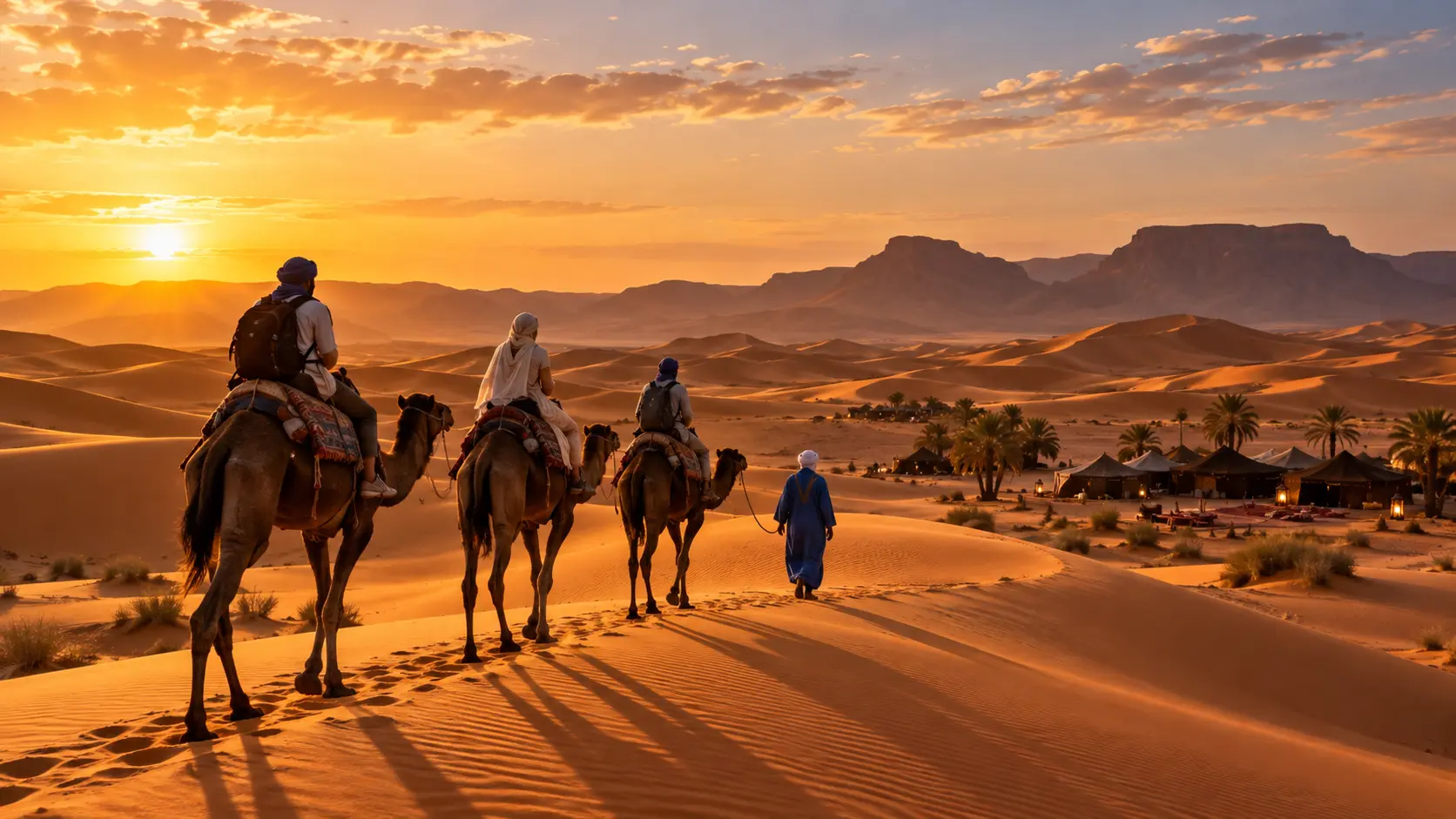
A camel rises from the sand at the edge of the Erg Chebbi dunes, shifting your weight forward and backward as you settle into the saddle. Ahead, a guide leads the way across sandy tracks, with towering dunes stretching into the distance. As the afternoon light softens, the ridges of the sand become more defined, creating one of Morocco’s most recognizable desert landscapes.
Camel trekking Morocco offers travelers a distinctive way to experience the country’s desert environments. Some visitors choose a short ride through the dunes, while others combine camel riding with sunset viewing, an overnight desert camp, or a longer guided expedition.
But not every camel experience is the same. A Sahara Desert camel ride in Merzouga is quite different from a short excursion through the rocky Agafay Desert near Marrakech. Even within Merzouga, the route, duration, comfort, and camp arrangements depend on the operator and the experience you book.
For travelers seeking the classic Sahara scenery of large sand dunes, Merzouga and Erg Chebbi are among Morocco’s most suitable destinations. If you have limited time in Marrakech, Agafay offers a more accessible alternative, although its landscape is very different.
This guide explains where to go camel trekking, what the experience is really like, how overnight desert tours work, what to bring, and how to choose a responsible operator.
What Is Camel Trekking in Morocco?
Camel trekking involves traveling through desert landscapes on camels, usually accompanied by a local guide who leads the animals along an established route.
The animals used for most tourist camel rides in Morocco are dromedaries, which have a single hump and are well adapted to arid environments.
A camel trekking experience may involve traveling over sandy dunes, following desert tracks, stopping at a viewpoint, or reaching an overnight camp. Many excursions are arranged around sunrise or sunset, when the light is particularly appealing and conditions may be more comfortable than during the hottest part of the day.
The term camel trekking can describe several different activities.
A short camel ride might involve a guided circuit near a village, hotel, or desert camp. A longer excursion may cross a greater area of dunes or include stops along the route. An overnight package combines desert accommodation with activities that may include camel riding.
Longer camel treks in Morocco can also involve extended journeys through desert terrain, sometimes using camels to carry supplies while participants alternate between walking and riding.
Importantly, booking a two-day or three-day desert tour does not mean spending two or three days riding a camel. Much of the itinerary may involve road travel, sightseeing, meals, and accommodation.
Some overnight packages also use 4×4 vehicles for all or part of the journey to the camp.
Before booking, check how much actual riding is included rather than relying on the total length of the tour.
Where Can You Go Camel Trekking Morocco?
Morocco offers several desert destinations, but the landscapes and experiences differ considerably.
For first-time visitors, the main choice is often between the large dunes around Merzouga, the desert landscapes surrounding Zagora, and the rocky Agafay area near Marrakech.
Merzouga and the Erg Chebbi Dunes
Merzouga is one of Morocco’s best-known destinations for Sahara Desert experiences. The village lies beside Erg Chebbi, an extensive area of sand dunes in southeastern Morocco.
The towering dunes make this area especially attractive to visitors who want to experience the scenery commonly associated with the Sahara.
A camel ride in Merzouga may begin near the village, from accommodation along the edge of the dunes, or at a designated departure point arranged by the operator.
Depending on the tour, travelers may follow a route into the dunes, stop to enjoy sunset, return to their accommodation, or continue toward a desert camp.
The experience is particularly appealing to photographers because the dunes change appearance as the sun moves across the sky. Their curves and ridges create contrasting areas of light and shadow, while footprints and camel tracks can add texture to the landscape.
Sunset and sunrise excursions are popular choices, but departure arrangements and available routes vary.
Is Merzouga the best place for camel trekking Morocco?
For travelers whose priority is riding among large Sahara sand dunes, Merzouga is a strong choice. The combination of accessible dune scenery, guided excursions, and desert accommodation makes it suitable for many first-time visitors.
However, Merzouga is not a single camp or fixed trekking route. The village, the surrounding dune area, and individual desert camps are separate locations.
Not every desert camp is reached by camel, and not every advertised Merzouga camel tour includes accommodation. Some camps arrange 4×4 transfers, while others may offer a choice between vehicles and camel riding.
Ask for the approximate camp location, transfer method, and actual riding itinerary before making a reservation.
Zagora and the Draa Valley
Zagora is another important gateway to southern Morocco’s desert landscapes.
The wider Draa Valley is known for its palm groves, traditional settlements, rocky desert terrain, and historic caravan routes. Camel excursions can be arranged in parts of this region, sometimes in connection with overnight desert tours.
However, the scenery should not be confused with Erg Chebbi.
The Zagora area includes a mixture of stony landscapes and smaller dune areas. Some excursions advertised as Sahara experiences focus more on desert atmosphere and traditional camp accommodation than on crossing extensive fields of high sand dunes.
Travelers considering a Zagora tour should look carefully at photographs of the actual destination and ask where the camel ride takes place.
Zagora can be a worthwhile option for visitors interested in the Draa Valley and desert culture, particularly when it fits their wider itinerary. But if your main objective is to see Morocco’s dramatic, large-scale dunes, Merzouga is generally the more appropriate choice.
Agafay Desert Near Marrakech
The Agafay Desert offers a different kind of experience.
Located outside Marrakech, Agafay is characterized by rocky hills, dry plains, and open arid landscapes. It is sometimes described in promotional material as a desert escape, but it is not part of the Sahara Desert and does not have the extensive sand dunes found at Erg Chebbi.
Camel rides in Agafay are generally associated with shorter excursions and outings that may also include meals, viewpoints, or desert-style camp facilities.
Its principal advantage is accessibility from Marrakech. Visitors who cannot dedicate several days to traveling toward the southeastern desert may still enjoy an arid landscape and a guided camel experience without making the long journey to Merzouga.
Agafay can be suitable for couples, families, and travelers with limited time, provided they understand what the scenery will look like.
It is best approached as a distinctive experience in its own right, rather than a substitute for a journey into the Sahara dunes.
What Is a Sahara Desert Camel Ride Really Like?
A first camel ride can feel unfamiliar, particularly during the first few minutes.
Most organized experiences begin with meeting the guide, receiving basic instructions, and approaching the camel at a designated mounting point.
The guide may help riders position themselves on the saddle and explain where to hold on as the animal stands.
Getting onto the Camel
Mounting and dismounting are often the moments that require the most attention.
A camel changes its body position significantly when standing up or kneeling down. As a result, the rider experiences a noticeable shift in balance.
Hold the saddle’s designated handhold, follow the guide’s instructions, and keep your phone or camera safely stored during these movements.
If you feel unsure, tell the guide before mounting.
Riding Through the Desert
Once the camel begins walking, you will notice a slow, rolling movement that differs from riding a horse.
The motion can be enjoyable, but it may also feel uncomfortable for people who are not accustomed to riding animals.
Your position, saddle design, and the length of the ride all affect comfort. Some travelers find the movement relaxing, while others experience muscle fatigue or discomfort in the hips, knees, or lower back.
A gentle pace is common on guided tourist rides. The route may follow firm desert tracks, sections of soft sand, or designated paths between dunes.
An excursion is not necessarily a journey deep into an isolated desert. Some routes remain relatively close to villages, accommodation, or other tourist activity.
Photography and Sunset Stops
Many visitors choose a sunset camel ride in Morocco because of the changing light.
As the sun becomes lower, the sand may take on warmer colors, and the shadows emphasize the shapes of the dunes.
Some operators include a stop where guests can dismount and take photographs. Others follow a different arrangement, depending on the terrain, group, and available time.
Do not assume photography stops are guaranteed. Ask whether the itinerary includes time off the camel and whether it is safe to use a camera during the ride.
Returning or Continuing to Camp
The final part of the experience depends on your booking.
You might return to the original departure point after a short circuit, dismount near a viewpoint, or finish at a desert camp where you will spend the night.
The guide will supervise dismounting, and you should remain seated until instructed to move.
A well-organized tour should provide clear instructions and give riders sufficient assistance throughout the experience.
Types of Camel Tours in Morocco: Which Experience Should You Choose?
Camel tours in Morocco range from introductory rides to extended desert journeys. The best choice depends on your available time, physical comfort, preferred scenery, and whether you want to stay overnight.
Experience | Main purpose | What to verify | Best suited to |
Short camel ride | Experience camel riding without a long excursion | Actual riding time, route, and transfers | First-time riders and travelers with limited time |
Sunset camel ride | Enjoy the desert landscape during late-afternoon light | Departure time, sunset stop, and return arrangements | Couples, photographers, and first-time visitors |
Sunrise camel ride | Experience the dunes in early morning light | Pickup arrangements, exact start time, and return transport | Early risers and photography enthusiasts |
Overnight camp with camel ride | Combine riding with a night in the desert | Camp location, riding time, facilities, meals, and transfer method | Travelers seeking a fuller Sahara experience |
Private camel tour | Arrange a more personalized guided excursion | Group exclusivity, route flexibility, and what is included | Couples, families, and travelers seeking additional flexibility |
Longer guided camel trek | Spend more time exploring desert landscapes | Daily riding or walking hours, support, accommodation, and physical requirements | Experienced and adventure-focused travelers |
How Long Does Camel Trekking Usually Last?
There is no standard duration for camel trekking in Morocco.
Some rides are brief introductory circuits. Others are longer sunset excursions or journeys to a camp. Multi-day trekking programs may include extended periods of walking or riding, although the daily schedule varies.
For example, an overnight desert tour might include a relatively short camel transfer followed by many hours at camp. The total itinerary duration is therefore not a reliable measure of time in the saddle.
When comparing offers, request the expected riding time in minutes or hours, the number of riding sections, and any planned stops.
Also ask how long the whole activity takes, including pickup, instructions, photographs, and return travel.
Is a Private Camel Tour Worth It?
A private camel tour in Morocco may be worth considering if you prefer a smaller group or would like greater flexibility.
This can be especially useful for couples, honeymooners, families with children, and travelers who feel nervous about riding.
However, private does not automatically mean that the operator can change the route, extend the ride, or stop anywhere in the dunes.
The guide must still consider weather, terrain, animal welfare, and operational restrictions.
Ask exactly what makes the experience private and which aspects can be customized before paying an additional fee.
Camel Trekking and Overnight Desert Camps in Merzouga
Combining camel trekking and desert camping is one of the ways visitors experience the Moroccan Sahara.
An overnight stay allows more time to appreciate the desert atmosphere beyond a short ride. Depending on the location and conditions, travelers may enjoy sunset, an evening meal, quiet nighttime scenery, and a sunrise view the following morning.
Nevertheless, a Sahara Desert overnight tour is not a standardized product.
How an Overnight Desert Experience Typically Works
Your tour may begin at a local meeting point, hotel, or guesthouse near Merzouga.
After meeting your guide, you may travel by camel toward the camp or a nearby drop-off point. Other packages arrange a 4×4 transfer, sometimes with camel riding offered separately.
If the route and schedule permit, there may be time to stop in the dunes before sunset.
At the camp, guests are shown their accommodation and given information about dinner and the evening schedule.
Some camps offer traditional Moroccan meals, communal dining, music, or stargazing opportunities. The availability of these activities depends on the camp and conditions. Clear skies and particular evening activities should never be assumed.
The next morning may begin with sunrise viewing, followed by breakfast and the return journey.
The return may be on camelback, by vehicle, or through a combination of both.
Standard vs. Luxury Desert Camps
Desert camps around Merzouga vary in facilities, location, and comfort.
A standard camp may provide relatively simple sleeping arrangements, shared facilities, and a communal dining area.
Higher-end camps may offer private tents, more substantial beds, en-suite bathrooms, and additional services.
However, the label luxury desert camp does not guarantee any particular standard of accommodation.
Facilities can vary substantially, even between camps marketed in similar ways.
Before booking, confirm whether the camp provides private bathrooms, hot water, electricity, bedding, meals, and suitable access for your needs.
Also check how luggage is transported. You may be able to take a small overnight bag while leaving larger suitcases at accommodation near the dunes, but storage arrangements should be confirmed in advance.
Do You Have to Ride a Camel to Stay in a Desert Camp?
No. Camel riding is not necessarily required for an overnight desert stay.
Some camps and tour operators offer vehicle transfers, allowing travelers to experience desert accommodation without riding.
This can be helpful for people with mobility limitations, back discomfort, concerns about animal riding, or a preference for other activities.
A vehicle transfer is also worth considering if you simply want more time for walking, photography, or enjoying the landscape.
Camel Trekking from Marrakech: What Travelers Should Know
Many travelers begin planning a Sahara trip while staying in Marrakech.
However, one important geographical detail is often overlooked: Merzouga is in southeastern Morocco, far from Marrakech.
Traveling between the two involves a substantial overland journey, with many itineraries crossing mountainous terrain and passing through several towns and valleys.
For this reason, camel trekking from Marrakech usually involves choosing between a multi-day desert tour and a closer, shorter excursion.
Marrakech to Merzouga
For travelers seeking the large dunes of Erg Chebbi, a multi-day Marrakech-to-Merzouga itinerary is generally the more practical approach.
Organized tours may include sightseeing along the route, overnight accommodation, and a camel excursion near Merzouga.
Travelers should distinguish the driving time from the total journey, which can be extended by rest stops, meals, viewpoints, and visits to attractions.
A multi-day package can make the trip easier to organize, but some itineraries involve long days in a vehicle.
Review the schedule carefully, particularly if you are traveling with young children or prefer a slower pace.
Marrakech to Zagora
A Zagora-area tour offers a different southern Morocco itinerary, with opportunities to explore the Draa Valley and surrounding desert landscapes.
Some travelers choose this option when their schedule does not allow a journey to Merzouga.
However, a shorter itinerary does not necessarily mean a relaxed one. Road travel can still occupy a significant part of the trip.
The key consideration is whether you are happy with the landscape and excursion described, rather than assuming that every Sahara-branded tour visits similar dunes.
Marrakech to Agafay
For visitors with very limited time, Agafay is the more convenient option.
A camel ride near Marrakech can be combined with a short outing or evening excursion without committing to a multi-day journey across Morocco.
Choose Agafay if your priority is accessibility and a short camel-riding experience.
Choose Merzouga if seeing extensive Sahara sand dunes is central to your trip.
When Is the Best Time for Camel Trekking in Morocco?
Season matters when planning a desert experience.
Spring and autumn are often preferred for outdoor activities in southern Morocco because conditions can be more manageable than during periods of intense summer heat.
However, weather varies from day to day, and comfortable conditions are never guaranteed.
Spring and Autumn
These seasons can offer a useful balance for camel rides and overnight desert stays.
Even so, travelers should prepare for changing temperatures, wind, and occasional dusty conditions.
Summer
Summer conditions in southeastern Morocco can be extremely hot.
Travelers considering camel trekking during this period should ask operators about their heat-management policies, departure times, and whether rides are postponed or canceled during unsafe conditions.
Avoid assuming that a late-afternoon departure automatically eliminates heat risks.
Winter
Winter can be a pleasant time for some daytime desert activities, but nighttime conditions can be cold.
This is particularly important when booking an overnight camp.
Check what heating, blankets, and other cold-weather provisions are available rather than relying on the camp’s marketing category.
Wind and Sand
Strong wind can affect comfort, visibility, and tour arrangements during any season.
Flexible planning is useful, especially if photography or a particular sunset experience is an important part of your trip.
A responsible operator should be prepared to alter or cancel activities when conditions are unsuitable.
What Should You Wear and Bring for Camel Trekking?
Preparing properly can make a substantial difference to comfort, particularly on longer rides or overnight excursions.
Use this practical packing checklist:
- Comfortable long trousers: Lightweight trousers help protect your legs from sun exposure and reduce rubbing against the saddle.
- Breathable clothing: Choose comfortable layers suitable for the expected weather rather than tight or restrictive outfits.
- Secure footwear: Closed-toe shoes or other secure footwear are generally more practical than loose sandals when mounting, dismounting, and walking on uneven ground.
- Sun protection: Bring suitable sunscreen, sunglasses, and a hat that can be secured in windy conditions.
- Water: Carry an appropriate amount based on the duration, temperature, and your guide’s advice. Confirm whether drinking water is provided.
- A secure camera or phone: A wrist strap or zipped bag can reduce the risk of dropping valuables during the ride.
- Warm layers: Bring additional clothing for cooler evenings and early mornings, particularly if you are staying overnight.
- Personal essentials: Pack necessary medication and any items you may need during the excursion.
- A small day bag: Avoid unnecessary luggage during the ride and check how overnight bags are transported.
A lightweight scarf can be useful when conditions are windy or dusty, but it should be worn securely and kept clear of equipment and moving animals.
For overnight stays, ask the camp about towels, toiletries, electricity, charging facilities, and bedding before deciding what to pack.
Is Camel Trekking in Morocco Safe and Comfortable?
Camel trekking can be manageable for many first-time riders, but it is not suitable for everyone.
The main physical considerations are mounting and dismounting, maintaining balance, sitting in the saddle, and tolerating the animal’s walking motion.
Camel Trekking with Children
Families can find camel riding an interesting shared activity, but suitability depends on the child’s age, size, comfort, and ability to follow instructions.
Operators may have different minimum-age rules, weight limits, and supervision policies.
Parents should confirm these details before booking and never assume that a child can ride alone or share a saddle with an adult.
Ask whether properly supervised arrangements are available and whether the operator has experience assisting younger riders.
If a child is frightened or uncomfortable, an alternative activity is preferable to pressuring them to continue.
Camel Trekking for Older Travelers
Age alone does not determine whether someone can enjoy a camel excursion.
Physical mobility, balance, joint comfort, and underlying medical conditions matter more.
Travelers with back or neck problems, recent surgery, significant joint pain, osteoporosis, pregnancy-related concerns, or other conditions that may be aggravated by riding should seek appropriate medical advice before participating.
A shorter excursion or a 4×4 transfer may be more suitable for some visitors.
What If You Feel Nervous?
Tell the guide about your concerns before mounting.
Ask for an explanation of how the camel stands and kneels, where to hold on, and what to do if you become uncomfortable.
There is no need to choose the longest available ride to have a worthwhile desert experience.
If you feel unsafe, communicate that clearly to the guide.
Responsible Camel Tourism: What Travelers Should Look For
Animal welfare is an important part of choosing a camel trekking experience.
Camels have a long history of use for transportation in arid regions, but their adaptation to desert environments does not mean they can work without proper care.
Tourist experiences should take animal health, workload, handling, and environmental conditions seriously.
Because standards can differ between operators, travelers should not assume that every camel excursion follows the same welfare practices.
Signs of Better Camel Care
Look for animals that appear alert, able to move comfortably, and free from obvious untreated wounds.
Pay attention to the saddle and harness. Poorly fitted equipment can contribute to rubbing and injury.
Observe how handlers interact with the animals. Calm, controlled handling is preferable to hitting, aggressive pulling, or forcing distressed animals to continue.
Ask how operators manage rest periods, access to water, food, shade, and work during extreme heat.
Also ask whether rider weight limits apply and how the operator assesses a camel’s suitability for carrying passengers.
An animal that appears exhausted, visibly injured, severely underweight, or in significant distress should not be used for a tourist ride.
Questions to Ask an Operator
Before committing to a booking, ask how many rides the camels perform, what rest arrangements are provided, and what happens when an animal is unwell.
You can also ask how equipment is checked and whether guests may decline to ride if they have welfare concerns.
Operator answers and photographs may help inform your decision, but they are not substitutes for independently verified welfare practices.
If you are uncomfortable with the conditions, choose another provider or a non-riding desert activity.
Responsible camel tourism also includes respectful treatment of local guides and communities. Avoid photographing people without permission, follow designated routes, and take your rubbish away from the desert.
How to Choose a Reliable Camel Trekking Operator in Morocco
Choosing an operator requires more than finding an attractive photograph or the lowest advertised price.
Before booking, make sure the offer clearly describes the experience you will receive.
Check the Actual Itinerary
Find out where the ride starts, which landscape you will visit, and where the excursion ends.
For a Merzouga tour, ask whether the route enters Erg Chebbi and whether sunset or sunrise stops are part of the planned experience.
Remember that route adjustments may be necessary because of weather and other operational conditions.
Confirm What Is Included
Some camel tours are sold as stand-alone activities. Others are included in broader desert packages.
Check whether your quotation covers local transport, guides, camel riding, meals, drinking water, accommodation, and return transfers.
If you are staying overnight, ask for the exact name or location of the camp and the facilities included in your booking.
Prices can vary by season, group size, accommodation, and tour arrangements. A detailed written quotation is more useful than comparing headline prices without understanding their inclusions.
Look for Specific, Credible Reviews
Reviews can help identify recurring issues, particularly those involving communication, organization, accommodation standards, or treatment of animals.
Look for detailed accounts from recent travelers rather than relying only on overall ratings.
Be cautious when a listing uses photographs that appear unrelated to the actual destination or fails to explain the itinerary clearly.
Reviews offer useful evidence of individual experiences, but they cannot guarantee that every future tour will be identical.
Clarify Safety Arrangements
Ask what assistance is available for mounting and dismounting, whether the guide speaks a language you understand, and how the group stays together during the ride.
For longer trips, ask about emergency communication, access to transport, and the operator’s procedures during difficult weather.
If you have mobility needs or health concerns, discuss them before making a reservation.
Understand the Cancellation Policy
Weather, transport problems, and travel-plan changes can affect desert excursions.
Ask what happens if an activity is canceled, whether another departure time is available, and under what conditions a refund or alternative arrangement is offered.
Written confirmation helps prevent misunderstandings.
Camel Riding vs. Other Desert Activities
Camel trekking is not the only way to explore Morocco’s desert landscapes.
Some visitors prefer to experience the dunes on foot, while others prioritize photography, overnight camping, or guided vehicle excursions.
Walking offers greater freedom to stop and observe the landscape at your own pace, although soft sand can be physically tiring.
A guided 4×4 excursion can make it possible to visit locations without spending extended periods in a saddle. Routes and access arrangements depend on local conditions and restrictions.
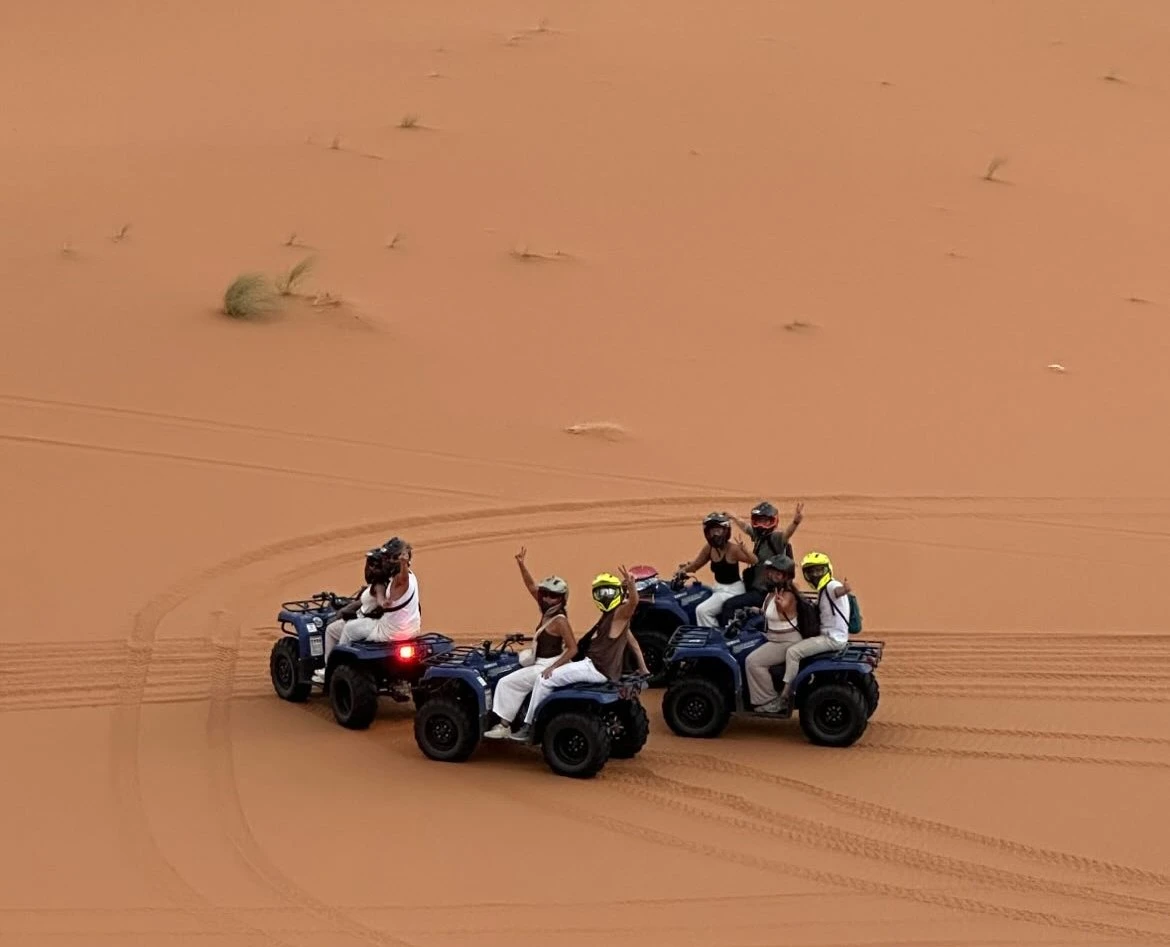
Quad biking and other motorized excursions are offered in some desert tourism areas, but they provide a very different experience. Safety standards, environmental impacts, and permitted riding areas should be considered carefully.
For travelers interested primarily in scenery and quiet time outdoors, walking, guided landscape excursions, and overnight stays may be preferable.
You do not have to ride a camel to enjoy the Moroccan Sahara.
Frequently Asked Questions About Camel Trekking Morocco
Camel trekking can be worthwhile for travelers who enjoy guided outdoor experiences and want to see desert scenery from a different perspective.
Merzouga is particularly attractive for visitors interested in large sand dunes. However, the experience may be less suitable for people who find animal riding uncomfortable or prefer more active exploration on foot.
Choosing an appropriate duration and responsible operator is important.
There is no universal ride duration.
Some operators offer short introductory circuits, while others organize longer sunset rides or camel transfers connected to desert camps.
Ask for the approximate time spent riding, not simply the duration of the complete tour package.
Yes. Sunset camel excursions are among the types of experiences available in desert tourism destinations such as Merzouga.
Exact departure times, photography stops, and routes depend on the operator, season, and local conditions.
Sunrise camel rides may be offered by operators around Merzouga, including as part of some overnight camp packages.
Check whether the sunrise excursion is included in your booking and whether the return journey will be on camelback or by vehicle.
No. Some Sahara Desert tours include a camel ride, others make it optional, and some rely on vehicle transfers.
If camel trekking is an essential part of your trip, make sure it appears explicitly in the itinerary.
Many first-time riders participate in guided camel excursions, particularly shorter experiences.
However, comfort varies. Beginners should choose an appropriate route, follow mounting instructions carefully, and inform the guide about any concerns.
Yes, solo travelers can consider both shared and private guided experiences.
Shared tours may provide opportunities to meet other travelers, while private arrangements can offer additional flexibility.
Confirm group arrangements and accommodation details before booking, especially if joining an overnight excursion.
A short camel-riding experience in the Agafay area is a practical option for travelers based in Marrakech.
Merzouga is much farther away and generally requires a multi-day itinerary if you want to travel there from Marrakech and enjoy the dunes without an exceptionally rushed schedule.
Merzouga sits beside the large Sahara dunes of Erg Chebbi in southeastern Morocco.
Agafay is a rocky, arid landscape closer to Marrakech and is not part of the Sahara.
Choose Merzouga for extensive sand-dune scenery and Agafay for a shorter excursion from Marrakech.
No. Many desert accommodation arrangements use 4x4 vehicles, and some allow guests to choose between a camel transfer and vehicle transport.
Confirm the available options with your camp or tour provider.
Check the destination, actual time spent riding, accommodation details, transport arrangements, inclusions, and animal-welfare practices.
Do not assume that a longer desert tour includes more riding, or that similarly named packages provide the same experience.
Final Thoughts: Planning Your Camel Trekking Experience in Morocco
Camel trekking Morocco can be a memorable way to discover the country’s desert landscapes, whether you choose a short sunset ride or an overnight stay beside the Sahara dunes.
For travelers dreaming of golden sand dunes and classic desert scenery, Merzouga and Erg Chebbi are among the most compelling options.
Zagora offers a different perspective on southern Morocco, combining desert landscapes with the character of the Draa Valley. Agafay provides a more accessible alternative for visitors staying in Marrakech who do not have time for a longer journey.
The best experience is not necessarily the longest or most expensive. It is the one that matches your expectations, available time, comfort level, and travel priorities.
Before booking, confirm the itinerary, understand how much riding is included, ask about animal care, and choose an operator that communicates clearly.
With realistic expectations and thoughtful planning, a camel excursion can become a meaningful part of exploring Morocco’s desert scenery.
- 4-day Casablanca to Marrakech desert tour
- 5-day Morocco tour from Casablanca
- 7-day Sahara desert tour from Casablanca
- 8-day imperial cities tour from Casablanca
- 10-day Morocco tour from Casablanca
- 10-day Imperial cities Tours from Casablanca
- 12-day grand Morocco adventure tour
- 14-day Morocco tour from Casablanca
- 3 Days Tour Marrakech To Merzouga Desert
- 3 Day Marrakech to Fes Desert Tour via Merzouga & Erg Chebbi
- 4 Day Sahara Desert Tour from Marrakech
- 4 Day Marrakech to Fes Desert Tour with Camel Trek & Sahara Experience
- 5-day Marrakech to Fes desert tour
- 6 day Morocco desert tour from Marrakech
- 7-day imperial cities tour Marrakech