Night in the Sahara Desert: A Morocco Camping Guide
limitlessmoroccotours.com
10 October 2026
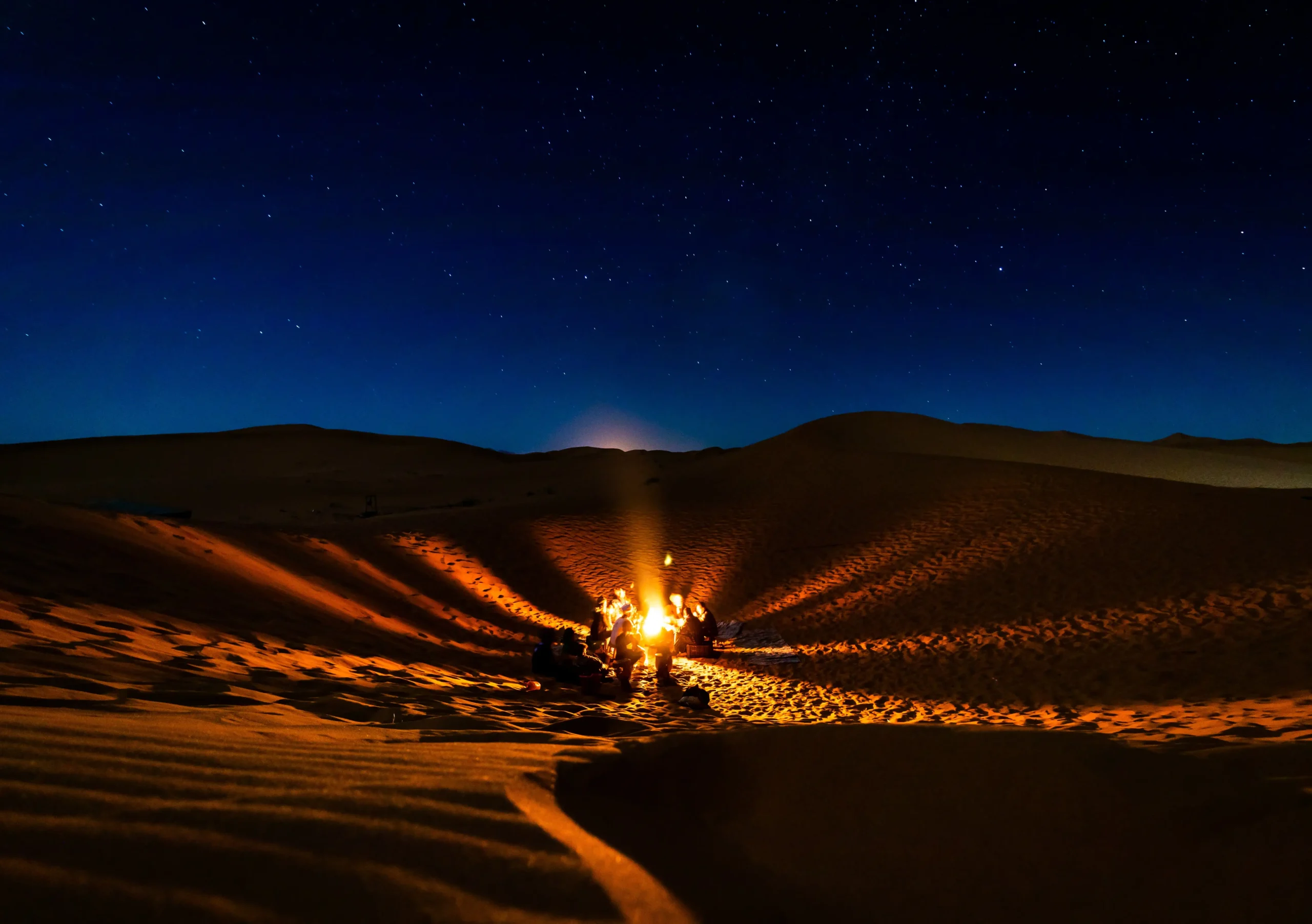
After sunset, the dune ridges become silhouettes, and the lamps between the tents draw your attention back towards camp. Dinner, a place to sit outside, and an early start for sunrise can shape the evening more than a long list of activities.
A night in the Sahara Desert in Morocco usually means staying in an established tented camp, with an organised arrival, dinner and breakfast, and time outdoors. Your comfort depends on the tent, bathroom, bedding, weather and transport arrangements included in your booking.
This guide focuses on Merzouga and the Erg Chebbi dunes in southeastern Morocco. An erg is an area of wind-shaped sand dunes; these are the landscapes associated with many Moroccan desert overnight trips. The advice here concerns this area, rather than every region across the Sahara.
What Happens During a Night in the Sahara Desert?
There is no universal timetable. Sunset, weather, your arrival time and the package determine how the experience unfolds.
Arrival, the final transfer and sunset
You may first meet the camp team at a hotel, parking area or other agreed point near Merzouga. Follow their directions: the meeting point and the camp itself may be different locations.
Depending on the booking, the final approach might involve camel trekking, a 4×4 transfer or direct vehicle access. Confirm whether a camel ride is transport to the camp or a separate excursion. If you prefer a vehicle, arrange it ahead and check any supplement.
Plan enough time for sunset without rushing the journey. Your guide may suggest a dune viewpoint, but climbing high is optional; ask about a lower, easier spot. Keep water and a warm layer with you if your luggage travels separately.
Dinner and the evening at camp
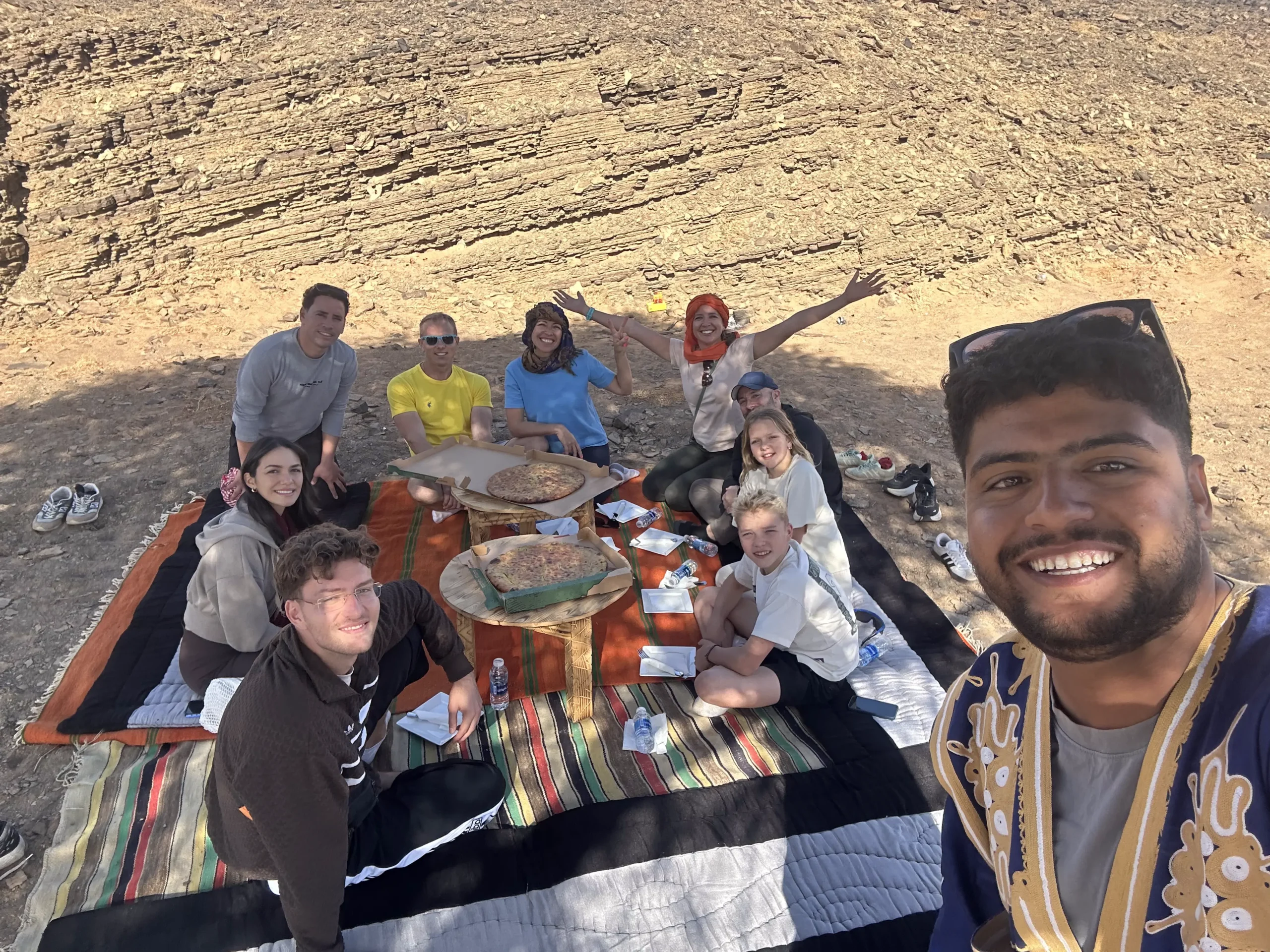
After settling into your tent, dinner is often served in a communal dining area. A Moroccan meal might include soup, tagine, vegetables, bread and fruit, although menus and serving styles vary.
Some camps arrange drumming or music after dinner, sometimes described as Amazigh or Berber music. Amazigh refers to the Indigenous peoples of North Africa; ask your hosts about the music they share rather than assuming every performance represents the same tradition.
Music, a campfire and other entertainment are package-dependent. If a quiet evening matters to you, ask when activities finish and where your tent will be.
Sunrise, breakfast and departure
Agree on the morning plan before going to bed. You may have time to watch sunrise, eat breakfast and return to the meeting point, or your onward journey may require an early departure.
Sandboarding, quad biking and additional excursions are separate activities unless specifically included. An overnight stay does not automatically provide a full day exploring Merzouga
Camping in the Sahara: What Are the Camps Like?
At established camps, sleeping in the Sahara Desert can involve a furnished tent with a bed rather than pitching your own tent. What needs checking is the level of privacy and the facilities attached to that bed.
“Standard” and “luxury” are not reliable specifications on their own. Compare the actual tent category and inclusions: an upgraded bathroom does not necessarily bring heating, air conditioning or unlimited electricity.
Merzouga Desert Camps: Standard vs. Luxury
These are common distinctions in advertised packages, with substantial variation between operators. Confirm the facilities for the tent you are booking.
Detail | Standard camp | Luxury camp |
Sleeping arrangements | Simpler furnishings; a private tent may depend on the booking | Usually marketed with more space and furnishings; confirm the beds and privacy |
Bathrooms | Shared toilets and showers are one common arrangement | An ensuite bathroom is a frequent upgrade; verify hot water and its location |
Temperature control | Bedding and ventilation may be the main provisions | Some offer heating or AC, while other upgraded camps provide neither |
Electricity | Charging may be in a communal area | In-tent sockets may be available; check power hours and appliance restrictions |
Meals | Dinner and breakfast may be part of the package | A higher price does not automatically include extra meals, drinks or private dining |
Setting | Location and proximity to other camps vary | Check the same details: the label does not establish solitude or a better dune view |
For some travelers, a private bathroom is the upgrade that matters most. For others, a simpler tent is comfortable enough if the bedding, cleanliness and location meet their needs.
Remember that canvas provides limited separation from outside sounds. Voices, music, wind or passing vehicles can affect sleep. Ask about quiet hours, and consider earplugs if you are a light sleeper.
What Is the Sahara Desert Like at Night?
The Sahara Desert at night offers a different sense of space: the dune contours become harder to distinguish, while the sky draws more attention. There can be quiet stretches, but a working tourist camp is not a promise of complete silence or darkness.
For Sahara stargazing, moonlight, cloud, airborne dust and artificial lighting all matter. A bright moon can illuminate the dunes beautifully while making faint stars harder to see. The Milky Way is not guaranteed; visibility also depends on the date, time and viewing direction.
Ask the camp team for a safe nearby viewing spot away from bright lamps. Give your eyes time to adjust, lower your phone brightness and use a dim red-light headlamp where practical. NASA’s stargazing guidance explains how darkness and moon phase affect the view.
You do not need to walk far into unmarked dunes to enjoy the sky. Stay within the area recommended by your hosts.
How Cold Is the Sahara Desert at Night?
There is no single temperature that describes a night near Merzouga. Desert temperatures after sunset can differ substantially from daytime conditions, and the season, wind and weather on your travel dates matter.
Use the following as packing guidance:
- Winter: Bring warm evening layers and warm sleepwear. Ask about extra blankets and whether heating is available in your specific tent.
- Spring and autumn: Pack layers for the change between afternoon, evening and the period before sunrise. These are generally good seasons for desert travel, as recommended by Morocco’s national tourism office.
- Summer: Plan for heat, and do not assume sunset guarantees a cold night. Check the overnight forecast and ask about ventilation or cooling before booking.
A regional climate description cannot tell you how warm your tent will feel. Check a forecast for Merzouga close to departure, along with Morocco’s official weather warnings, and adjust your packing with the operator’s advice.
What Should You Pack for a Night in the Sahara?
Pack a small overnight bag that you can manage easily during the transfer:
- Layers: A fleece or jumper, a wind-resistant outer layer, long trousers and season-appropriate sleepwear. Add a warm hat and socks for a winter stay.
- Footwear: Comfortable closed shoes for sand and uneven ground; optional easy-to-remove shoes for the tent.
- Daytime protection: Sunscreen, sunglasses, a hat and a scarf for windblown sand.
- Personal essentials: Toiletries, any medication and enough supplies for unexpected delays.
- Electronics: Phone or camera, charging cable, power bank, suitable adapter and a small torch or headlamp.
- Useful extras: Drinking water, tissues, hand sanitiser and a bag for your rubbish.
Confirm what happens to your main suitcase. It might remain at the meeting point or travel separately, depending on the operator and transfer. Ask where it will be stored and keep valuables and essential medication with you.
Is Spending a Night in the Sahara Safe?
Safety depends on preparation, conditions and the operator’s arrangements. For remote desert travel, Canada’s official Morocco advice recommends local guidance, appropriate equipment and drinking water.
Choose an established operator, follow the guide’s instructions and avoid wandering away alone after dark. Ask how staff can be reached overnight and what happens if a guest needs medical assistance.
In hot weather, drink regularly, take shade breaks and avoid strenuous activity during the hottest part of the day. Carry layers for cooler conditions. These precautions are consistent with CDC guidance for travel in hot climates.
Camel riding involves mounting, dismounting and a moving seat. Discuss balance, mobility, back problems or other relevant needs beforehand, and check vehicle alternatives. Travel insurance should cover your planned activities and remote travel arrangements.
Wind, storms or heavy rain can change transfers and outdoor plans. Follow local instructions and check current travel advice before setting out.
Is a Desert Overnight Suitable for Families, Couples and Solo Travelers?
The right arrangement matters more than a broad claim that desert camping suits everyone.
Families should confirm beds, bathroom access, child seats for road transfers and the camp’s approach to children joining camel rides. Ask about meal times, and supervise children around dunes, vehicles and fires.
Couples may value a private tent and a quieter position. A private tent does not mean exclusive use of the dining area or camp.
Solo travelers should check whether the quoted price includes a private tent, shared accommodation or a single supplement. Shared dinners may offer company, depending on the camp and other bookings.
Older travelers and anyone with access needs should ask about walking distances, soft sand, steps and bathroom layout. Request recent photographs or a short video of the route into the tent. Confirm any need for reliable power or medication storage directly; the word “luxury” does not establish accessibility.
How to Choose and Book the Right Desert Stay
Booking a camp directly can work if you are arranging your own journey to Merzouga. An organised Morocco desert tour can combine that journey with accommodation and other stops. Compare the whole arrangement, not just the tent photograph.
Ask these questions before paying
- What is the exact camp name, location and tent category? Can it be substituted?
- Is the tent private, and is the bathroom private or shared?
- What bedding, hot water, heating or cooling is actually provided?
- Where and when do we meet, and how do we reach and leave the camp?
- Are dinner, breakfast, drinking water, activities, transfers and taxes included?
- Is the quote per person or per tent, and are there any supplements?
- What are the cancellation terms and arrangements if weather or road conditions change?
Read recent reviews for repeated comments about cleanliness, communication, noise and whether the booked facilities were delivered. Ask how the camp handles water, waste and animal welfare. During your stay, conserve water, take your litter with you and ask permission before photographing people.
Allow enough time to reach Merzouga
From Marrakech, Merzouga is a long overland journey, not a short excursion. Even itineraries spread over several days include substantial driving. Check each day’s time in the vehicle, rest stops and arrival plans before choosing a departure date.
Our Marrakech to Merzouga travel guide explains the route and how a camp night fits into the journey.
Count the actual nights in the desert: a longer tour may add hotel nights along the route rather than more time at camp. Confirm the final destination, too, particularly if you want to finish in Fes instead of returning to Marrakech.
Choosing an overnight tour with Limitless Morocco Tours
When comparing a three-day Marrakech desert tour to Merzouga, look at transport, the named camp, meals and the return journey together.
If you would prefer a full day around Merzouga, consider an itinerary such as our four-day Marrakech tour with two Sahara camp nights. A private or custom arrangement can offer more choice over the route and stops; confirm which elements are private, since the camp itself may still welcome other guests.
Choose the stay that gives you enough time to enjoy the evening and enough comfort to sleep well. Those details are worth settling before you reach the dunes.
Frequently Asked Questions
One night can provide the evening-to-sunrise experience. Two nights can create a full day between arrivals and departures. Weigh that extra time against your wider itinerary, especially when travelling a long distance from Marrakech.
Yes, some camps accept direct bookings. You remain responsible for reaching the agreed meeting point and confirming the final transfer. Booking accommodation independently is different from heading into the dunes without local arrangements.
Ask for the bedding list. A sleeping bag may be unnecessary when the booked tent includes adequate bedding, but a basic bivouac or trekking arrangement can differ. Confirm what is supplied for your season.
Ask whether your camp permits and can arrange it. Weather, wind, bedding and the approved sleeping area all matter. Keep your tent available, and do not assume outdoor sleeping is included or suitable that night.
Some camps advertise Wi-Fi, but availability and quality depend on the location and setup. Download essential booking details and maps beforehand. If connectivity is important, ask about your specific camp rather than relying on a general promise.
Discuss your exact requirements before paying and reconfirm before arrival. Ask what can be prepared and how ingredients are handled. A vegetarian option does not establish that a kitchen can safely manage a serious allergy.
Contact the operator as soon as a delay becomes likely. A late arrival may change the transfer, dinner or camel activity. Do not assume the original sunset experience can still happen; agree on revised arrangements before continuing.
- 4-day Casablanca to Marrakech desert tour
- 5-day Morocco tour from Casablanca
- 7-day Sahara desert tour from Casablanca
- 8-day imperial cities tour from Casablanca
- 10-day Morocco tour from Casablanca
- 10-day Imperial cities Tours from Casablanca
- 12-day grand Morocco adventure tour
- 14-day Morocco tour from Casablanca
- 3 Days Tour Marrakech To Merzouga Desert
- 3 Day Marrakech to Fes Desert Tour via Merzouga & Erg Chebbi
- 4 Day Sahara Desert Tour from Marrakech
- 4 Day Marrakech to Fes Desert Tour with Camel Trek & Sahara Experience
- 5-day Marrakech to Fes desert tour
- 6 day Morocco desert tour from Marrakech
- 7-day imperial cities tour Marrakech