- Home
- TOURS
- TOURS FROM MARRAKECH
- 3 days Marrakech desert tour to Merzouga
- 3 day Marrakech to Fes desert tour
- 4 Day Sahara Desert Tour from Marrakech to Merzouga
- 4 Day Marrakech to Fes Desert Tour – Explore Morocco in the Sahara
- 5-day Marrakech to Fes desert tour
- 6 day Morocco desert tour from marrakech
- 7-day imperial cities tour Marrakech
- TOURS FROM CASABLANCA
- 4-day Casablanca to Marrakech desert tour
- 5-day Morocco tour from Casablanca
- 7-day Sahara desert tour from Casablanca
- 8-day imperial cities tour from Casablanca
- 10-day Morocco tour from Casablanca
- 10-day imperial cities tour from Casablanca
- 12-day grand Morocco adventure tour
- 14-day Morocco tour from Casablanca
- TOURS FROM TANGIER
- TOURS FROM FES
- TOURS FROM MARRAKECH
- About
- Gallery
- Contact
- Blog
Sahara Stargazing Morocco
limitlessmoroccotours.com
5 February 2026
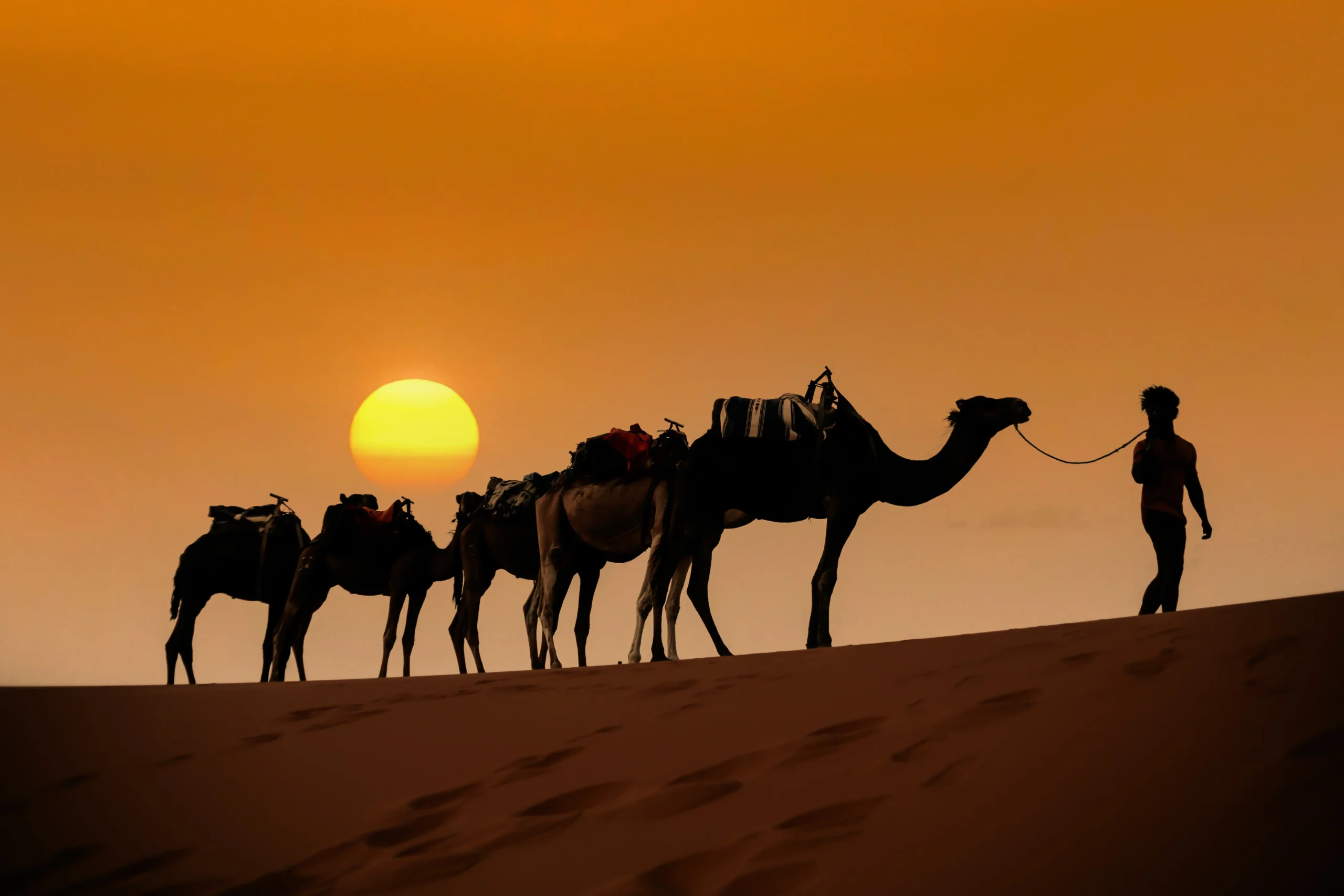
Sahara Stargazing Morocco: The Stars Above Merzouga’s Shifting Dunes
The first time you experience Sahara stargazing Morocco, it doesn’t feel like “just” looking at the sky. It feels like the desert changes the way you see everything.
After sunset, the dunes lose their heat. The wind becomes gentler, almost careful. Sounds fade—no traffic, no city hum—just the quiet movement of sand. Then your eyes adjust, and the darkness turns into detail: hundreds of stars, then thousands, and sometimes a pale, luminous band that doesn’t look real until you remember it has a name—the milky way in the sahara.
For many travelers, the day’s camel ride and sunrise photos are wonderful… but it’s the night that becomes the memory you keep.
Why the Sahara Night Sky Feels So Bright
Stargazing is partly science and partly atmosphere, and the Sahara gives you both.
1) Low light pollution (the real game-changer)
Away from big towns, artificial light drops dramatically. That’s why the merzouga night sky can feel “bigger” and deeper than what you’re used to at home. On the right nights, stars appear in layers—not just the bright ones, but faint constellations and dust-like clusters.
2) Open horizons
In cities or forests, buildings and trees break your view. In the dunes, the horizon is clean. You’re surrounded by space, and the sky feels like a full dome rather than a narrow window.
3) Quiet changes the experience
The Sahara’s silence is not a small detail—it’s part of why stargazing here feels emotional. When the world gets quiet, your mind slows down. You notice more.
Where to Go: Merzouga and the Erg Chebbi Dunes
When people talk about Morocco’s most iconic dunes, they’re usually talking about Erg Chebbi, near Merzouga.
Erg Chebbi: the classic location for stargazing
An erg chebbi desert camp puts you close to tall dunes with excellent sightlines. Camps vary from simple to high-comfort, but the best stargazing usually comes down to two things:
- how deep into the dunes the camp is (farther from village lights = darker sky)
- how the camp uses lighting (soft, warm, low-to-the-ground lighting is best)
If you’re choosing between camps, ask a simple question:
“How far from the village is the camp, and do you keep lights low at night?”
What the Merzouga night actually feels like
A typical evening near Merzouga often looks like this:
- sunset walk to a dune ridge
- dinner at camp (tagine, bread, tea—simple and satisfying)
- music around a small fire (sometimes quiet, sometimes lively)
- then the best part: the camp settles down and the sky takes over
Even if you do nothing special—no telescope, no app, no plan—the merzouga night sky usually gives you something worth remembering.
Best Time to See Stars in the Sahara (Season + Moon)
If your goal is the “wow” factor, timing matters. Here’s what helps most.
Best time to see stars in the Sahara: the practical answer
For comfort and clear skies, many travelers find the best time to see stars in the sahara is October through April. Nights are cooler (sometimes cold), which often means clearer air and longer stargazing sessions without heat fatigue.
Month-by-month feel (simple guide)
- Oct–Nov: comfortable evenings, great balance
- Dec–Feb: very clear nights, but colder (pack warm layers)
- Mar–Apr: warming up, still excellent skies
Summer (May–Sep) can still be great for stars, but daytime heat can be intense depending on your route and schedule.
New moon vs full moon
This is the detail most people forget:
- New moon: darkest skies = best chance to see the milky way in the sahara
- Full moon: the dunes glow beautifully, but many stars disappear in the brightness
If you want “maximum stars,” plan your Sahara night close to the new moon
What You Can See During Sahara Stargazing (No Telescope Needed)
You don’t need equipment—just patience and darkness.
The Milky Way in the Sahara
On moonless nights with clear conditions, you may see the Milky Way as a soft white band—like thin cloud made of light. It becomes easier to notice after your eyes adjust for 15–20 minutes.
A simple tip:
Avoid looking at your phone screen during that first adjustment period. One bright screen can reset your night vision.
Planets that shine steadily
If you see a bright “star” that doesn’t twinkle much, it could be a planet. In Morocco, depending on the season, you might spot Jupiter or Venus clearly.
Shooting stars
Even outside major meteor showers, you can often catch a few meteors in the desert simply because the sky is darker and your view is wider.
How to Make Your Erg Chebbi Desert Camp Stargazing Better
A few small choices can turn a good night sky into a great one.
1) Walk 2–5 minutes away from camp lights
Most camps have lanterns or path lights. That’s normal. But if you walk just over a small dune ridge, the sky often looks noticeably darker.
2) Dress warmer than you expect
Even if your day was hot, the desert cools fast. Bring:
- warm jacket
- socks
- a scarf or neck layer
- a hat in winter months
Stargazing is much better when you’re comfortable enough to stay outside longer.
3) Pick your “quiet hour”
The sky doesn’t change quickly, but the camp atmosphere does. Often the best time is after the music ends, when most people go to their tents and the dunes feel empty again.
Quick Astrophotography Tips (Stars Over Merzouga)
If you want photos, you don’t need a professional setup—but you do need stability.
Basic gear
- tripod (most important)
- camera with manual mode (or a phone + tripod + night mode)
Starter settings (camera)
These are safe “first tries”:
- 10–20 seconds shutter
- f/2.8–f/4 aperture
- ISO 1600–6400
- manual focus (focus on a bright star, then don’t touch it)
Composition tip
Include a dune line in the lower part of the frame. The silhouette gives scale and makes the sky feel even larger.
Responsible Stargazing: Keep the Desert Dark
Part of protecting Sahara stargazing Morocco is simple respect:
- use low light (avoid bright flashlights on dunes)
- don’t leave trash (even small plastic travels far)
- keep noise low late at night
- avoid driving on dunes unless necessary (protects the landscape)
The more we protect the desert’s darkness, the more powerful the night sky stays for future travelers.
Final Thoughts: Why This Night Stays With You
Photos help, but they don’t fully capture it: the feeling of standing on a dune while the wind smooths the sand behind you, and the sky above Merzouga becomes bright enough to make you pause mid-thought.
If you’re planning Sahara stargazing Morocco, prioritize two things: a well-located erg chebbi desert camp and the right moon phase. Do that, and you give yourself the best chance to see the milky way in the sahara—not as an idea, but as something real above the dunes.
FAQ: Sahara Stargazing Near Merzouga
The desert has very little light pollution, so stars appear in much greater detail than in cities. Combined with open horizons and near-total silence, the sky feels bigger and closer than what most travelers are used to.
October through April is generally the best period, since cooler nights often bring clearer air. Winter months offer especially crisp skies, though it’s worth packing warm layers for the drop in temperature after sunset.
Yes, a new moon gives you the darkest skies and the best chance of seeing the Milky Way clearly. A full moon, on the other hand, lights up the dunes beautifully but makes many fainter stars harder to spot.
No, you don’t need a telescope or any special gear. Just give your eyes 15 to 20 minutes to adjust to the darkness, and avoid looking at bright phone screens during that time for the best view.
For a Morocco desert trip, pack lightweight clothes for daytime, warm layers for cold evenings, sunglasses, sunscreen, a hat, comfortable shoes, and a small backpack. If you are planning a Sahara experience, remember that desert temperatures can change quickly between day and night.
A stable tripod is the most important tool, along with a camera set to manual mode. A good starting point is a 10 to 20 second shutter speed, an aperture around f/2.8 to f/4, and an ISO between 1600 and 6400.
- 4-day Casablanca to Marrakech desert tour
- 5-day Morocco tour from Casablanca
- 7-day Sahara desert tour from Casablanca
- 8-day imperial cities tour from Casablanca
- 10-day Morocco tour from Casablanca
- 10-day Imperial cities Tours from Casablanca
- 12-day grand Morocco adventure tour
- 14-day Morocco tour from Casablanca
- 3 Days Tour Marrakech To Merzouga Desert
- 3 Day Marrakech to Fes Desert Tour via Merzouga & Erg Chebbi
- 4 Day Sahara Desert Tour from Marrakech
- 4 Day Marrakech to Fes Desert Tour with Camel Trek & Sahara Experience
- 5-day Marrakech to Fes desert tour
- 6 day Morocco desert tour from Marrakech
- 7-day imperial cities tour Marrakech